The definition of the food service industry refers to the preparation, handling, packaging, and distribution of food, beverages, and related services by an establishment. The foodservice industry includes restaurants, cafés, bars, catering companies, cafeterias, hotels, care homes, healthcare kitchens, food-to-go businesses, and institutional food providers.
In the UK, the food service industry plays a major role in hospitality, healthcare, education, travel, and retail. Food service operations are expected to maintain strong food safety standards, clear HACCP procedures, temperature monitoring records, allergen controls, and due diligence documentation to remain compliant with Food Standards Agency (FSA) guidance and local authority requirements.
Key takeaways
- The food service industry includes restaurants, catering businesses, cafés, hotels, hospitals, care homes, school kitchens, and food-to-go operations.
- Food service businesses are expected to maintain food safety procedures based on HACCP principles and due diligence requirements.
- Temperature monitoring, allergen management, cleaning schedules, and traceability records are core daily operational controls in foodservice operations.
- Multi-site food service businesses often struggle with inconsistent food safety checks, missing records, and lack of operational visibility across locations.
- Food preparation, storage, service, and transportation all form part of the food service sector and require clear operational procedures.
- EHO inspections in the UK commonly assess hygiene practices, food safety records, cleaning standards, and staff food safety knowledge.
- Staff training consistency is critical in restaurant groups, central kitchens, care homes, and catering operations where multiple teams handle food daily.
- Food service businesses increasingly use digital systems like FoodDocs, to manage monitoring logs, corrective actions, supplier records, and operational consistency across sites.
- Effective food service operations depend on consistent kitchen workflows, clear responsibilities, and reliable monitoring procedures.
What is food service?
Food service refers to all activities involved in preparing, cooking, serving, packaging, storing, transporting, and distributing food and beverages to customers or consumers.
The food service industry covers both commercial and non-commercial operations. Commercial foodservice businesses generate profit directly through food sales, while non-commercial operations mainly provide food services as part of another organisation, such as schools, hospitals, care homes, or workplace cafeterias.
The industry food service sector involves much more than serving meals. Daily operations usually include:
- food preparation
- chilled and frozen storage
- cooking and reheating
- cleaning and sanitation
- allergen management
- supplier management
- stock rotation
- waste management
- temperature monitoring
- food safety documentation
- customer service

What are the different sectors of the food service industry?
The foodservice industry contains several sectors that operate differently depending on their service model, customer expectations, and operational complexity.
Restaurants and cafés
Restaurants and cafés are among the largest parts of the food service industry. These businesses prepare and serve meals directly to customers and often operate with complex kitchen workflows, multiple food preparation stages, and strict hygiene expectations.
This sector includes:
- quick service restaurants
- casual dining
- fine dining
- takeaway businesses
- coffee shops
- bakeries
- food-to-go operations
Restaurant groups and multi-site café chains often face operational challenges around SOP consistency, food safety supervision, allergen management, and monitoring compliance across locations.
Catering businesses
Catering companies prepare and transport food for external events, workplaces, schools, healthcare facilities, and private functions.
Unlike restaurants, catering operations often manage food transportation, temporary serving locations, large batch cooking, and tight service schedules. This creates additional operational pressure around hot holding, cold chain management, and traceability documentation.
Hotels and hospitality venues
Hotels commonly operate multiple food service areas simultaneously, including restaurants, breakfast buffets, bars, conference catering, and room service kitchens.
These operations require clear coordination between teams, particularly around opening and closing checklists, cleaning schedules, chilled storage, allergen controls, and service timing.
Healthcare and care homes
Healthcare kitchens and care homes form a significant part of the UK food service sector. These businesses often serve vulnerable populations, making food safety controls especially important.
Operational procedures in care homes frequently involve:
- texture-modified meals
- allergen-sensitive meal preparation
- temperature-controlled food delivery
- strict cleaning schedules
- detailed monitoring documentation
Many care home groups standardise food safety procedures across sites to support consistency and EHO inspection readiness.
Institutional food service
Institutional food service includes schools, universities, prisons, military kitchens, and workplace cafeterias.
These operations usually prepare high food volumes while working within strict budgets and operational procedures.
Why is the food service industry important?
The food service industry supports public health, employment, hospitality, tourism, and everyday convenience.
Beyond serving meals, the industry creates systems that help protect consumers from foodborne illness through proper food handling, cleaning, temperature control, and HACCP-based procedures.
According to UK Food Standards Agency guidance, food businesses must be able to demonstrate that food is handled safely and that hazards are controlled appropriately.
The foodservice industry also supports millions of jobs globally across kitchen operations, logistics, supply chains, hospitality, and retail.
In practical terms, effective food service operations help businesses:
- maintain food safety compliance
- improve operational consistency
- reduce food waste
- improve customer satisfaction
- prepare for inspections
- standardise staff procedures
- manage supplier and traceability records
Common operational challenges in the food service industry
Food service operations often manage hundreds of small daily tasks that directly impact food safety and operational consistency.
Some of the most common operational challenges include:
Staff training consistency
High staff turnover remains a major challenge in hospitality and food service UK operations. New employees must quickly learn food safety procedures, allergen protocols, cleaning schedules, and kitchen routines.
Without consistent training systems, teams may complete tasks differently across locations.
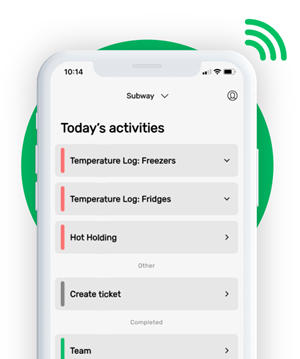
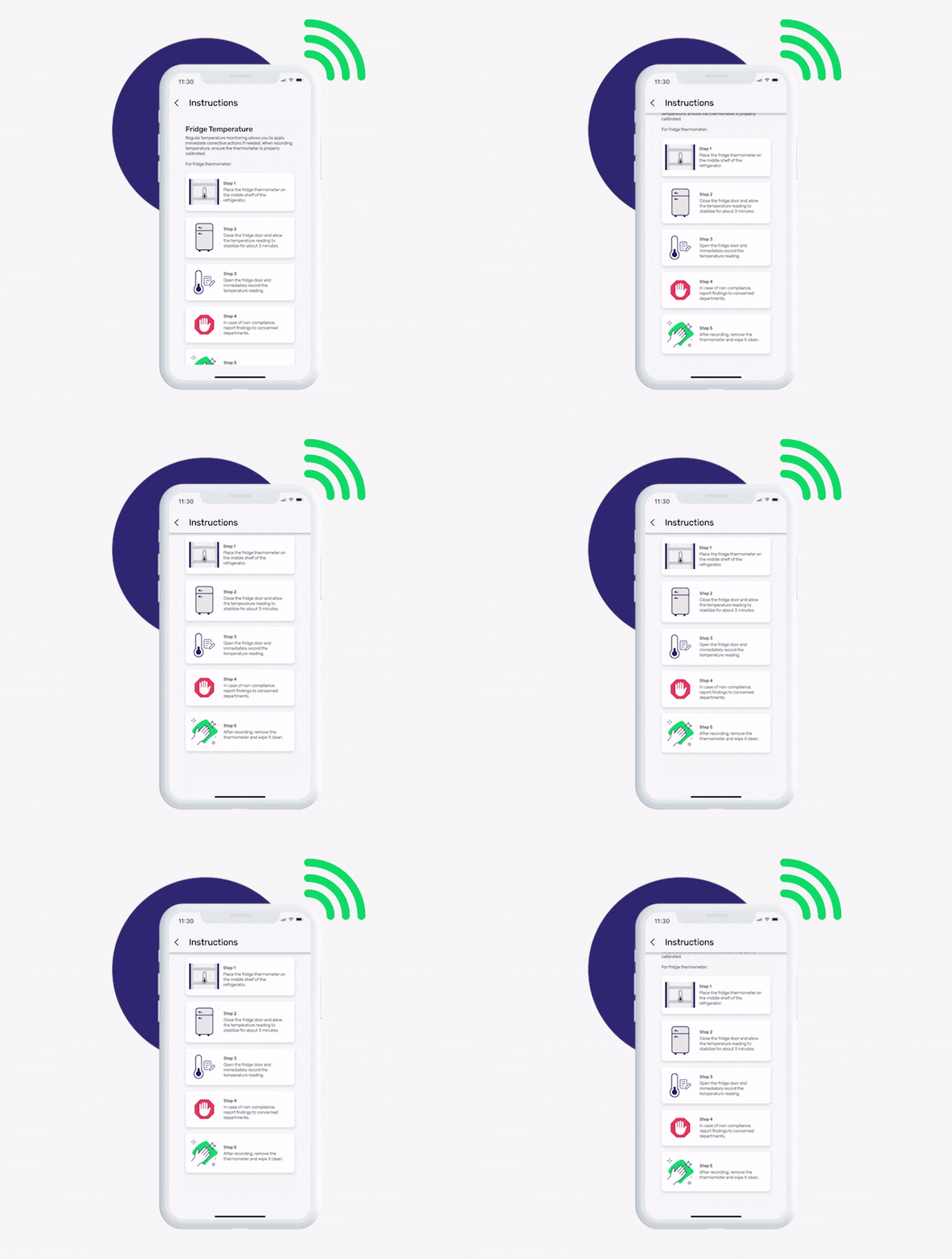
Digital monitoring checks include educative instructions. Team members can check the instructions to perform the food safety task correctly.
Temperature monitoring
Chilled storage, freezer checks, cooking temperatures, reheating, and hot holding all require regular monitoring.
Missed temperature checks or inconsistent corrective actions can create food safety risks and compliance issues during inspections.
Paper-based records
Many businesses still rely on paper logs for monitoring and HACCP documentation. In multi-site operations, paper systems can create visibility gaps, inconsistent record keeping, and supervision difficulties.
Digital systems are increasingly used to centralise records and improve operational oversight across restaurant groups, catering companies, and care homes.
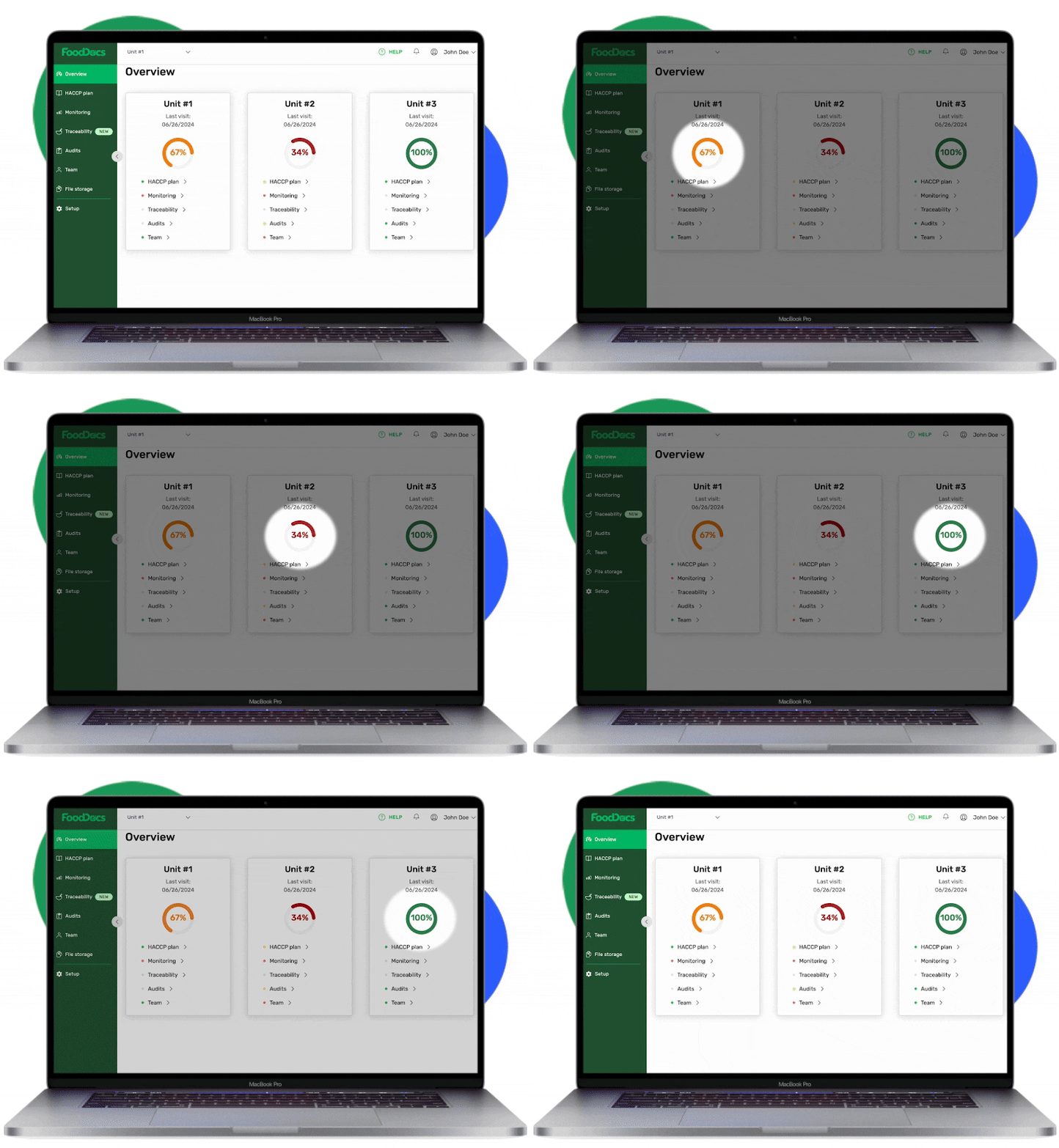
The instant overview gives a simple and powerful outline of the Food Safety Management System from all your business locations. This feature helps save your time on supervision.
Allergen management
Allergen control remains one of the most important operational responsibilities in the food service sector.
Food handlers must understand:
- cross-contamination risks
- ingredient changes
- supplier updatesallerge
- menu communication
- cleaning procedures
Clear communication between kitchen teams and front-of-house staff is essential.
Food safety in the food service industry
Food safety is one of the most important operational responsibilities in the foodservice industry.
Most UK food businesses are expected to implement food safety management procedures based on HACCP principles. These procedures help businesses identify hazards, monitor risks, document corrective actions, and maintain due diligence records.
Operational food safety controls often include:
- cleaning and sanitation schedules
- food temperature monitoring
- supplier approval procedures
- stock rotation systems
- allergen controls
- personal hygiene procedures
- traceability records
- corrective action documentation
The Codex Alimentarius HACCP framework continues to form the foundation of many food safety systems used throughout the food industry globally.
For multi-site foodservice businesses, maintaining consistency across all locations can become difficult when procedures are managed differently at each site.
Technology and digitalisation in the foodservice industry
Technology now plays a major role in modern food service operations.
Many businesses use digital systems for:
- POS systems
- recipe management
- stock control
- supplier management
- temperature monitoring
- digital checklists
- food safety compliance
- scheduling and labour management
Restaurant groups and catering operations increasingly look for systems that improve operational visibility across multiple locations.

10 Tips for food safety compliance in the food service industry
Regardless of the food service segment to which your business belongs, you and your team are required to comply with food safety regulations. This aspect makes sure that your business will not cause any harm to public health while serving high-quality food and services.
The importance of food safety in a food service business is invaluable. It is an essential aspect of a business needed to continue operating.
The following are general and basic, yet critical, food safety rules for compliance:
- Train your employees on food safety. All employees must receive basic training on food safety and proper food service. Some countries require a food handler's license. This aims to help them understand the importance of food safety and how to prevent foodborne illnesses from occurring. Managers must provide food safety training and employee resources for consistent learning.
- Implement temperature control. This applies to the storage, cooking, and handling of foods. Controlling temperature is the most effective method to prevent the growth of bacteria, which can cause foodborne illness.
- Avoid cross-contamination. Foodservice establishments must implement controls to prevent cross-contamination. Controls may include providing separate food service tools and utensils for raw and cooked materials.
- Keep the facility clean and sanitized. As a prerequisite, all food contact surfaces in a food service establishment must be clean and sanitized properly. A food service facility must provide the necessary tools to perform these tasks.
- Employees must maintain proper hygiene. As a minimum requirement, all food handlers in a food service business must know how to practice proper personal hygiene. This includes how they present themselves and the following pointers:
- Practice proper storage of food products and ingredients. Food service businesses must have the necessary storage areas and food storage equipment to help maintain the safety of their food products and minimize contamination and food spoilage. This tip also includes employing an inventory management system, including proper food stock rotation.
- Choose your supplier or distributor carefully. Restaurant suppliers and distributors play an important role in keeping food safe. The quality of the food ingredients that you receive can greatly determine the safety of your existing stocks. All ingredients must arrive fresh and in good condition.
- Implement a comprehensive food safety system with food hazard control plans. A comprehensive food safety management system will help your food service business cover all vulnerable areas and control potential food safety hazards. This plan includes proper controls and appropriate monitoring techniques to help ensure consistent compliance. The plan must include other specific management controls, such as the following:
- Record all food safety operations. To serve as proof for any inspection and record of tasks, your team must properly document all results related to food safety compliance. In case of a health inspection, these records will verify your foodservice operations' compliance with food safety regulations.
- Perform regular food safety audits. As a form of self-evaluation, your team must conduct regular food safety audits. This task will help you identify any areas that may be non-compliant and immediately address them.
Frequently Asked Questions