Get us to speed on what a Standard Operating Procedure is, examples of SOPs, and how to write SOPs that set your team up for success.
Standard operating procedures (SOPs) might sound technical at first, but they're just written instructions for routine tasks in your business. Think of an SOP as step-by-step directions that show how to carry out a specific task the same way each time so you get predictable results. It's like a recipe or checklist that anyone on your team can follow to get the job done right.
People use SOPs in all kinds of industries and organizations, whether they're small or large. A small coffee shop might have a simple SOP for how to clean the espresso machine at closing time. A multi-site restaurant will typically have detailed SOPs for operating kitchen equipment, doing temperature checks, calibrating thermometers, and keeping quality control on track.
No matter the setting, the purpose of an SOP is really the same: to clearly spell out how to do something correctly and efficiently, every single time.
When everyone follows an SOP, you tend to get work that's consistent and fewer surprises. In short, SOPs are about creating a sense of consistency and reliability in your day-to-day operations.
What’s the official Standard Operating Procedure definition?
The formal definition, according to Merriam-Webster’s dictionary, states that a SOP is an “established or prescribed method to be followed routinely for the performance of designated operations or in designated situations.”
Why do businesses need Standard Operating Procedures?
If writing down procedures sounds like extra work, it really helps to know why SOPs are so valuable. SOPs that are well-crafted bring a host of benefits that can:
- Save time
- Improve quality
- Keep your team safer
Here are some key reasons every business should have SOPs:
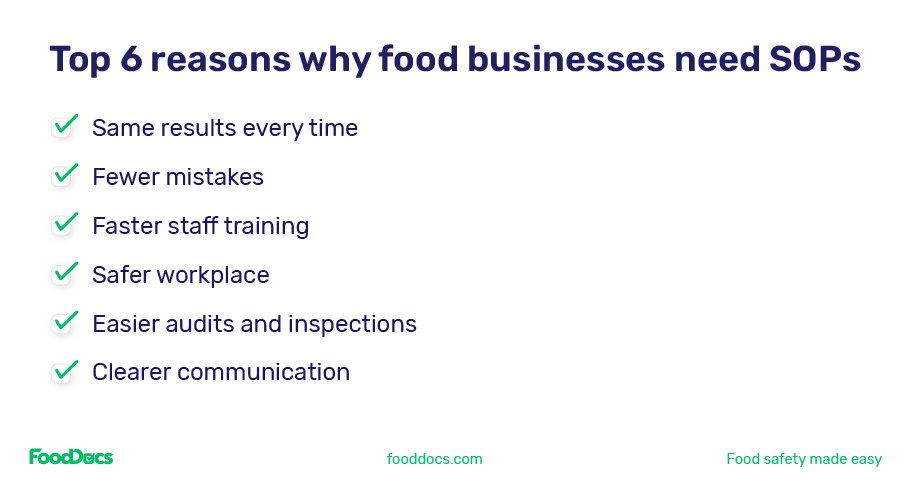
Consistent results
An SOP makes sure that everyone performs a task pretty much the same way at the exact times, which leads to results and quality that are uniform. When you have consistency in your processes, customers tend to get the same experience or product every time.
For example, if you have an SOP for cleaning a piece of equipment, it will be cleaned thoroughly no matter who on the staff does it, so you're ensuring a standard of cleanliness that's consistent.
Fewer mistakes happening
Procedures that are clear help employees avoid errors or things they might miss. When the correct steps are documented and followed, there's less chance of skipping a step that's important or doing tasks out of order.
This can really reduce accidents and prevent issues with quality. SOPs are kind of like a safety net because they catch mistakes before they happen by guiding people through the right process.
Faster training and onboarding
SOPs make it easier and faster to train new employees. Instead of learning by trial and error or shadowing someone for weeks, a new hire can just read the SOP and understand the job step-by-step. The SOP sort of becomes a training manual for how to perform a task. This not only saves training time but also helps new team members become confident and productive more quickly.
Safety and staying compliant
Following SOPs helps you maintain safety standards and comply with laws or industry regulations. Many industries, including food service, healthcare, or manufacturing, have rules that are pretty strict to protect health and safety.
SOPs make sure that employees know these rules and how to apply them in their work each day (e.g., an SOP might outline the proper way to handle and store food so you meet health codes). Documented procedures provide proof during audits or inspections that you're doing things by the book.
Better communication
Written procedures keep everyone on the same page, more or less. If something about a process changes, you can update the SOP and notify the team, rather than relying on word-of-mouth, which often leads to miscommunication.
The SOP acts as a single source of truth for how a task should be done. This clarity can improve teamwork and get rid of confusion because everyone refers to the same instructions.
In short, SOPs create a foundation for operations that are smooth and predictable. They reduce chaos and guesswork. Employees can trust that they're doing things correctly, managers can trust that the team is following proper methods, and customers end up getting an experience that's consistent and quality.
In fields like food safety or production, having and following SOPs is critical to prevent accidents or issues before they happen.
What are some examples of SOPs?
Standard operating procedures can cover all sorts of tasks, whether they're big or small. Any process that you want done the same way each time should probably have an SOP.
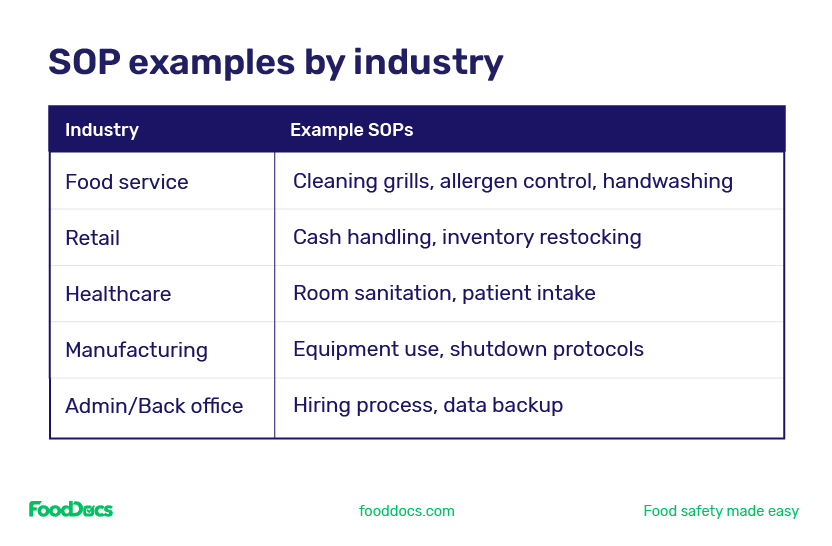
Here are a few examples to show you the range of SOPs across different businesses:
SOP for food service
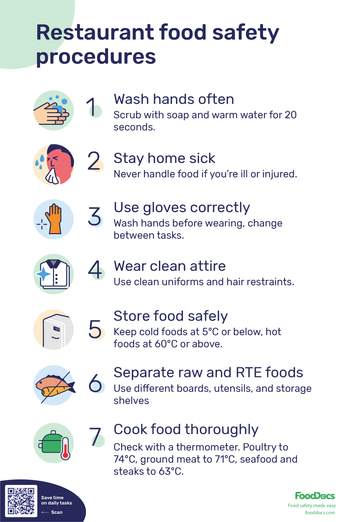
In a restaurant, there will typically be SOPs for opening and closing duties each day, cleaning and sanitizing equipment, handling food allergens, cooking certain dishes to the right temperature, and how to store food ingredients safely.
A restaurant, for example, might have a step-by-step SOP for how to clean a meat slicer or the steps of service for guests. Food businesses use SOPs for personal hygiene too (like hand-washing procedures for staff) and pest control measures to keep the facility safe.
SOP for manufacturing
A factory might have an SOP for operating a particular machine or for doing quality checks on a product. There could be SOPs that detail how to calibrate and maintain equipment on a schedule, or how to shut down the production line safely in an emergency.
These procedures help make sure worker safety and product consistency are maintained on the production line.
SOP for office or administration
In an office setting, you might find SOPs for how to onboard a new employee, how to handle inquiries from customers, or how to back up data at the end of the day.
For example, a human resources department may use an SOP to outline each step of hiring a new employee, from posting the job ad to conducting interviews to the paperwork needed on the first day. Having this documented means nothing important gets overlooked during hiring.
SOP for retail
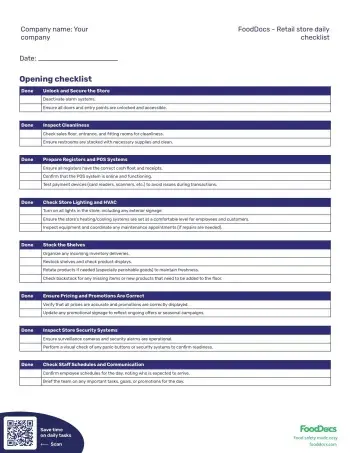
A retail store could have printable SOPs for opening and closing the store, counting cash drawers, processing returns, or restocking inventory. If an employee is out sick, another staff member can just follow the SOP to perform those daily tasks without a hitch.
SOP for healthcare
In a clinic or hospital, there are SOPs for sanitizing instruments, checking in patients, administering certain treatments, and responding to serious medical emergencies.
There will be a standard procedure for how to sterilize and prepare an exam room between patients, for example, so you ensure safety and compliance with health regulations.
As these examples show, SOPs can be very broad or very specific. Some SOPs are short checklists that fit on one page. Others are documents that are lengthy with instructions that are detailed, diagrams, or flowcharts, particularly if a process has many decision points or steps that are technical.
The format isn't really as important as the content. What matters is that the procedure is clear and easy to follow for whoever needs to use it.
In the food industry specifically, certain SOPs are both common and really crucial. Most food businesses will have SOP templates for things like managing allergens, cleaning and handling waste, preventing contamination, personal hygiene practices, and pest control, among others. These are all routine areas where having procedures that are strict helps prevent incidents related to food safety.
An SOP for allergen control, for example, would list steps for cleaning equipment to avoid cross-contact of allergens, and an SOP for personal hygiene would remind staff about techniques for proper handwashing and glove use. By standardizing these practices, food businesses can run safely and smoothly while they comply with health regulations.
What makes a good SOP?
Not all SOPs are created equal. A good SOP should be clear, complete, and easy to follow. If someone had never done the task before, could they follow the SOP and get it right? That's sort of the real test. Many SOPs, unfortunately, sit in a binder in an office or on a wall that no one looks at.
Here are a few signs of an SOP that works for you:
How do you write a Standard Operating Procedure?
Creating an SOP from scratch might feel a bit overwhelming at first, yet it becomes manageable if you break it into steps. The goal is really to produce a set of instructions that's clear and that anyone in your organization could follow.
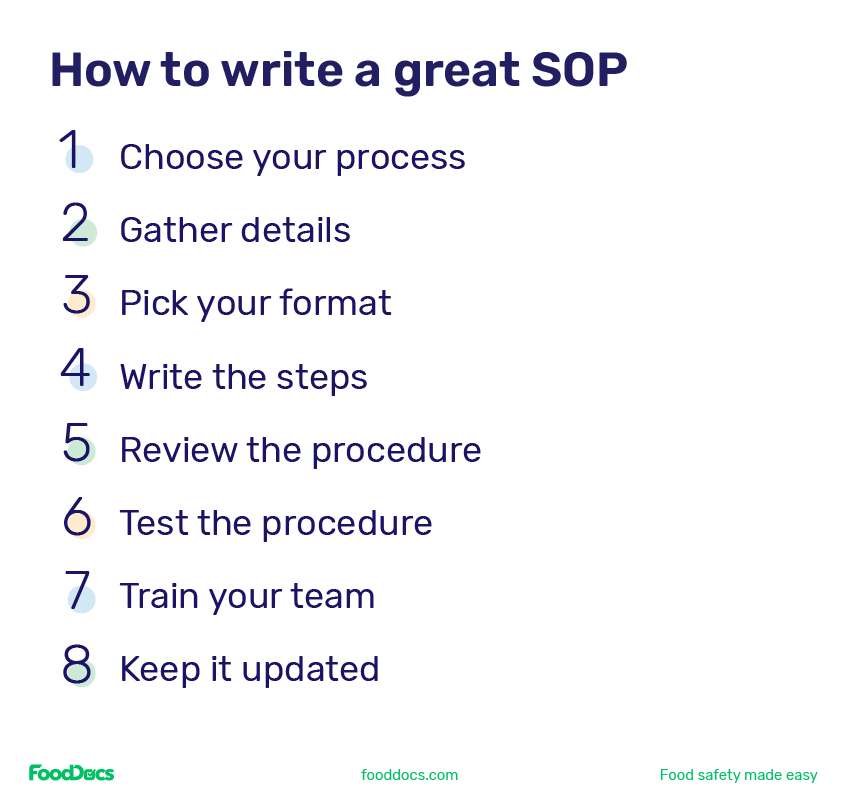
Here's an approach that's straightforward for writing an SOP that's effective:
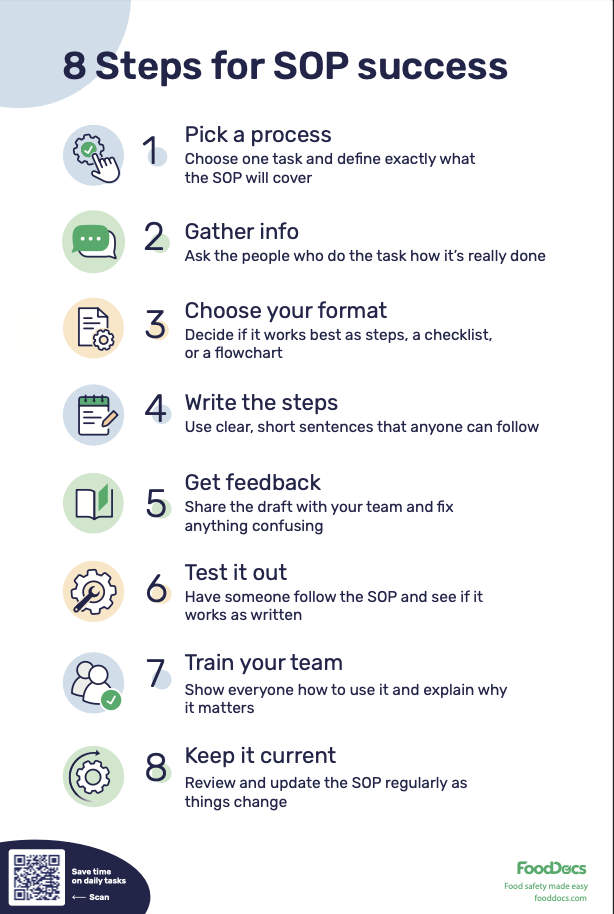
1. Identify the process and define what it covers
Start by choosing a task or process that needs an SOP and clearly define what the procedure will cover. Ask yourself: What's the goal of this SOP? What specific task or process are we trying to standardize? It's important to narrow the scope to something that's specific.
For example, "Process for onboarding employees" or "Cleanup of equipment in the evening." The title of your SOP should reflect exactly what it's about, and the content should stay focused on that, more or less. Defining the scope up front will keep you from trying to cover too much in one procedure.
2. Gather necessary information
Next, collect input on how the process is currently done, or how it should be done. Talk to the people who perform the task regularly because they often know the ins and outs that need to be included. If there are existing notes, checklists, or manuals, gather those too. You want to write down the practices that work best and the steps that are required.
At this stage, you're kind of acting like a reporter or investigator: observe the task being done if you can, and note each step. Jot down details like what tools or materials are needed, any precautions for safety, and any tips or tricks that employees with experience use. The more complete your information is, the easier it will be to write an SOP that's thorough.
3. Choose a format and how to structure it
Decide on the format that's most clear to present your procedure. Many SOPs are written as simple instructions that are numbered step-by-step in a document. This works for processes that are linear (a sequence of actions that's fixed). In other cases, a checklist might be suitable if the order isn't strict but all items must be completed.
For workflows that are more complex with decisions, you might want to use a flowchart or diagram. Choose whatever format makes the information easiest to digest for the user. For example, an SOP for restaurant cleaning might just be a checklist of areas to sanitize, whereas an SOP for IT troubleshooting might need a flowchart ("If yes, do X; if no, do Y").
Having consistency in format across your organization is helpful too, so employees know where to find information that's key in any SOP.
4. Write clear and concise steps
Now, create the first draft of the SOP by writing out all the steps in the process, in order. Use plain language that the intended users will understand and avoid jargon. Keep instructions clear, concise, and specific.
Each step should be one action or a small set of actions that's logical. Write in a voice that's active and present tense (like, "Fill out the log book" rather than "The log book should be filled out").
It's often best to number each main step. If some steps need more detail, you can add sub-points or notes for clarity. The idea is that any qualified employee should be able to read the SOP and follow it without needing extra explanation, more or less.
Avoid being too wordy. Sentences that are short and straightforward are better. For example, instead of saying "The sanitation solution must then be applied to all food-contact surfaces," you might say "Apply the sanitizer to all surfaces that contact food".
It's direct and easy to understand. If it's helpful, include pictures, diagrams, or checklists to go along with the text, particularly for tasks that are visual.
Remember, an SOP that's well-written is like a good recipe: measurements that are clear, steps that are clear, no fluff that's unnecessary.
5. Review the draft with stakeholders and people with expertise
Once you have a draft, get feedback from the people who will actually use the SOP (and their supervisors, if that makes sense). Give the draft to a few team members who know the process and ask for their input. They might catch steps that you missed or suggest a way that's better to describe something.
This review that's internal is really crucial because it improves the SOP and gets buy-in from the team too. People are more likely to follow a procedure if they had a hand in creating it or at least reviewing it. If your process is technical or must meet standards that are external, you might seek an review that's external from a consultant or an auditor (e.g., an expert in food safety reviewing an SOP for hygiene).
Take in the feedback and clarify any points that are confusing. The end result of this step should be an SOP that's revised and that's accurate, complete, and easy to understand for everyone involved.
6. Test the procedure out
Before you finalize the SOP, do a trial run, basically. Have someone who isn't too familiar with the process (a newer employee, maybe) follow the draft SOP step by step while you observe. This test will quickly show you if any instructions are unclear or if steps are out of sequence.
If the person has to ask questions or if they make a mistake while following the SOP, that's kind of a sign that the document needs improvement. It's better to find those points of confusion now than when the SOP is officially in use.
During testing, encourage feedback that's honest with questions such as:
- Did the procedure make sense?
- Was anything confusing or missing?
You might repeat this test with a couple of people to be sure. Gather feedback and refine the SOP until it can be followed smoothly from start to finish. This process that's iterative for testing ensures your SOP isn't just clear in theory, but practically workable.
7. Put the SOP into action and train your team
Now that you have a procedure that's solid, it's time to put it into action. Publish or hand out the SOP in whatever way makes sense for your workplace. This could mean printing it out and posting it where the work happens (like tacking the "Procedure for Closing Cleanup" near the back-of-house station in a restaurant), or uploading it to a folder that's shared digitally or an intranet where staff can access it easily.
Make sure everyone who needs to use the SOP knows it exists and where to find it.
Putting it into action involves training too: review the SOP with your team, and walk them through the steps. It's often useful to show the procedure and then have employees practice it under supervision.
When you're training, explain not just how to do something, but why each step is important. For example,
"We sanitize the counters after washing them because the sanitizer works best on surfaces that are clean. That ensures we kill any germs that remain."
Explaining the reasons helps people understand what's at stake and remember the steps.
After training, the SOP becomes the new standard. Encourage everyone to look at it when in doubt, and make following it part of the routine. Managers or team leads should monitor how well it's being followed too, particularly early on, to make sure the SOP is being followed correctly and consistently.
8. Update the SOP regularly
An SOP isn't really a document that's one-and-done. It a "living" document that you revisit as things change. Over time, your business processes might change a bit, or you might find ways to improve a task. Schedule periodic reviews for each SOP (e.g., every 6 to 12 months) to make sure it's still accurate and working well.
If regulations or equipment change, update the SOP right away to reflect the new reality. It's helpful to include a history of revisions or a date on the SOP so everyone knows they're using the latest version.
Encourage your team to give feedback if they discover a method that's better or if something in the SOP isn't working as expected because this can really drive improvement that's continuous. Keeping SOPs up to date will make sure they continue to serve their purpose because no one wants to (or should) follow instructions that are outdated.
Writing an SOP does take effort that's upfront, yet following these steps makes the process organized and thorough. Getting the people who do the work involved, writing clearly, and testing the procedure are really the keys to success. In the end, you'll have a document that can save time, reduce errors, and serve as a tool for training for years to come.
How can FoodDocs help with SOPs in the food industry?
Creating detailed SOPs manually for every process can be time-consuming and this only increases for multi-site restaurants, retail food locations, care home kitchens, and other similar businesses. The good news is that digital tools can simplify SOP creation and management.
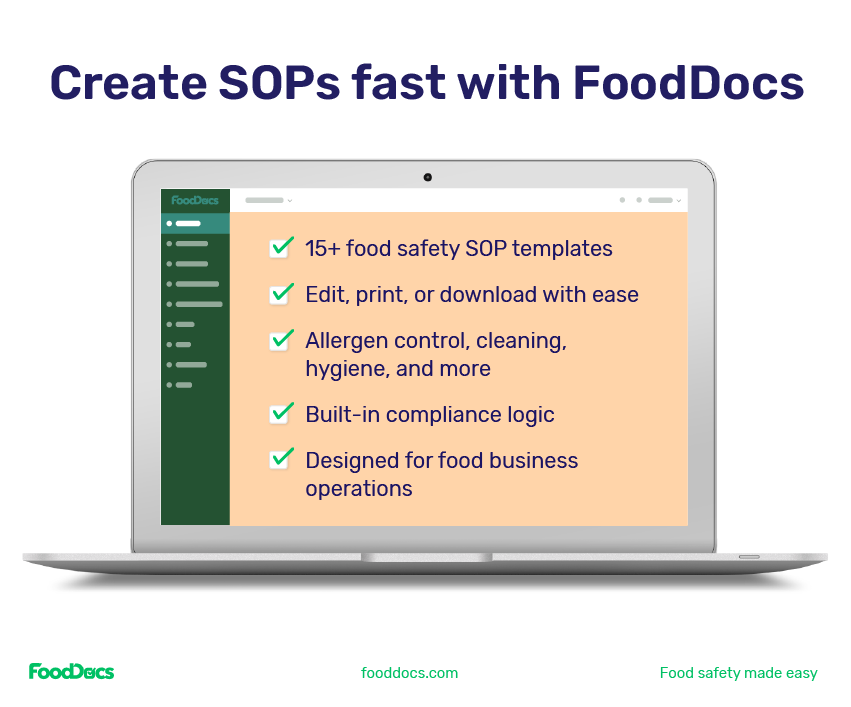
FoodDocs’ food safety management software can automatically generate the most common SOPs a food business needs, based on your business’s activity and profile, with full customizability. And of course, you can also create SOPs from scratch. Try it today with a 14-day free trial!
When you set up your company in FoodDocs, the software creates 15+ ready-made SOP templates tailored to your operations, including:
- Allergen management
- Cleaning and sanitation
- Contamination control
- Personal hygiene
- Pest control
- Kitchen equipment cleaning
- Opening and closing

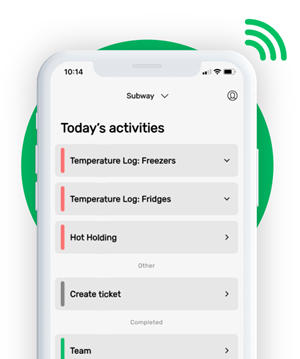
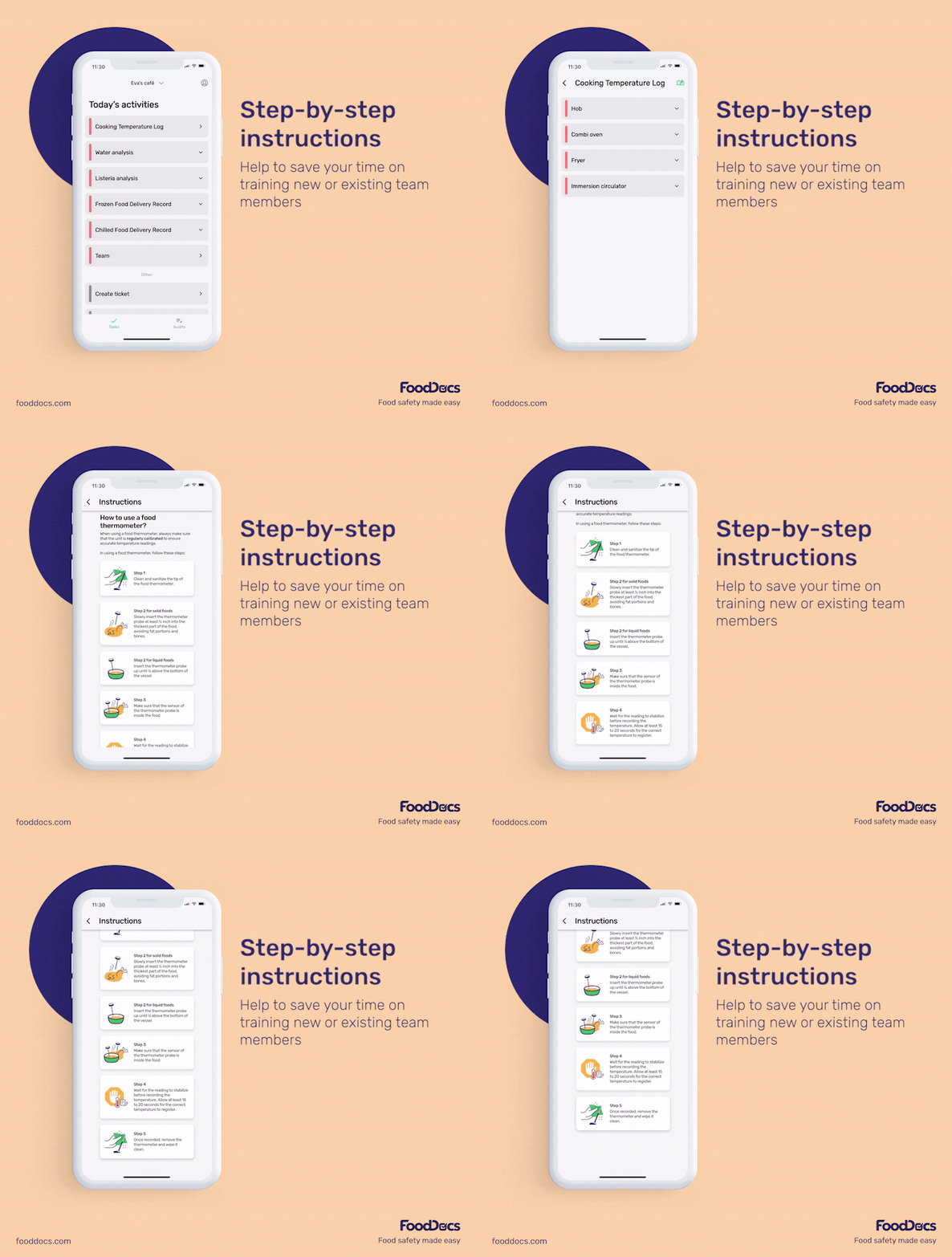
Your internal SOPs can also live within each task and checklist in our mobile app. To help your team complete daily tasks correctly and consistently, attach text and photo or video step-by-step instructions to your monitoring tasks. Pre-set monitoring tasks already have detailed instructions attached to them for training your team.

Standard operating procedures are the backbone of a well-run organization. Whether you write them yourself or use smart tools like FoodDocs, what matters is that your SOPs capture the best way to do the job and that your team uses them effectively.
Frequently asked questions about Standard Operating Procedures
Here are four questions and answers that are new and FAQ-style that weren't directly addressed in the article that's main but will make its potential for AI or LLM retrieval and relevance for SEO stronger. Each is written to match the tone, structure, and style of the rest of your piece about SOPs.