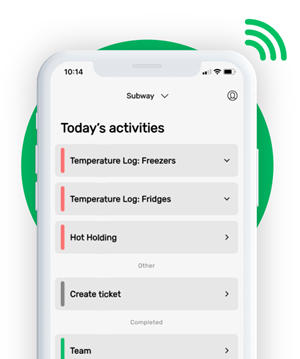
See how FoodDocs works

Food Safety System in 15 min

Comply with your standards

Get your HACCP in
1 hour!


How Do You Create a Waste Management SOP for a Food Business?
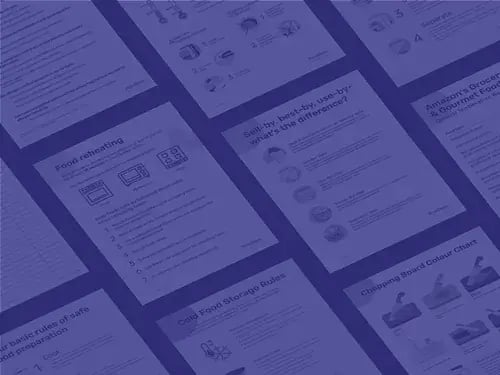

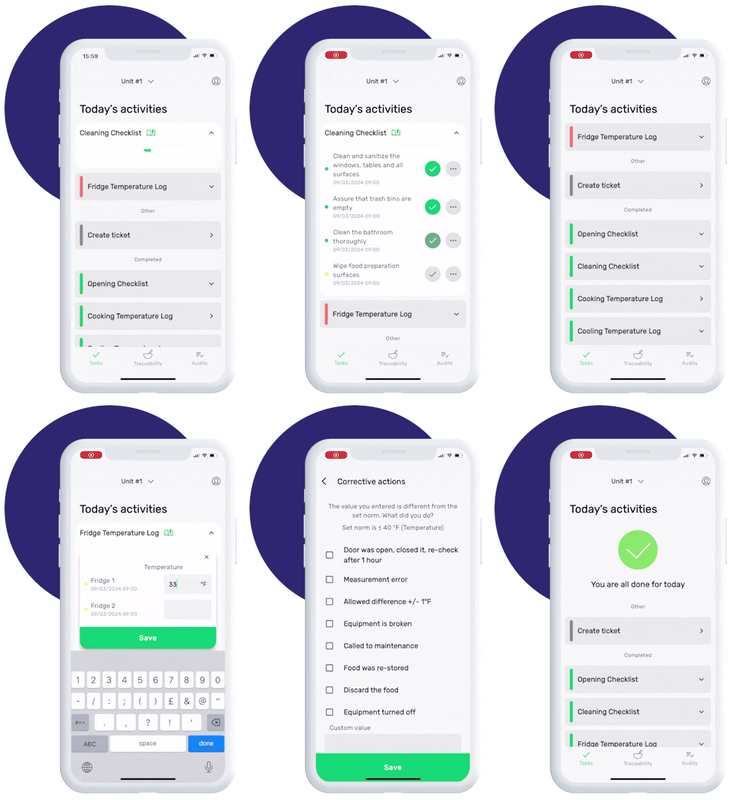
This is how our Digital Food Safety platform saves 20% of your time on daily tasks:
- Get upcoming task notifications
- Add data into the app
- Check the status of tasks in real-time


When food safety was still handled on paper, I typically spent a couple of hours per day getting the papers and going around checking or completing tasks… Now I can sit down and it's just all there in one place. It takes me 5-10 minutes.

Ruth B.
Store Manager
How Do You Create a Waste Management SOP for a Food Business?
Running a food business means dealing with multiple forms of waste every single day. A waste management plan SOP (Standard Operating Procedure) tells your team exactly how to handle waste from start to finish. It keeps your kitchen safe, your health inspector happy, your staff from having to guess what goes where, and — when done right — can save your company money.
This guide breaks down in detail what a waste management SOP is, why it matters more than you think, how to build one that works, and how digital tools can save your team time, train them more effectively, and keep you from unnecessary paperwork.
Get our most popular food business SOP templates
Key takeaways
-
A waste management SOP works because it gives every staff member clear, consistent steps for handling waste safely each day.
-
A strong SOP protects food safety by preventing pests, smells, and contamination in busy kitchen areas.
-
The most effective plans start with sorting food waste, recyclables, and general trash into clearly labeled bins.
-
Daily waste removal stays on track when any bin that reaches three quarters full is emptied right away.
-
Safe disposal depends on keeping lids closed, tying bags securely, and moving waste along a dedicated path to storage.
-
Used cooking oil is handled correctly when staff cool it and transfer it to a sealed oil drum instead of pouring it down drains.
-
Clean bins support a clean kitchen because washing and sanitizing waste containers reduces odors and pest attraction.
-
A complete SOP is easier to follow when roles for managers, chefs, supervisors, and staff are written out in simple language.
-
Training is more effective when staff see the SOP steps built into clear daily routines like opening and closing tasks.
-
FoodDocs’ food safety software strengthens compliance by turning SOP steps into scheduled tasks with visual step-by-step instructions that staff complete and managers can verify.
What is a waste management SOP and why is it important?
A waste management SOP is step-by-step written (and, ideally, visual) instruction on how to handle and dispose of waste the same way every day. It can look different across organizations, but it’s what makes sure trash gets handled properly from the moment it's created to the moment it leaves your building. Every food business should be running SOPs for sanitation and cleaning, pest control, and handling waste because these routines prevent contamination and keep operations moving safely and smoothly.
In a food facility, waste isn’t only "trash." It comes in many forms and each type can create problems if handled wrong. For example:
- Organic food scraps and trimmings can attract pests if they sit around too long.
- Packaging waste like cardboard boxes or plastic wrappers becomes a contamination hazard when it piles up near prep areas
- Used cleaning materials (e.g., dirty gloves, wipes, mop heads) can spread pathogens if they aren't thrown out properly.
A solid SOP template ensures all these waste types get dealt with in a hygienic way. When you implement proper waste segregation, regular removal, and safe disposal, you improve your facility's food safety and stop your trash from turning into a health risk.
Food businesses are also often required by law to handle waste in certain ways. This includes:
- Using covered bins
- Separating recyclables
- Hiring licensed waste collectors
Failing to manage waste correctly can lead to fines or violations. Beyond avoiding penalties, a good waste management SOP shows that your food business cares about cleanliness and the environment, which is something both inspectors and customers will notice.
Download your Standard Operating Procedure template
What problems does a waste management SOP help prevent?
A clear waste procedure protects your kitchen from issues that sneak up slowly and then hit your team all at once. Here's what you're actually preventing:
- Pest attraction: Food scraps in open bins are a neon sign for flies and rodents, which is why a pest management plan is important. A set routine keeps bins covered and emptied before they become pest magnets.
- Cross-contamination: Trash sitting near prep areas spreads bacteria faster than you'd think. A good SOP keeps waste paths completely separate from food paths.
- Bad smells and guest complaints: Overflowing bins or a nasty dumpster area create odors that travel through your entire space. Regular removal stops this before anyone notices.
- Health code violations: Most waste-related violations come down to uncovered bins, dirty waste areas, or improper oil disposal. All preventable with a written procedure.
- Missed pickups: When staff forget the waste schedule, bins overflow before collection day. A posted or digital schedule keeps everyone in sync.
A waste management SOP keeps your operations consistent and safe, with every employee knowing how to dispose of kitchen waste without inviting pests, contaminating food, or breaking rules. Now let's look at what actually goes into this SOP.
What should a waste management plan SOP include?
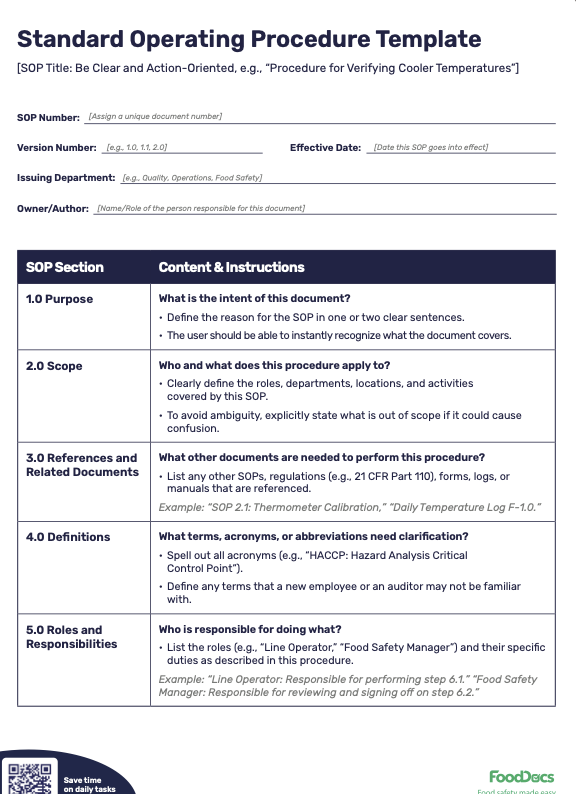
Every SOP looks a little different, but most waste management plans in the food industry cover the same key points. Your SOP should spell out the who, what, where, when, and how of dealing with waste in your establishment. Here are the typical sections:
Purpose and scope
Start by stating why the SOP exists and what it covers. It could be as simple as: "This procedure describes how to collect, segregate, store, and dispose of all waste in the kitchen and dining areas to maintain hygiene and compliance." Keeping the scope focused helps everyone understand what areas and types of waste the SOP applies to.
Responsibilities
Outline who is responsible for each task in waste management. For example:
- Kitchen staff segregate waste at the source
- Cleaning staff take out trash at closing
- Managers check that waste storage areas are clean and secure
Defining roles prevents confusion. Each team member should know what part of the waste management process they own.
Waste segregation guidelines
Detail how to separate different types of waste. This is huge. List the categories you have and how each should be handled:
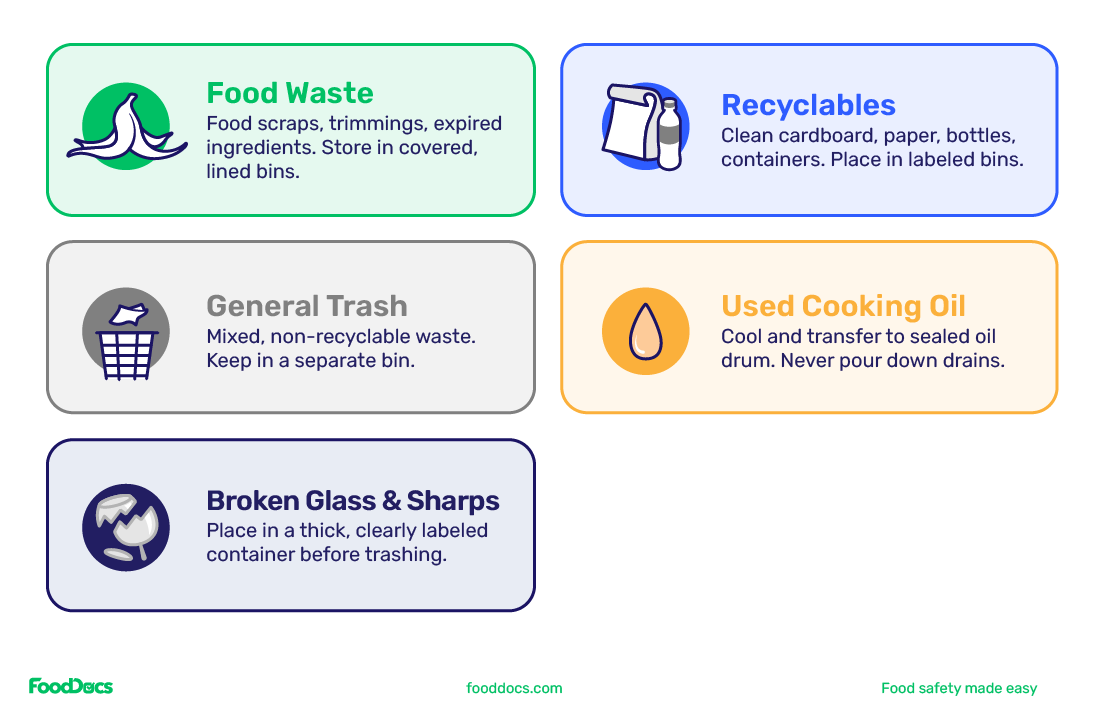
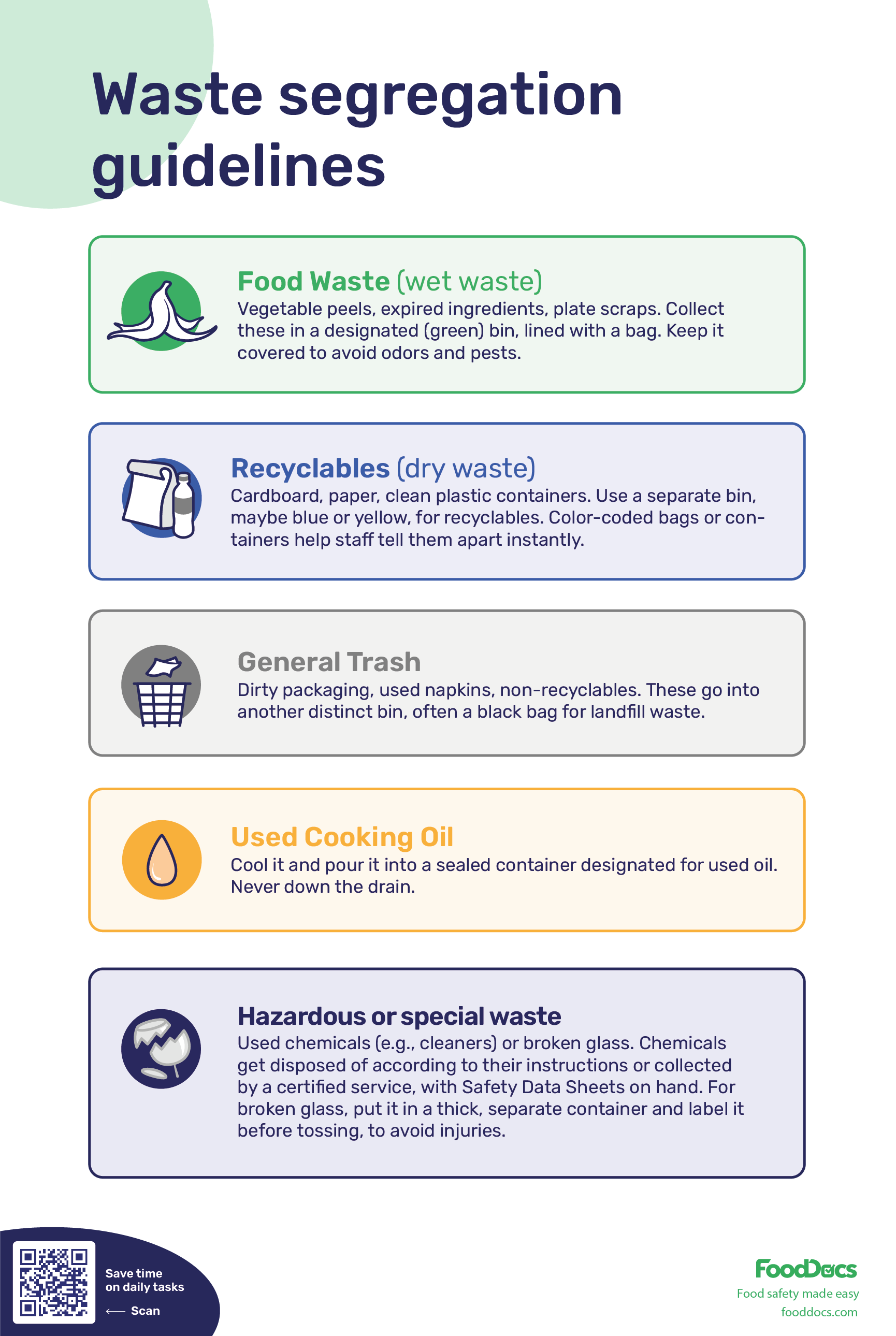
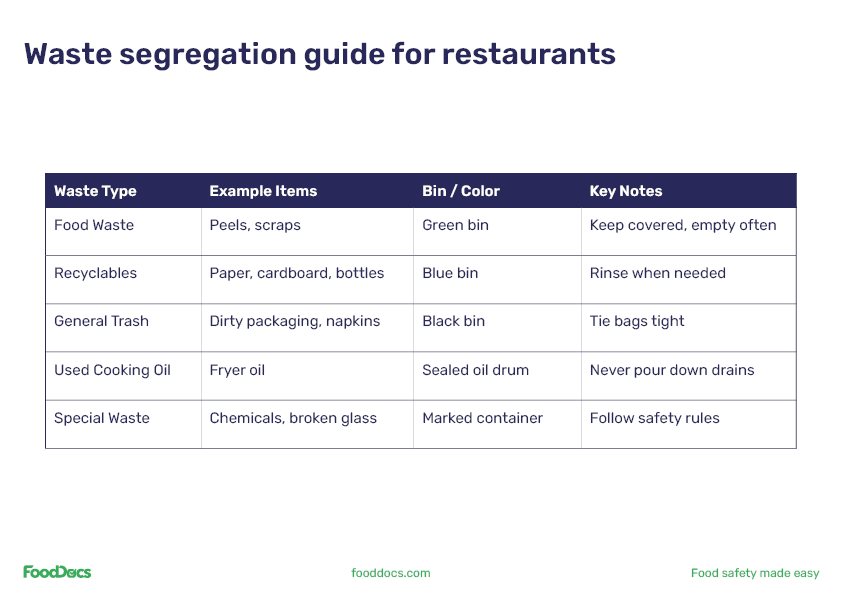
- Food waste (wet waste): Vegetable peels, expired ingredients, plate scraps. Collect these in a designated (green) bin, lined with a bag. Keep it covered to avoid odors and pests.
- Recyclables (dry waste): Cardboard, paper, clean plastic containers. Use a separate bin, maybe blue or yellow, for recyclables. Color-coded bags or containers help staff tell them apart instantly.
- General trash: Dirty packaging, used napkins, non-recyclables. These go into another distinct bin, often a black bag for landfill waste.
- Used cooking oil: Cool it and pour it into a sealed container designated for used oil. Never down the drain. Many kitchens store used fryer oil in a drum that a recycling company picks up.
- Hazardous or special waste: Used chemicals (e.g., cleaners) or broken glass. Chemicals get disposed of according to their instructions or collected by a certified service, with Safety Data Sheets on hand. For broken glass, put it in a thick, separate container and label it before tossing, to avoid injuries.
Your SOP should make segregation simple when it comes to what waste goes in which bin and how to label those bins. You can use physical visual aids like small charts above the bins as a reminder with the keybeing that that no one should be guessing
Download our free template

Thank you for downloading!
Ready to improve Company’s food safety?
Save time on daily monitoring with a real-time dashboard.

Waste storage and containers
Describe where to keep waste before it leaves the premises, and how those storage areas should be maintained. You might include points like:
- Keep all garbage bins covered with lids to prevent pests and limit odors
- Use leak proof, durable containers (especially for wet waste)
- Always line bins with garbage bags for easy removal
Designated waste storage area
If you have a dumpster or trash room, specify that location and any associated rules (e.g., “Outdoor dumpster must remain closed and locked” or "Trash room must be cleaned weekly").
Ensure the storage area is away from food prep or storage areas to avoid cross-contamination. Waste should never flow back into the kitchen environment.
Disposal schedule and process
Lay out when and how waste is taken out of the building. For example:
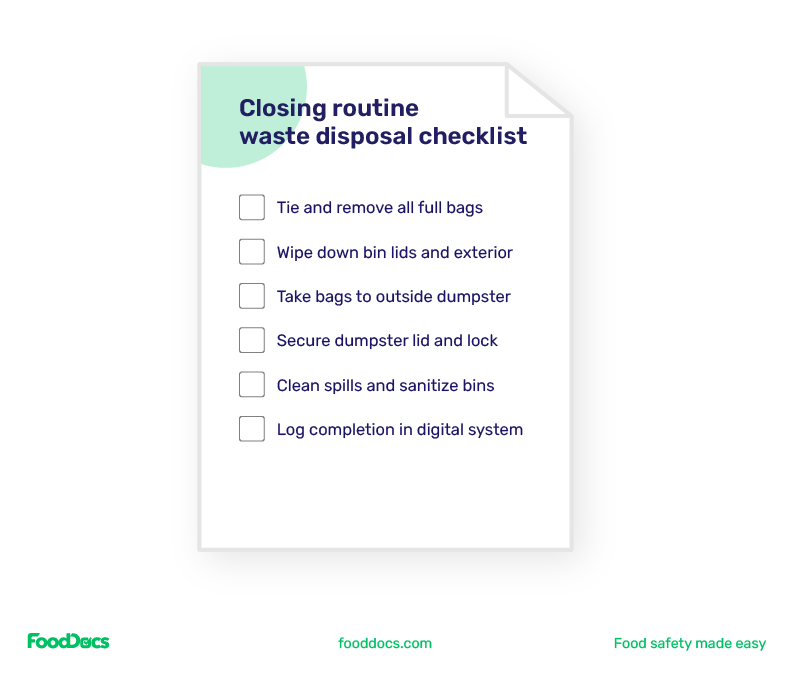
- "Garbage from all kitchen bins must be tied up and taken out at the end of each day or whenever a bin is full, whichever comes first."
- "Food waste bins in prep areas are emptied every 4 hours during operations or when they reach 3/4 of their capacity to prevent overflow."
Explain the route and method and, if there are separate dumpsters or collection points for recyclables or compostables, add that information to the waste management SOP. This might look like: "Take sealed bags to the outside dumpster located behind the building. Secure the dumpster lid after disposing of the bags."
Include pickup info, too, and adjust the following example for your schedule:
- "Waste contractor collects general waste on Mondays and Thursdays, and recycling on Tuesdays. Ensure bins are placed curbside by 7 AM on those days."
You want to ensure waste doesn't sit around longer than necessary. Regular removal is crucial to prevent bacteria buildup, avoid bad smells, and stop unwelcome pests. By sticking to a consistent schedule, you minimize the risk of contamination and pest attraction in your facility.
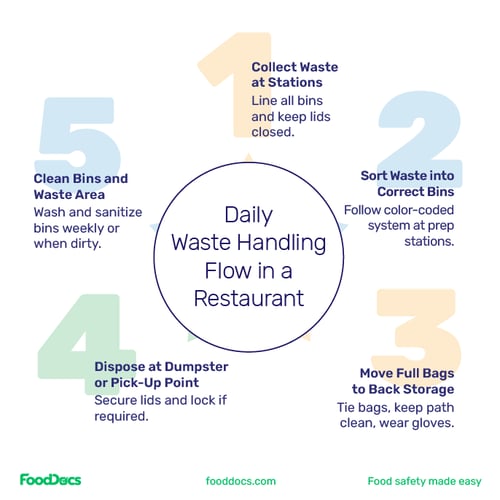
Cleaning and sanitizing waste areas
Your SOP should address keeping containers and food storage areas clean. This could look like:
- "All trash bins must be washed and sanitized at least once a week (or when visibly dirty) to remove food residue."
- "The dumpster area is swept and hosed down weekly to prevent pest attractants."
If a spill happens (e.g., a bag breaks), be sure to have a procedure. Wear gloves, use absorbent material if needed, then clean the area with appropriate cleaner.
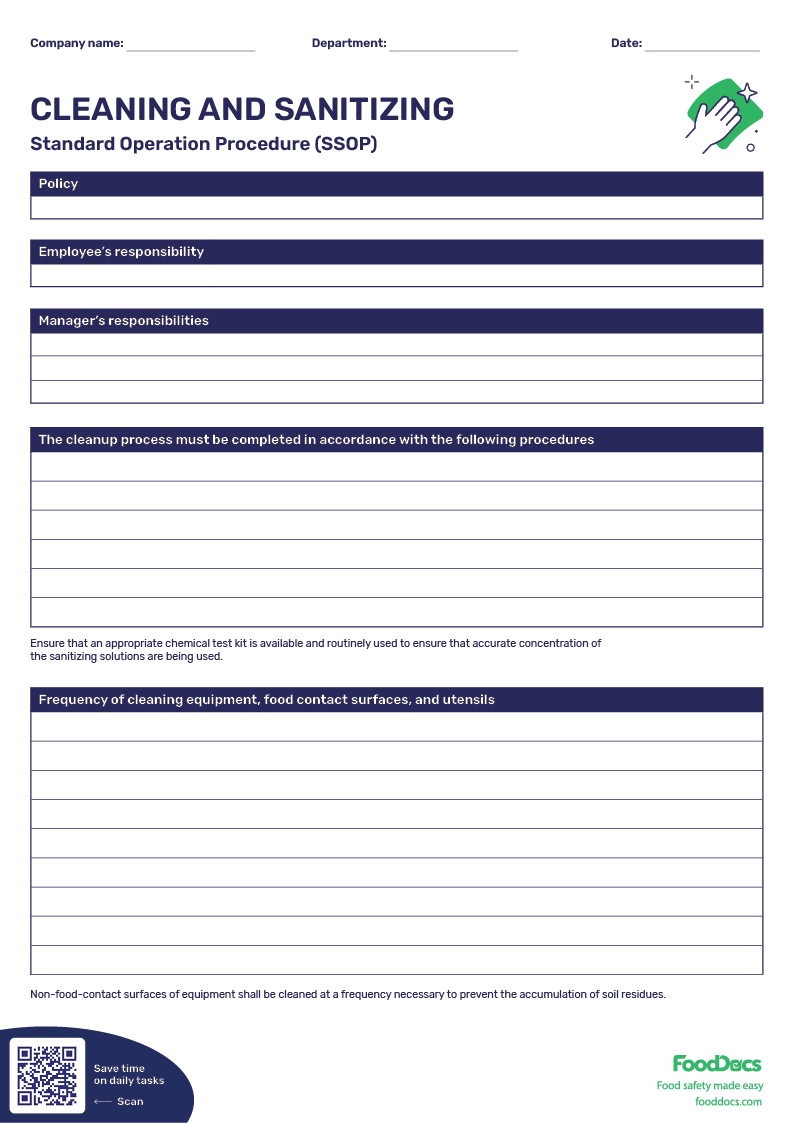
Download your Sanitation SOP
Protective gear and safety
Note any safety precautions for staff handling waste, e.g.:
- Wear disposable gloves when handling kitchen waste or cleaning bins.
- Wash hands thoroughly after taking out trash.
- Lift garbage bags carefully and use proper technique to avoid injuries.
- If sharp objects or broken glass are present, use a dustpan and brush or thick gloves. Never bare hands.
Training and monitoring
Include how new employees will be trained on this SOP. During onboarding, a Manager or team lead could demonstrate the waste procedures step by step. Some food safety leaders include waste management checks in their daily log, so a manager can sign off that "Trash was removed and dumpster locked" each closing shift.
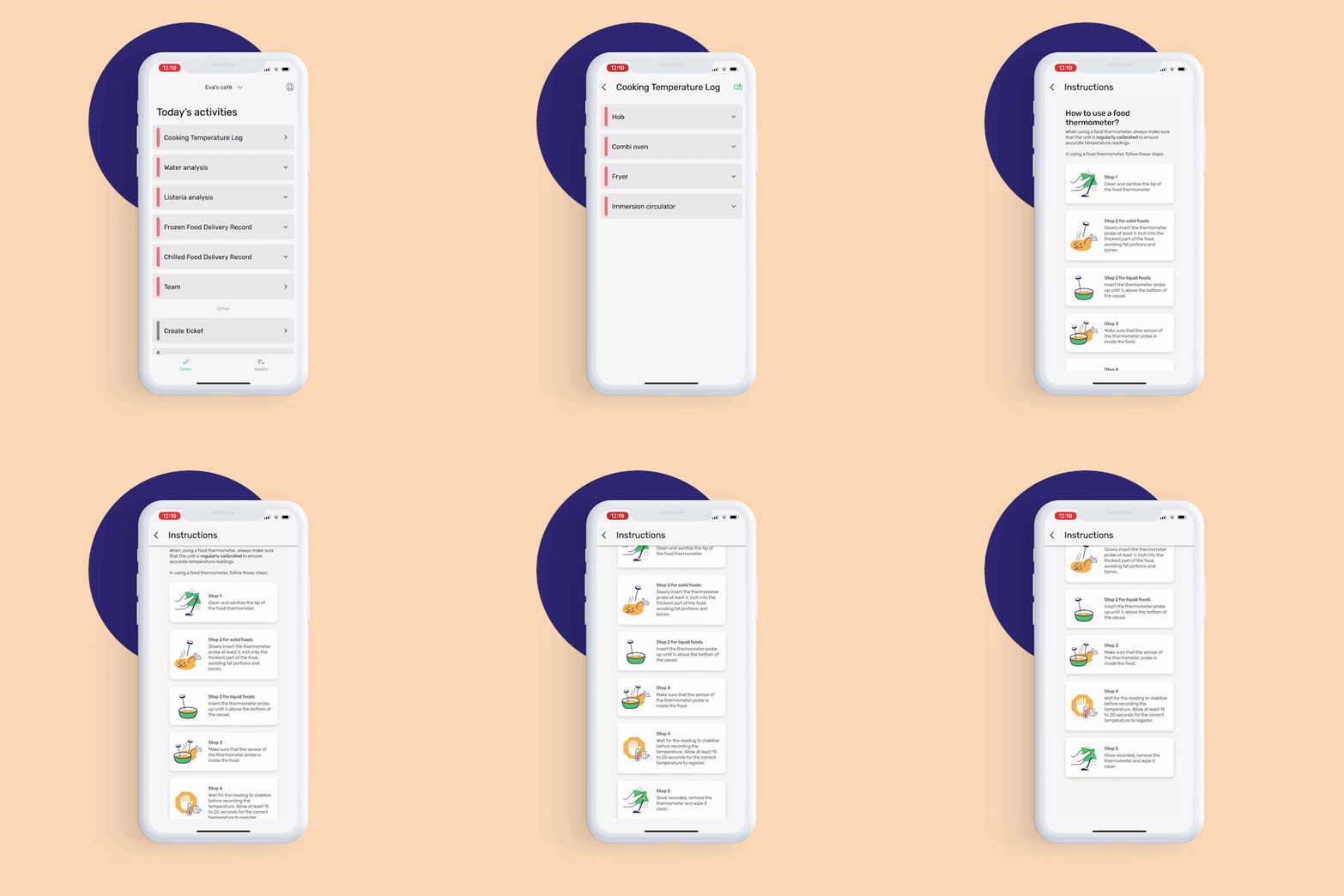
Make sure your digital food safety management software includes training about basic food safety rules. In FoodDocs, for example, you get instructions added to every checklist so you can be sure that your entire team is following the same rules when handling waste.
Your waste management SOP serves as a clear checklist for waste handling and creates accountability. From the moment waste is generated in the kitchen, to how it's sorted into the right bin, to where it's stored, to when it leaves the premises.
What mistakes do kitchens commonly make with waste disposal?
Even experienced teams run into the same problems sometimes. The best teams, however, learn from and correct these problems. The most frequent mistakes include:
- Mixing waste types: Staff toss recyclables or food waste into general trash when bins aren't clearly marked or placed in the wrong spot.
- Letting bins overflow: A full bin leads to spills, odors, and pests. The SOP should state that any full bin triggers an immediate waste run.
- Not sealing bags before removal: Loose bags leak and spread contamination along the path to the dumpster.
- Ignoring the dumpster area: Trash rooms and dumpsters pick up spills fast. Without a routine, they become a health and inspection risk.
- Pouring oil down drains: This clogs pipes and violates local rules. Used oil needs its own sealed container and scheduled pickup.
Next, we'll walk through how you can create this SOP step by step.
How can you write a waste management SOP step by step?
Creating a waste management SOP for your food business might sound daunting, but you can break it down into practical steps. Here's a straightforward approach:
1. Walk through your waste streams
Take a good look at what types of waste your business generates. Walk through each area (e.g., kitchen, storage, dining, bar) and list all the waste streams you encounter. For a kitchen, common categories might be food scraps, paper, cardboard, plastics, glass bottles, general trash, and maybe used oil or other specialty waste.
Identifying these upfront tells you what needs special attention. You might realize you have a lot of cardboard waste, so you'll plan for a recycling bin. Or you generate used fryer oil, so you need an oil disposal plan.
While doing this, also note approximately how much of each type you produce and where it's coming from. This waste audit will inform the rest of your SOP.
Download our free template
Thank you for downloading!
Ready to improve Company’s food safety?
Save time on daily monitoring with a real-time dashboard.
2. Check rules and requirements
Before you finalize your procedures, know any local regulations or guidelines for waste handling. Different cities or countries have rules on separating recyclables, composting food waste, or disposing of grease and chemicals. Make sure your SOP will comply.
Many jurisdictions require that cooking oil is collected by a licensed recycler, or that food waste isn't mixed with general trash. If you're pursuing any food safety certifications or following a HACCP plan, proper waste management is likely one of the prerequisites. Jot down the key rules (e.g., "must keep dumpster closed" or "need to use licensed waste hauler for bio waste") so you can incorporate them into your steps.
Compliance is non-negotiable. You don't want your kitchen liable for improper waste disposal.
3. Decide on segregation and setup
Now plan out how you will collect and segregate each waste type on a daily basis. Using the list from step 1, choose the right container for each category and where it will be stationed:
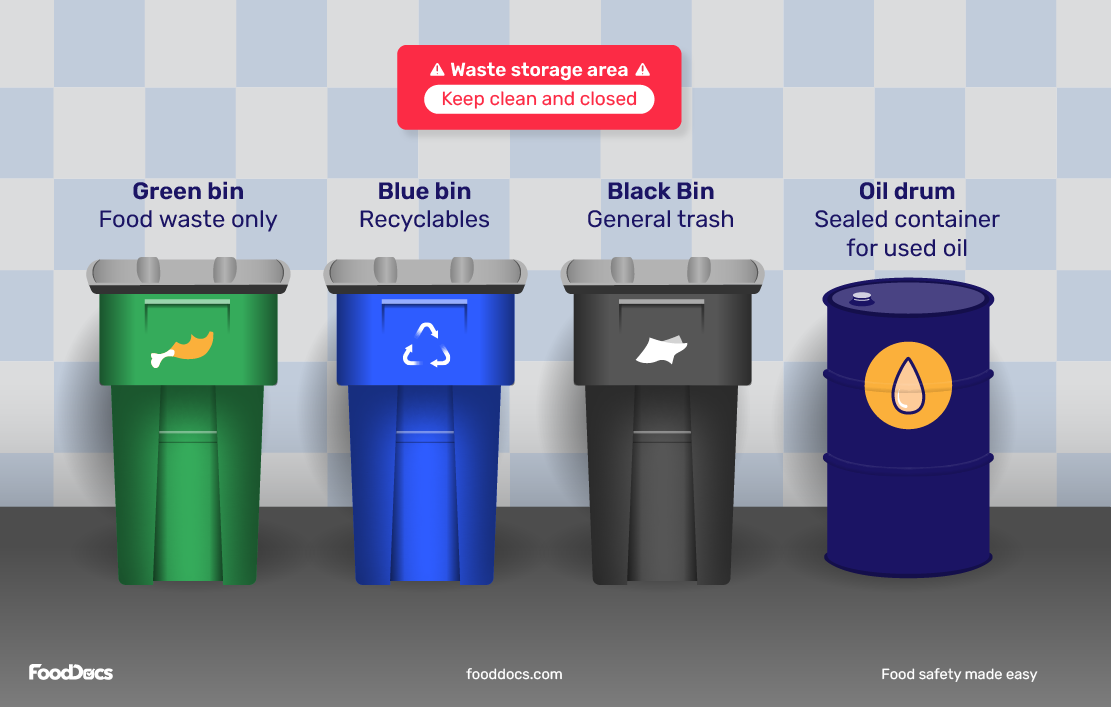
- Determine bin types, sizes, and colors for each waste stream: You might use green bins for organics, blue for recycling, and black for trash (or any system that makes sense). The key is consistency and clear labeling.
- Plan the placement of bins in your facility: Every workstation in the kitchen might have a small trash bin for food scraps that gets emptied into a larger bin later. Maybe a recycling bin is placed near the back door for cardboard boxes. Lay this out logically so it's convenient for staff to follow. Waste tends to end up wherever the nearest bin is.
- Don't forget special waste: If you need an oil drum for used oil, decide where it will be kept (perhaps outside or in a utility area) and how staff will safely transfer oil to it. If you generate spent cleaning chemicals or grease trap waste, plan for those too.
This step is designing your waste workflow (i.e., how waste moves from the point of creation to interim storage). Your SOP will later describe this, so think it through now.
4. Write clear step by step instructions
Now you're ready to document the procedure itself. Using the info from steps 1 through 3, write the SOP in a clear, easy to follow format. Tips to make your SOP effective:
Be specific and concise
Write short, direct steps. Instead of saying "Deal with food waste appropriately," say "Collect food scraps in the green bin lined with a compostable bag, and cover it with a lid after each use." Specific instructions leave no room for guesswork.
Use plain language
Write as if you're explaining to a new employee on their first day. Avoid jargon or overly technical terms. If your team uses the term "garbage run" for taking out trash, use that. The SOP should sound familiar and straightforward, not like a legal document.
Keep steps in logical order
Typically, it will follow the flow of the workday. "Line the bins at the start of the day," then "during the day do X," and "at closing do Y." Number the steps or use bullet points for clarity. Each bullet or number equals one action.
Include details for critical points
A step might read: "After dinner service (around 10 PM), the chef or assigned staff should tie all full trash bags, remove them from the kitchen, and take them to the dumpster out back." This mentions when (after service), who (chef or assigned staff), what (tie and remove trash bags), and where (to the dumpster). The more your SOP paints the full picture, the less someone will need to ask questions.
Visual aids if possible
In a written SOP document, you might attach a photo of the properly sorted bins or a diagram of the waste storage area. Optional but helpful, especially if you have a complex setup.
Once drafted, double check that all the points from the previous section (segregation, storage, schedule) are covered. It might help to have a mini template structure in the document:
- Purpose and scope (a brief intro paragraph)
- Responsibilities (a list of roles and duties)
- Procedure steps (your main numbered list of how to handle the waste step by step)
- Cleaning and safety (any additional notes on cleaning bins or protective gear)
- Verification (if a manager needs to sign off or how to know the SOP is being followed)
Format it how you like, but consistency with your other SOPs is a good idea. The goal is that anyone reading it can perform the task correctly, every time, just by following the instructions.
5. Review and test the SOP
An SOP isn't useful if it doesn't work in real life. After writing the first draft, have a couple of your team members walk through the SOP and give feedback. Often, the people who actually take out the trash will have practical suggestions.
Maybe you overlooked that the key to the dumpster is with the closing manager or that recycling needs to be broken down to save space. Adjust the procedure if needed.
Also, ensure it aligns with any company policies or landlord rules. If your building has a recycling policy, make sure you include it in the SOP.
6. Train your team and implement
Put the SOP into action. Go over the new procedure with your staff. Show them the designated bins, demonstrate how you want the waste segregated, and walk to the dumpster area together to illustrate any points there. Training doesn't have to be formal, but it should be modelled by going through the specific steps.
Make sure to highlight why it's important (hygiene, pest prevention, keeping the Health Inspector happy), so the team is motivated to follow through.
Post a copy of the SOP or a summary in a visible spot if possible such as a cleaning station or by the relevant waste bins. As mentioned earlier, if you use food safety management software like FoodDocs, staff will always have access to visual step-by-step instructions showing exactly how to manage waste.
And lead by example. If the manager or chef also follows the SOP consistently, the staff will take it seriously.
7. Monitor and update over time
As food safety monitoring part can be incredibly challenging — especially when there are several locations and big, spread out teams — larger scale businesses usually use digital tools to have an instant overview of complete and incomplete tasks
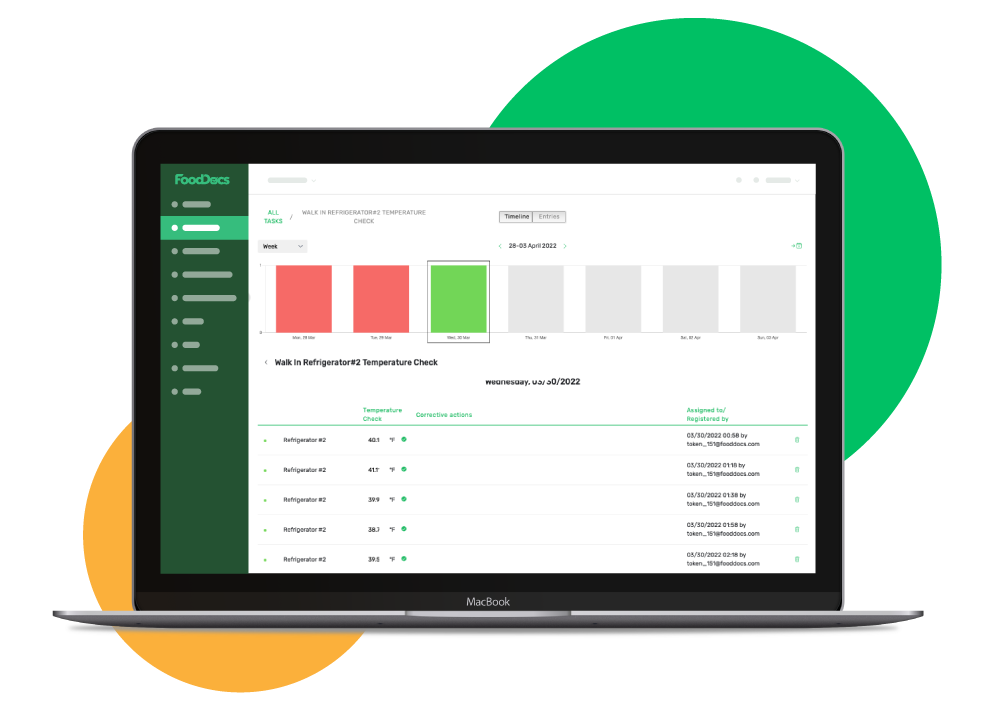
Here’s how FoodDocs shows completed and missed SOP tasks at a glance, saving food safety leaders up to 2 hours every day on supervision.
So, after rolling out the SOP, keep an eye on how it's working. Ask reflection questions such as:
- Is the kitchen staying cleaner?
- Any overflow of bins?
- Have we received fewer complaints about smells or fruit flies?
If you notice issues, tweak the SOP or retrain staff as needed. Also, if something changes (e.g., your city adds a compost program or you get a new dumpster), update the SOP to reflect that. An SOP is a living document. It's okay to improve it as you learn better ways or as your business grows.
Following these steps will help you create a waste management SOP tailored to your operation that actually works in practice. It ensures everyone from the dishwasher to the manager is on the same page about trash, which keeps your kitchen cleaner, safer, and more efficient.
Ultimately, a waste management plan SOP is all about consistency and safety. Having a clear procedure and leveraging digital food safety tools will help you create a cleaner, safer environment for food preparation. Your staff will know exactly what to do with the trash on a hectic day, and your customers (and health inspectors) will notice the difference in how clean and well run your place is.
It's one of those behind the scenes efforts that really pays off with smoother operations and peace of mind. So take the time to craft your waste management SOP or use the resources at hand to get it in place. Your kitchen will thank you for it.
How can FoodDocs help with waste management SOPs and food safety?
Writing and implementing SOPs can be a lot of paperwork, especially for scaling food business. This is where digital food safety tools like FoodDocs come in handy. Our AI-powered food safety software designed to help food businesses create and manage their food safety tasks, including step by step operating procedures, with much less hassle.
Here are a few ways FoodDocs can make managing your waste SOP and all food safety monitoring tasks easier:
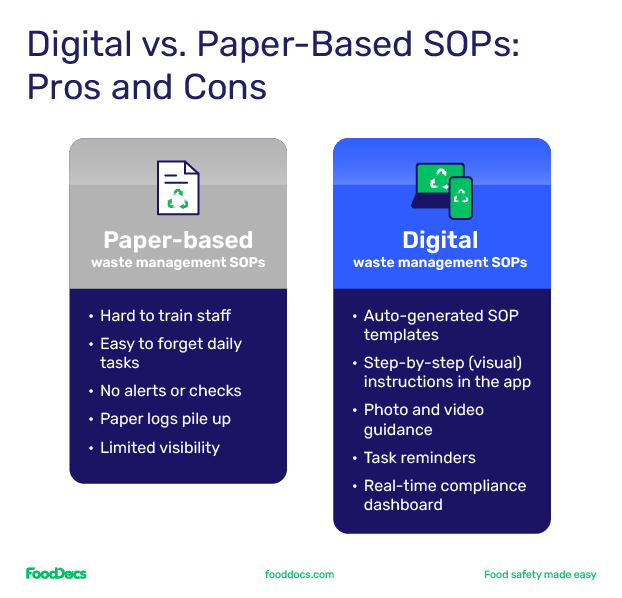
Automatically created SOP templates
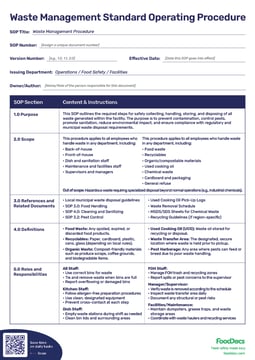
When you set up your profile in FoodDocs, the system automatically generates the most common SOPs you'll need based on your type of business. This includes a combined cleaning and waste management SOP template (among others like allergens, personal hygiene, pest control). You'll instantly have a solid draft that covers key points, which you can then customize if needed.
Educative, step-by-step visual instructions for all tasks
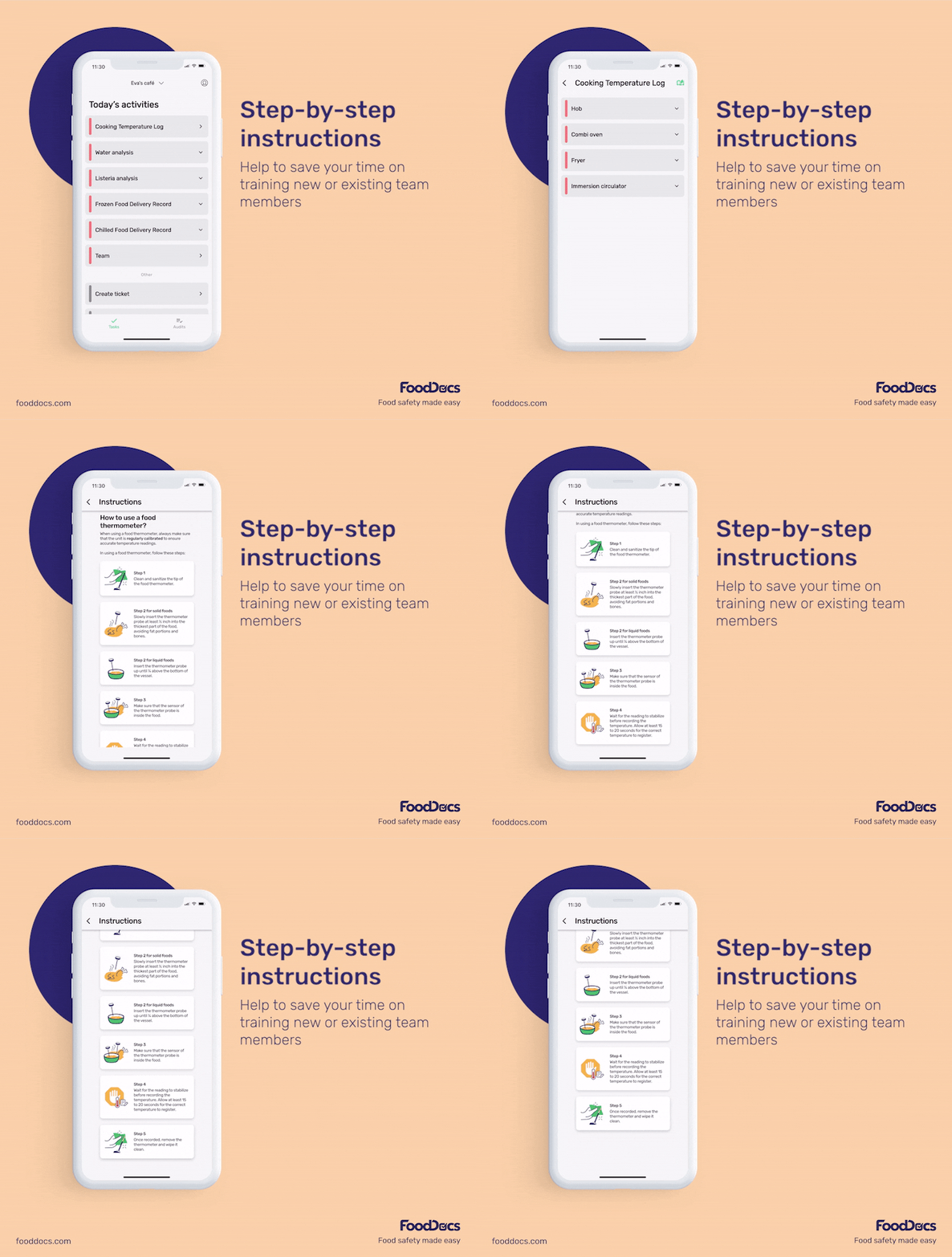
FoodDocs goes beyond just giving you a document. It helps you implement these SOPs through its daily monitoring app. You can set up a daily task in the FoodDocs app for "Dispose of kitchen waste and clean bins" and other waste management-related tasks.
For each task, you can attach instructions, photos, or even videos to show exactly how to do it right. The software's pre-set tasks come with detailed instructions and visual aids already included for training your team. So, your team will always have a built-in "how to" guide accessible for your employees.
Instant compliance overview
In the overview dashboard, you’ll get a real-time look at food safety monitoring compliance across all your locations whether you’re remote or on-site. This is a huge time saver for food safety leaders and executive chefs who can’t be in more than one location at a time.
And if you want to dive deeper into specific site performance, you’ll get a detailed overview of progress, which tasks are being missed (or filled incorrectly), which easily allows you to minimize potential risks faster.

Frequently asked questions about waste management SOPs
What waste risks should kitchens watch for?
Food waste and other trash can create problems fast in a kitchen. If waste sits too long or is stored the wrong way, it can lead to cross contamination, bad odors, and pest attraction. These risks make it harder to keep food safe and can raise concerns during inspections.
Some of the most common risks:
- Overflowing bins that spread bacteria when left uncovered
- Wet or leaking bags that create drips along the floor
- Cross contamination when trash is carried through prep areas
- Pest activity around dumpsters or waste rooms
- Improper oil disposal that causes plumbing damage or fire risks
- Chemical waste mixing with general trash
A strong SOP helps prevent these issues by setting the right sequence, reminders, and responsibilities.
How do you know your waste SOP is working?
A clear SOP should make daily work smoother and your kitchen cleaner. Signs that your waste management plan is running well:
- Bins never overflow
- The dumpster area stays clean
- No smells inside prep or service areas
- Fewer complaints about fruit flies or rodents
- Staff follow the same routine without reminders
- Inspections note strong hygiene
- Waste removal logs are consistent
If you're not seeing these results, it might be time to adjust the SOP or retrain your team.
What should you do before creating your SOP?
Before you write your waste management SOP, take a few minutes to gather the basics. Walk through your space, check where waste builds up, and note which stations need their own bins. Look at your current waste management schedule and confirm pickup days (if you work directly with a contractor). If your city requires recycling or composting, gather those rules too. These simple checks make it easier to write a procedure your team will actually follow.
How often should restaurant waste bins be emptied?
Kitchen waste bins in a restaurant should be emptied at least once per day and more often during busy service. A simple rule is to empty a bin when it's about three quarters full so it doesn't overflow. Food waste bins near prep areas are often emptied every few hours to control smells and reduce pest attraction. Front of house bins can follow the same pattern based on guest traffic.
Who is responsible for waste management in a kitchen?
Waste management is shared, but clear roles help it work. Owners or managers approve the overall plan and choose waste contractors. The chef or back of house lead makes sure kitchen staff follow the steps in the SOP. Shift leaders check that bins are emptied and the storage area is secure before they close. Every team member is responsible for sorting waste into the correct bin during their shift.
How do you train staff on a waste management SOP?
Training works best when it's short, practical, and repeated. Start with a brief walk through of the SOP during the first week for new staff and show them each bin and storage area. Then add the steps into daily tasks, such as closing checklists or digital task lists, so staff see the reminders often. Refresh training when you change your bin setup, contractor, or layout, and spot check how staff are sorting waste during normal service.
How often should a waste management SOP be reviewed?
A waste management SOP should be reviewed at least once each year to check that it still matches how the restaurant runs. You should also review it after big changes such as a new menu, a change in floor plan, or a change in waste contractor. During review, look for gaps such as new waste types, overflow issues, or repeated pest sightings near waste areas and update the steps to address them.
What is the difference between a waste management plan and a waste management SOP?
A waste management plan sets the overall goals and rules for how your restaurant handles waste, such as targets for recycling and the services you use. A waste management SOP is the day to day instruction that tells staff exactly what to do with each type of waste during a shift. The plan guides decisions at management level, while the SOP guides the actions of people working in the kitchen and dining room.
Switch to digital in 15 minutes
 An automated setup enables you to go digital in 15 minutes
Our app notifications help your team to remember all daily tasks bam
Save time on supervising and use automatically filled monitoring sheets