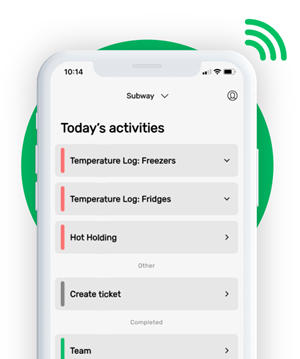
See how FoodDocs works

Food Safety System in 15 min

Comply with your standards

Get your HACCP in
1 hour!


What Is a Pest Control SOP for Restaurants & How to Create One

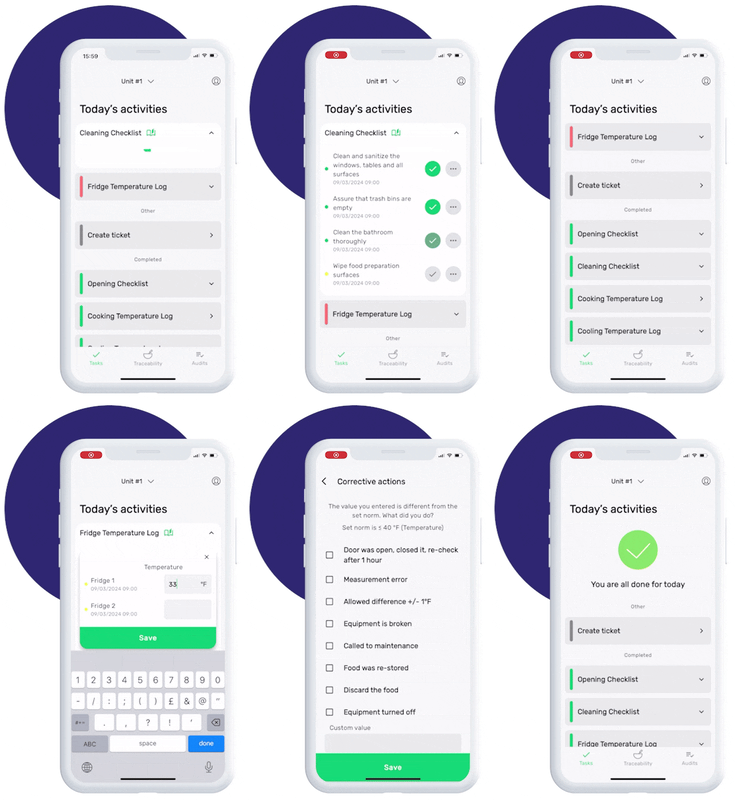
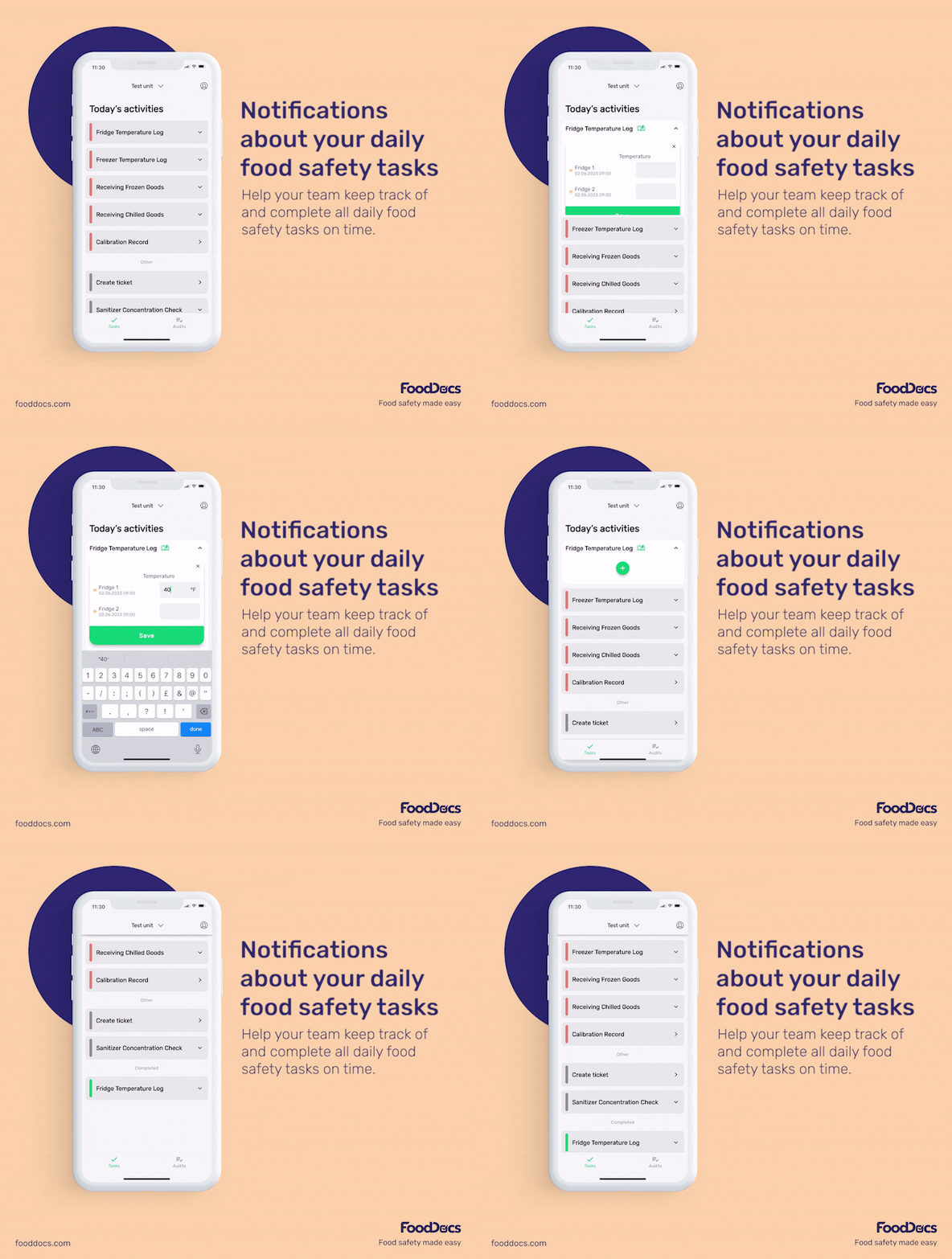
This is how our Digital Food Safety platform saves 20% of your time on daily tasks:
- Get upcoming task notifications
- Add data into the app
- Check the status of tasks in real-time


When food safety was still handled on paper, I typically spent a couple of hours per day getting the papers and going around checking or completing tasks… Now I can sit down and it's just all there in one place. It takes me 5-10 minutes.

Ruth B.
Store Manager
How to Master Standard Operating Procedures in the Food Industry
A pest control SOP (Standard Operating Procedure) is a written plan that explains exactly how to keep pests away from your food business. As a Food Safety Leader, or Executive Chef, this means laying out every single step your team needs to take when dealing with rodents, bugs, birds, or whatever other critter that might be attracted to a kitchen.
When operating a restaurant kitchen, your pest-free playbook should cover:
- Prevention (keeping them out)
- Monitoring (checking if they're sneaking in)
- Emergency (what to do when you actually find something).
The whole point? Protect your food, protect your customers, and protect that reputation you and your team have worked so hard to build.
Get our most popular restaurant management resources
Key takeaways
-
A pest control SOP is your written blueprint for how the food business handles anything pest related, from prevention to corrective action and response.
-
You're protecting primarily against rodents, flies, cockroaches, ants, and birds, which are the most common pests in establishments.
-
It's much easier to prevent than to fix, so be sure to seal up entry points, clean daily, and handle waste properly.
-
You need actual tools like traps, screens, and a solid monitoring schedule to help empower staff to catch problems before they get out of control.
-
Everyone needs to know their role and how to execute it because when it's clear who does what, supervisors and Executive Chefs can manage pest control more easily and efficiently.
-
Daily and weekly checks are non-negotiable in order to achieve and maintain a safe, pest-free, and compliant kitchen.
-
Document your pest management plan and every pest control log the team fills. Good pest logs help Food Safety Leaders to identify patterns, communicate issues to their teams, and satisfy health inspectors during audits.
-
When you find pests, act fast and be specific by isolating the food, cleaning the area, and telling your manager.
-
Food safety software like FoodDocs makes pest control logs and cleaning checks fast and easy. You can attach step-by-step visual instructions to each pest-related task to train people faster and store paper-free records.
-
Every food business needs to implement a pest control SOP not only for compliance, but for guests’ experience and the high safety standards of your brand.
Why is pest control important in restaurants?
Pest control is important because pests can ruin your business but, more importantly, it helps maintain sanitary facilities, keep food safe, and protect your guests. Pests carry germs and disease and a single mouse or cockroach, for example, can spread bacteria all over your cooking surfaces and throughout ingredients.
This includes Salmonella, E. coli, and more that can give people one of the big 6 foodborne illnesses. And it's not just the germs but the physical contamination, too.
But what likely keeps FOH and BOH leaders up at night is the potential for your reputation to disappear in an instant. One customer spots a cockroach scurrying across the floor during dinner? That could be an instant one star review, with a photo and the potential to get shared online. The reality is, people don't easily forget that stuff.
Health inspectors take this seriously, too, because if they find evidence of pests during a restaurant health inspection, you can get cited for a health code violation or worse. In fact, September 2025 saw the L.A. County Department of Public Health temporarily shut down dozens of restaurants due to “vermin”.
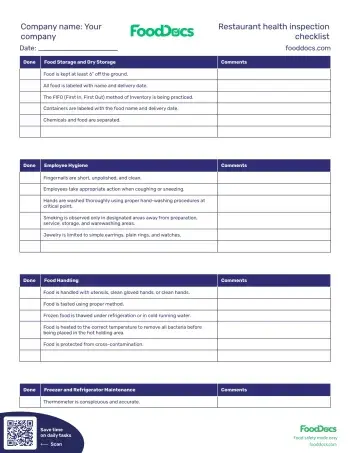
Download your Restaurant Health Inspection Checklist
There's also the legal side that staff should be more aware of. Food safety laws and regulations actually require you to have a pest control plan. It's not optional. HACCP-based systems, local health codes, licensing requirements mandate some form of pest management program.
On the flip side, when food safety leaders implement and manage pest control correctly, you're showing that your establishment is clean, safe, and professionally run.
What should a pest control SOP include?
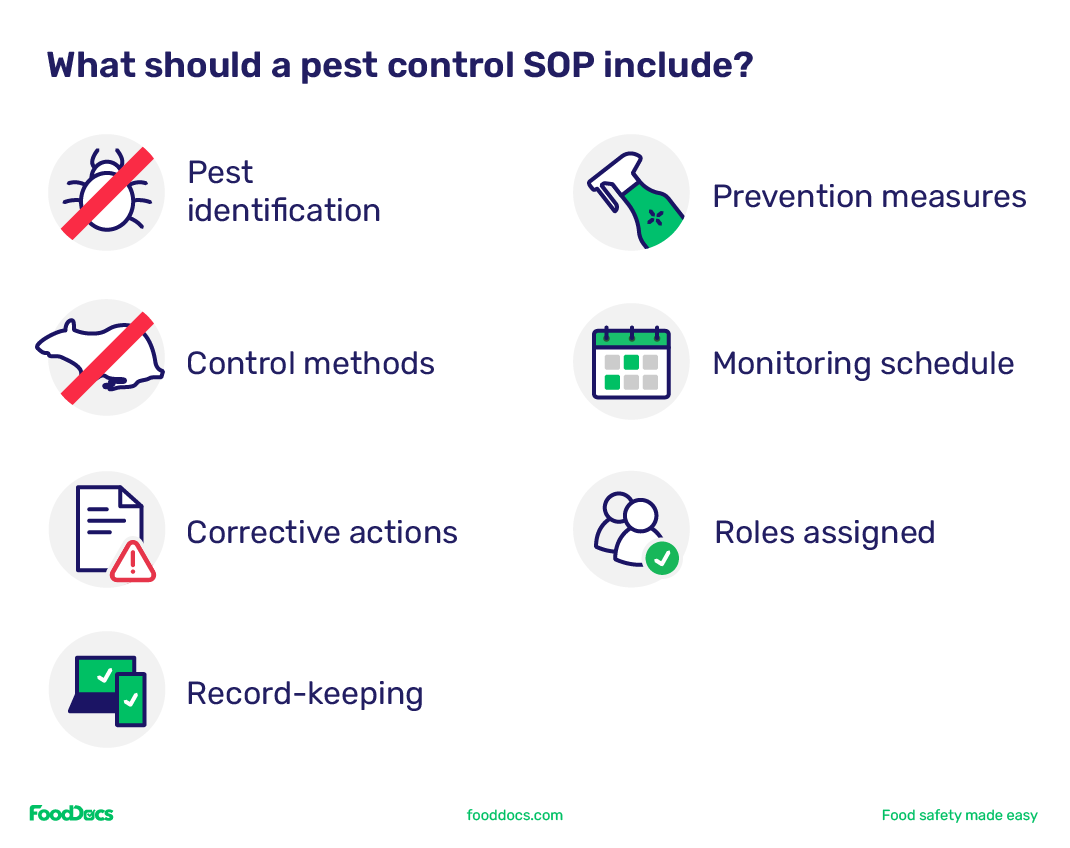
A solid pest control SOP needs to be comprehensive without being overwhelming. While every foodservice business will tweak things based on their specific setup, most good pest control plans share the same core components.
Identifying target pests
Start by listing the pests that actually matter for your location. You can't fight everything, so focus on what you're most likely to see. Rodents like rats and mice are usually at the top of the list. They don't just eat your food, they contaminate it, chew through packaging, and can spread disease.
Cockroaches and ants can hide in tiny cracks and multiply fast. Flies can carry different pathogens because they’re always around garbage, drains, and anywhere food sits out. Birds, especially pigeons near your dumpsters or on the roof, create their own set of problems with droppings and the diseases they carry.
Your pest control SOP should spell out the specific risks each one brings so that teams can be prepared to uphold high safety standards.
Preventive measures
Prevention beats treatment because it puts your food business in control. There are three areas that will contribute to your ability to keep your kitchens and dining areas pest-free:
- Physical barriers: At bare minimum, restaurants should seal entry points, add sweeps at the base of doors, ensure window screens are properly sealed and hole-free.
- Sanitation: Your SOP should detail the cleaning schedule with specificity. Food scraps, grease, and standing water are all things that attract pests, so instructions for the staff responsible should include something like “Wipe down all surfaces after each shift, sweep and mop floors nightly, clean behind and under equipment weekly."
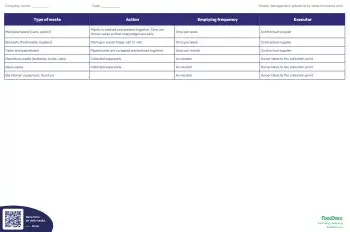
- Waste management: Empty indoor garbage bins delay, ideally as soon as they fill up. Position outdoor dumpsters with tight fitting lids away from your building. Don’t wait for trash areas to get noticeably dirty or smelly to clean them.
Download your Waste Management Schedule
Pest control methods
Even with perfect prevention, some pests are persistent. Your SOP needs to explain exactly what tools and treatments you'll use when they, or hints of them, appear.
Non-chemical methods should be your first line of defense in restaurant pest control, especially in food areas. Traps for rodents (e.g., snap traps, enclosed bait stations) need strategic placement. For insects, glue boards or light traps work well, but their setup will depend on your specific building structure.
The SOP should specify where each trap goes and how often someone checks them.

Physical controls like fly screens, air curtains at doors, and properly sealed windows keep flying insects out without any chemicals involved. There may be times when chemical controls are necessary (e.g., gels for cockroaches, safe pesticides in specific areas). But, if possible, use the least risky methods first such as traps, exclusion, and better sanitation before you start spraying anything.
As a rule of thumb, if you're using chemicals, the staff responsible need to know what they’re doing. Restaurants typically leave this to licensed professionals and, if you’re in this category, your SOP should reflect that (e.g., one of the steps would be to inform your Executive Chef, Food Safety Leader, or Operations Manager to inform the appropriate pest control contractor).
Monitoring and inspection schedule
You can't manage what you don't measure, and you can't catch pest problems if you're not looking for them. Regular inspections are the only way to know if your prevention efforts actually work.
Most restaurants do weekly inspections at minimum. High risk areas like storage rooms near loading docks might need daily quick checks. The person responsible for these tasks should look for droppings, gnaw marks, dead insects, or any other signs.
Take your time with the process and get behind appliances, check corners, and look up at ceiling tiles and down at floor drains.
To do this effectively, use a pest control checklist (better yet, a digital one with food safety management software). This helps because people forget stuff when they're busy. Some restaurants do daily closing checks where each station gets a quick once-over, then more thorough weekly inspections by a manager, then bi-monthly deep cleans with an external pest service.
Actions and corrective steps
When you spot pests or signs of pests, if you’ve got a solid SOP, you’ll be confident in the next steps. But your SOP needs clear, specific instructions for what happens when someone spots something.
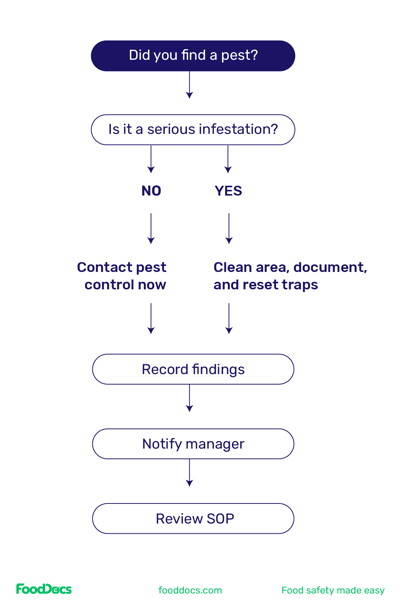
Start by isolating any affected food so nothing contaminated gets served. Clean the area thoroughly, document what you found, then notify the right person.
For each type of pest, the response might differ:
- If a trap catches a mouse, dispose of it safely, sanitize everything nearby, and reset the trap.
- If someone finds droppings, close off that area, deep clean it, and check all nearby food for contamination.
- If you see roaches during the day, that's usually a sign of a bigger problem and you’ll probably need to call pest control professionals.
Some SOPs include thresholds. For example, if you catch more than three mice in a week or see more than five roaches in a month, call the exterminator. Clear corrective actions mean nobody wastes time figuring out what to do while pests keep multiplying and you teams can maintain the high quality of service that customers expect.
Roles and responsibilities
Pest control works when everyone owns a piece of it. Your SOP should spell out who does what.
All employees need to know they're responsible for spotting and reporting pests. For example:
- Servers should report fruit flies around the bar
- Cooks should report droppings near storage
- Dishwashers should report anything abnormal in the drain area
Operations Managers or Executive Chefs should ensure this feedback is acted upon. Create a food safety culture where reporting pests is expected, not awkward.
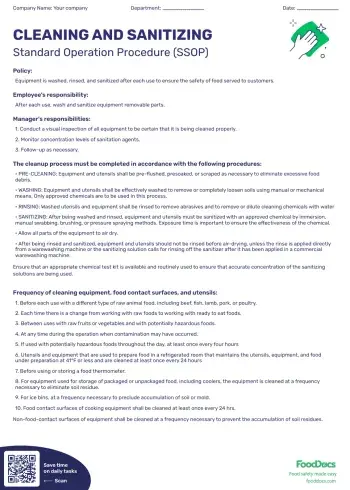
It’s also helpful to designate people for specific tasks. This could look like having a Pest Control Coordinator (usually a Food Safety Leader) who oversees the whole program and contacts professionals when needed. The kitchen manager might check traps weekly. The cleaning crew handles nightly sanitation standard operating procedures. The receiving manager inspects deliveries for pests.
When roles are clear, it’s easier for whole teams to keep the “control” in pest control.
Download your Sanitation Standard Operating Procedure
Record keeping and documentation
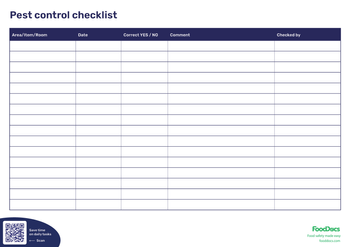
Keeping records is about tracking patterns and proving compliance when inspectors show up. If you work with an external pest service, keep a copy of their reports. Your SOP should include log sheets where staff record each inspection, any sightings, and what actions they took, i.e.:
- Date
- Time
- Location
- What was found
- What was done
Good records give you useful and actionable insights. And they’re only truly possible to capture and act upon when these patterns are recorded and analyzed with the help of a digital food safety management system.
Download your Pest Control Checklist
For example, maybe ants show up every April in the dry storage room. That pattern means you can seal cracks and put out bait in March next year before they arrive. Or maybe you notice mouse activity increases when deliveries ramp up during the busy season. That tells you to inspect deliveries more carefully during those weeks.
Plus, when a health inspector asks about your pest control program, you can hand them documentation and past logs. Many restaurants and other establishments that run kitchens now use digital apps for this because paper logs get lost or forgotten, which isn’t a good look during an inspection.
What pests should restaurants look for?
Different pests need different strategies, but these are the ones that show up most often:
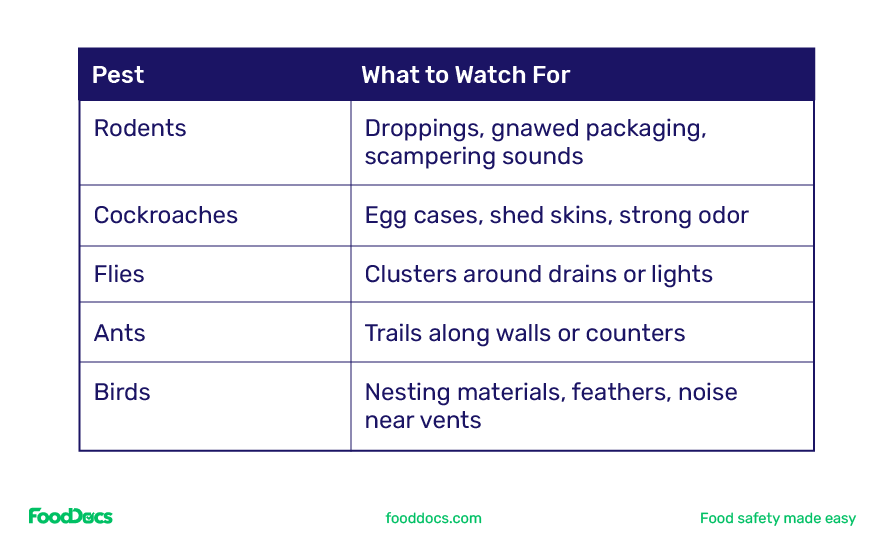
- Rodents (rats and mice) cause massive food safety problems. They hide in walls, under shelves, behind equipment. They can squeeze through incredibly small spaces. One mouse can produce 50 droppings per day and contaminate way more food than it actually eats.
- Cockroaches are nightmare fuel because they breed so fast and hide so well. You rarely see them during the day because they're nocturnal. Spot one cockroach at 2pm? You probably have a serious infestation. Look for egg cases, shed skins, or that distinctive musty smell they leave behind.
- Flies include house flies, fruit flies, drain flies, and others. They breed in your drains, your garbage, your compost. They land on trash and then land on your prep surfaces. One fly can carry over 100 different pathogens.
- Ants find the tiniest cracks and head straight for anything sweet or greasy. The ants you see are just scouts. The colony is hidden somewhere else, and it can have thousands of members.
- Birds, especially pigeons and sparrows, are known to hang around outdoor bins and roost on roofs. They carry diseases and their droppings corrode building materials.
Even seeing one pest can signal a greater problem that might not be immediately visible. Your SOP should focus on the ones that show up most in your specific locations.
Pest control SOP examples you can actually use
Let’s look at what real pest control actions look like in practice from actual SOP templates.
Rodents (rats and mice)
Use bait stations or traps in strategic locations including behind equipment, along walls, near loading docks, anywhere you've seen droppings or gnaw marks. Check the traps at least monthly, though weekly is better.
When you find a trapped rodent, don't panic.
- Use gloves, dispose of it safely (usually sealed in a plastic bag)
- Sanitize the entire area with proper cleaner
- Reset or replace the trap
- Check nearby food storage for contamination (any opened packages or anything with gnaw marks gets thrown out immediately.
The Kitchen Manager or Head Chef usually handles trap checks, but anyone trained can do it. The more important thing is making sure the checks happen on schedule.
Crawling insects (ants, cockroaches)
Set out insect bait stations in corners, under sinks, behind equipment, and near potential entry points. These work because insects take the bait back to their colony.
Inspect storage rooms and incoming deliveries daily for any signs (e.g., shed skins, egg cases, live insects, off-putting smells). Cockroach egg cases look like little brown capsules and ant trails follow predictable paths once you know where to look.
When you discover activity:
- Replace or add more bait stations
- Dispose of any contaminated food
- Document the incident
If the problem persists after a week, call in professional help.
Flying insects (flies, mosquitoes)
Prevention matters most here. Install window screens and door nets and actually keep doors closed instead of propped open because someone's carrying stuff in and out.
- Check screens monthly for tears or gaps.
- Remove standing water everywhere (e.g., from mop buckets, under refrigerators, floor drains, anywhere water collects).
Flies and mosquitoes breed in water, and they don't need much.
If you've got a serious fly problem, UV light traps can help. The SOP should cover how often to clean them because dead flies pile up fast and make the trap less effective.
Birds and other animals
Use physical barriers to keep them out. Block all exterior gaps, vents, and openings with mesh. Check the building perimeter monthly for new holes because buildings shift and develop gaps over time.
Keep exterior doors closed as much as possible. Seems obvious but in a busy restaurant with deliveries and staff smoking breaks, doors get left open constantly.
Manage your outdoor waste area properly. Bins need tight fitting lids that actually stay closed. If raccoons, possums, or stray cats can get into your trash, they will.
When you find openings (e.g., a broken window, gap under a door, or hole in the wall), fix it immediately to ensure the maintained safety of your kitchens and Front of House.
How do you implement a pest control SOP in daily operations?
Writing an SOP is the easy part. Actually following it every single day? That's where most restaurants struggle.
1. Train your team like it matters
Everyone needs to understand and perform the pest control plan. Hold real training sessions that go over every part of the SOP. Point out each person's specific duties. Walk them through the building and show them where traps are, what signs to look for, where to check.
Remember to explain the why to help make training stick. Instead of saying "take the garbage out nightly", explain that garbage left overnight attracts rodents and roaches, which contaminate food, which makes customers sick, which potentially gets us shut down and put out of work. It sounds extreme, but it happens. When people understand consequences, they’re more likely to follow through.
2. Embed checks into existing schedules
The easiest way to make an SOP stick is to build it into routines that already happen. Add pest checks to your closing checklist.
Assign specific people so it's clear who's responsible. For example, "Monday and Thursday, the kitchen manager checks all traps. Every night, the closing server checks the dining area and bar for any pest signs."
When it's on the schedule or the team’s food safety mobile app is sending them role-based notifications and someone owns it, it’ll get done.
3. Use reminders that people actually see
Put up small signs in key spots. This could be as simple as a note on the back door: "Keep closed to keep pests out." Or a label on food containers that say, "Seal tightly after each use."
Some restaurants mark pest control inspection points with stickers or labels inside cabinets and storage areas. Little visual cues that remind people to check even when they're busy.
4. Work with professionals when you need them
Food businesses might have monthly visits from a licensed pest control company. The professionals inspect, treat problem areas, and leave a service report. Your SOP should note when these visits happen.
When the technician leaves recommendations, put them into practice. If they say "trim the bushes away from the building" or "seal that gap in the back wall," do it. They're giving you actionable suggestions that will keep your facility pest-free, safer, and inspection-ready.
For serious infestations, don't try to handle it yourself. Call the professionals immediately because they have tools and treatments you don't have access to, and they know how to use them safely around food.
5. Keep records up to date without making it painful
Documentation feels tedious until you need it. Then it's the only thing between you and a failed health inspection. Make logging easy with a simple form or safety app where people check boxes and add quick notes and photo proof.
For large-scale food businesses managing many team members across multiple locations, digital food safety management tools are the best way to have a complete compliance overview of all pest-related tasks.
Managers should review logs regularly. If someone's skipping their pest checks, address it right away. Consistency matters more than perfection.
Over time, these logs show you pest-related patterns. Seasonal spikes in ant activity. Increased rodent signs when weather changes. That information helps you adjust your strategy before problems start.
6. Evaluate and adjust because nothing stays the same
Set aside time quarterly to review how things are going. Ask impactful questions such as:
- Have we had pest incidents?
- Why did they happen?
- How did we handle them?
- Are parts of the SOP not working or not being followed?
You might discover that weekly inspections caught problems early and you can keep that frequency. Or maybe you need to increase checks during the busy or warmer seasons when doors get left open more often.
Use this review to update the SOP. Continuous improvement means your pest control gets better over time instead of staying stuck with whatever you wrote on day one.
7. Build a culture where pest control matters to everyone
Implementation really comes down to culture. One of the most effective ways to do this is to add pest-related tasks into their daily checklists (e.g., opening, closing, hygiene). When everyone from the dishwasher to the head chef knows that pest control is part of their job and actually cares about it, problems don't have room to grow.
Pests are sneaky and persistent, but a well-executed plan that runs every single day enables your team to catch issues fast and handle it before it turns into something bigger.
Where can you find a pest control SOP template (PDF)?
Creating a pest control SOP from nothing can feel overwhelming, especially if you're not sure what to include. Good news is that pest control SOP templates exist that give you a solid starting point.
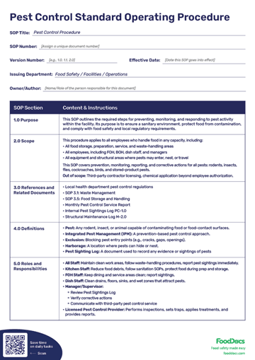
At the top of this page, we’ve created a free pest control plan template you can download and customize. It includes all the basic sections you need.
Using a template saves massive amounts of time. Like many other restaurant management strategies, templates make sure you don't forget important stuff. The FoodDocs template outlines common pests (e.g., rodents, insects, flies, birds) and for each one provides sample control measures, suggested frequency, and what to do if you find them. You just adjust the details to fit your restaurant.
Maybe you add pests specific to your location or change inspection frequencies based on past problems. Templates are meant to be flexible. Fill in your restaurant name, assign tasks to your staff, tweak steps to match your actual operation.
How can FoodDocs help manage pest control SOPs?
Templates and paper logs work, but they’re slow and prone to damage or loss. Digital tools make pest control management way less painful. FoodDocs offers a digital restaurant food safety management system that handles your pest control SOP tasks, cleaning schedules, training records, and everything else related to food safety.
When you set up FoodDocs, it asks questions about your operation. What food you serve, your processes, your setup. Using that information, our smart setup creates a custom pest control plan for you, plus other needed SOPs and monitoring forms. It's like having a food safety expert write everything. You can still customize anything it creates, but you're not starting from scratch.
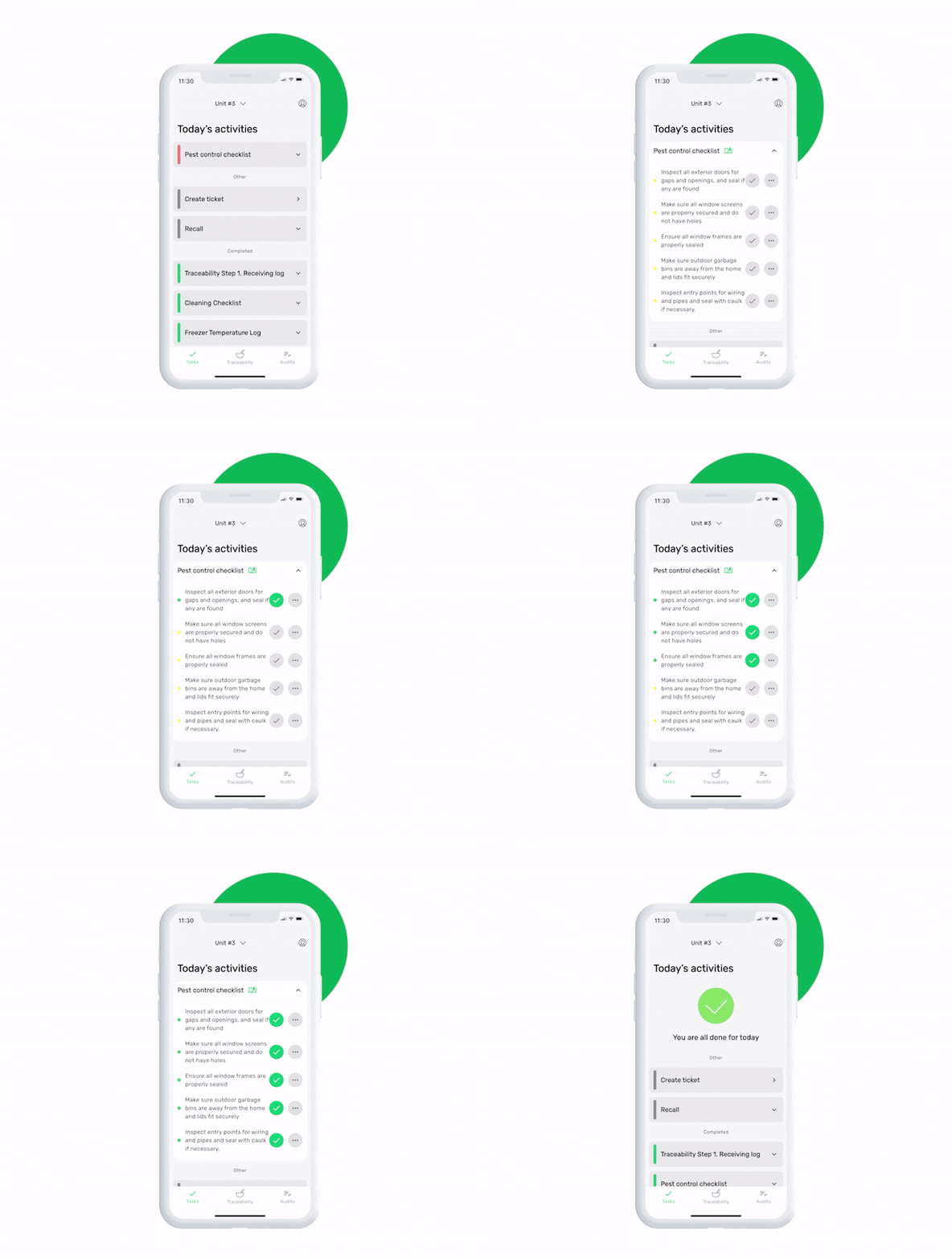
Once your pest control SOP is in the system, here's where it gets useful. FoodDocs provides an app with step by step instructions for each task, with the ability to add photo or video direction. If staff have a daily task to check pest traps, the app sends a notification and walks them through it. Simple instructions, sometimes with photos or videos showing exactly what to do.
As a manager, you get a real-time overview of whether pest checks (and other tasks) got done each day. If something was missed, you see it immediately and can follow up. Way more efficient than flipping through paper logs or discovering a lapse during an audit.
FoodDocs keeps all your food safety documents in one place. When an inspector shows up, you can pull up digital records instantly to show an historical record of your compliance.
Whether you use a template or a software, the goal stays the same: a pest-free facility where food’s always safe, customers can eat with confidence, and business continues to grow.

Frequently asked questions about pest management SOPs
How often should pest control be done in restaurants?
Most restaurants need pest control checks at least weekly as part of regular inspections. High risk areas like storage rooms or near dumpsters should get daily spot checks. Many restaurants also schedule monthly visits from a licensed pest control company for extra protection.
If your location has had issues before or you're in a dense urban area, increase the frequency. Consistency matters more than anything. Pests are way easier to stop early than to remove once they've settled in.
Who is responsible for pest control in a restaurant?
Every employee plays a role in pest prevention, but overall responsibility usually falls to a designated manager or pest control coordinator. This person makes sure the SOP gets followed, traps and logs get checked, and pest sightings get handled.
Outside pest control companies may handle treatments, but day to day pest prevention is a team effort inside the restaurant. When everyone owns a piece, it actually works.
What is the difference between pest control and pest prevention?
Pest prevention focuses on keeping pests out in the first place. Sealing entry points, cleaning up food waste, using covered bins. All the proactive stuff.
Pest control kicks in when prevention fails. Using traps, bait stations, sometimes safe chemical treatments to remove pests already inside.
A strong SOP focuses on both. Prevent first, control if needed. Prevention is always cheaper and easier than dealing with an infestation.
Can digital software help with pest control SOPs?
Absolutely. Tools like FoodDocs can automate the creation and daily use of pest control SOPs. The software builds a custom SOP, gives staff step by step checklists, sends reminders, stores digital logs.
This helps restaurants stay consistent, reduce human error, and prove compliance during inspections. It also makes updates and training way easier as the team or setup changes. Worth trying the free trial to see if it fits your operation.

Switch to digital in 15 minutes
 An automated setup enables you to go digital in 15 minutes
Our app notifications help your team to remember all daily tasks bam
Save time on supervising and use automatically filled monitoring sheets