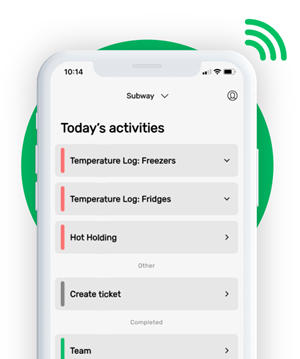






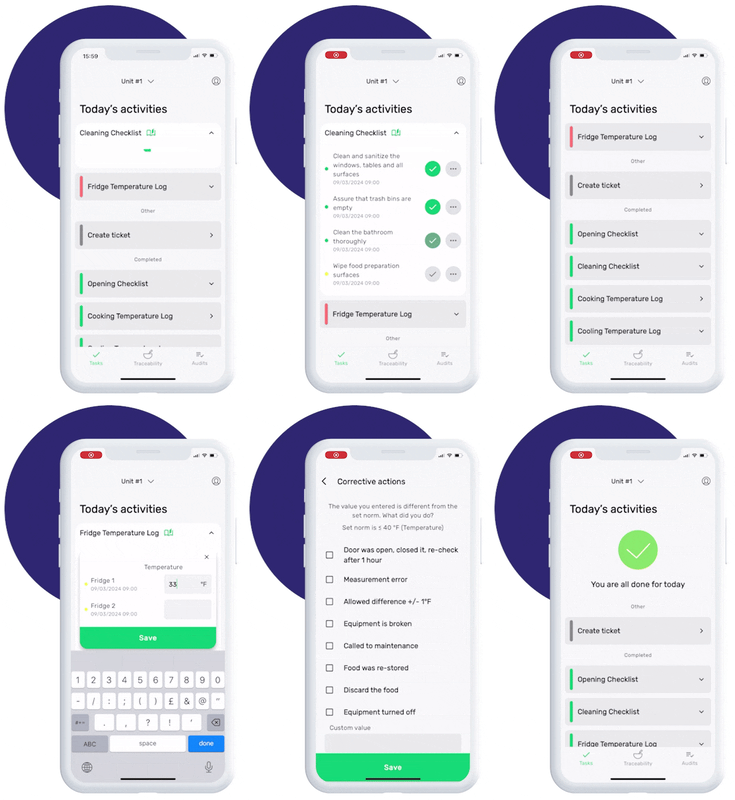
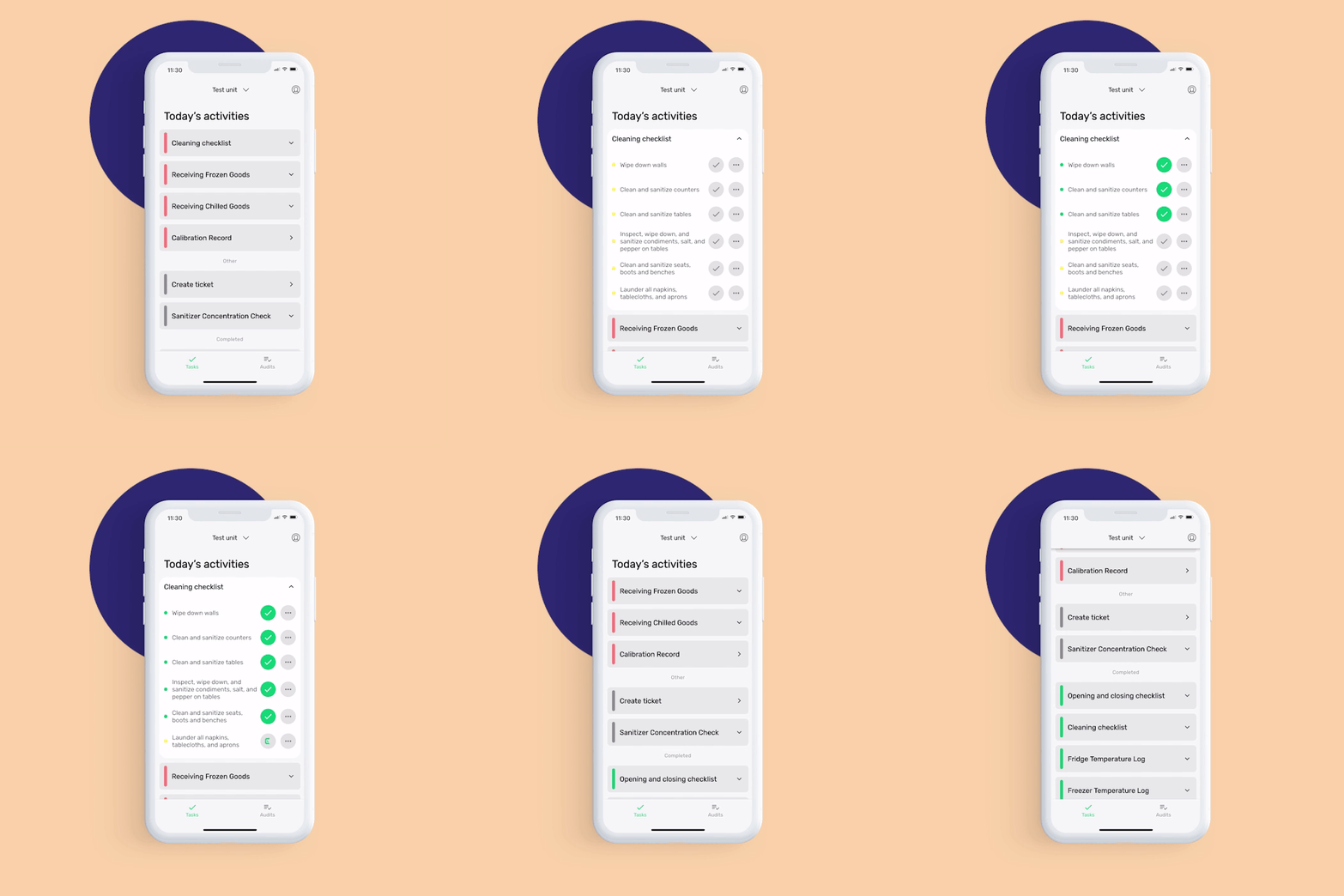
This is how our Digital Food Safety platform saves 20% of your time on daily tasks:
- Get upcoming task notifications
- Add data into the app
- Check the status of tasks in real-time


When food safety was still handled on paper, I typically spent a couple of hours per day getting the papers and going around checking or completing tasks… Now I can sit down and it's just all there in one place. It takes me 5-10 minutes.

Ruth B.
Store Manager
What is a food hygiene inspection checklist?
A food hygiene inspection checklist is a structured set of checks used by Environmental Health Officers (EHOs) to assess how your business handles food safety in practice.
Your food hygiene rating is based on three areas:
- How food is handled.
- The condition of your premises.
- How well your team manages food safety day to day.
Why does this food hygiene standards checklist matter for your team?
How often you see EHOs or food safety officers from your local council depends on risk: higher-risk operations get seen more often and lower-risk operations may have longer gaps between inspections.
Most teams do not struggle with knowing what to do. They struggle with doing it the same way, every day, across every shift, which is where a checklist (or a digital food hygiene app checklist) becomes useful.
It gives your team a clear standard to follow, shows managers where things are being missed, and it helps you stay ready for inspections without scrambling at the last minute.
In practice, strong operators use this checklist as part of their daily routine. Teams will carry out food hygiene tasks while Food Safety Leaders, Operations Managers, or Executive Chefs Not get a compliance overview and keep control of what is happening across premises.
This is also where many teams start looking at digital food safety compliance tools such as FoodDocs. (See how it works in the video below!) They allow you to replace the paper food hygiene checklist and make sure it actually gets followed, tracked, and reviewed without chasing people or digging through paper logs.
In England, Wales, and Northern Ireland, the Food Standards Agency runs the public rating scheme with local authorities. A local authority food safety officer visits, checks your day-to-day food hygiene, then issues a rating that shows up online and, in many places, on your front door.
A good internal food hygiene inspection checklist takes the mystery out of that visit. It mirrors what the officer scores, then turns it into repeatable routines your teams can follow across locations.
The goal is to train your team on the right aspects of food hygiene principles so that they’re prepared for steady, calm inspection days, with routines that hold up across shifts and sites.
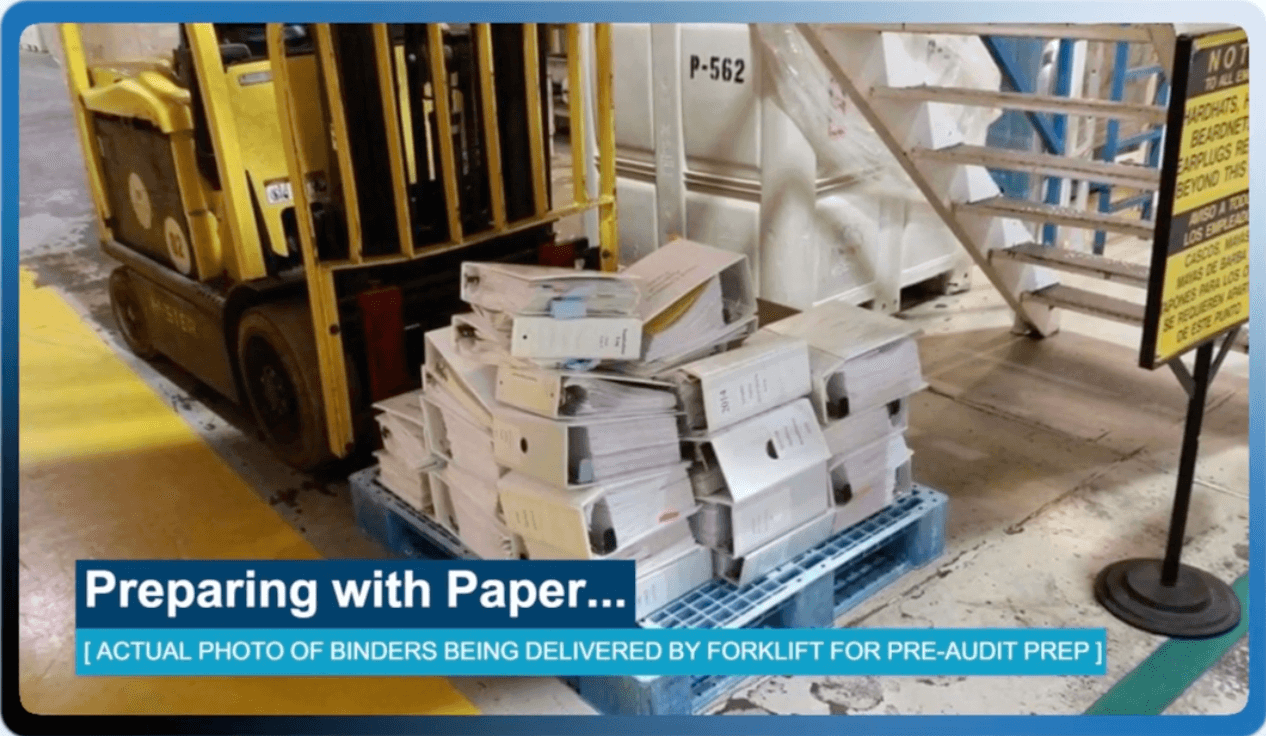
Ideally, these checklists are completed and kept digitally so that you can show inspectors that you take food safety compliance seriously, store monitoring logs securely, and are fostering a culture of daily improvement — and not end up like this company...
This guide is built from official UK guidance and inspection checklists. You can lift the checklist sections straight into your own internal audit, or have it setup for you digitally in less than an hour using a digital food safety management platform.
What happens during a food hygiene inspection?
A food hygiene inspection is a visit from a local authority food safety officer. They check that you follow food hygiene laws so the food you sell or serve is safe to eat.
During the visit, the officer focuses on three areas. They look at how food is handled, how the site is kept and built, and how you run food safety day to day, including training and systems that keep hygiene steady over time.
After the inspection, you get a written explanation of the rating and why you got it. In that scheme, the rating is on a 0 to 5 scale.
How does an inspection lead to a food hygiene rating?
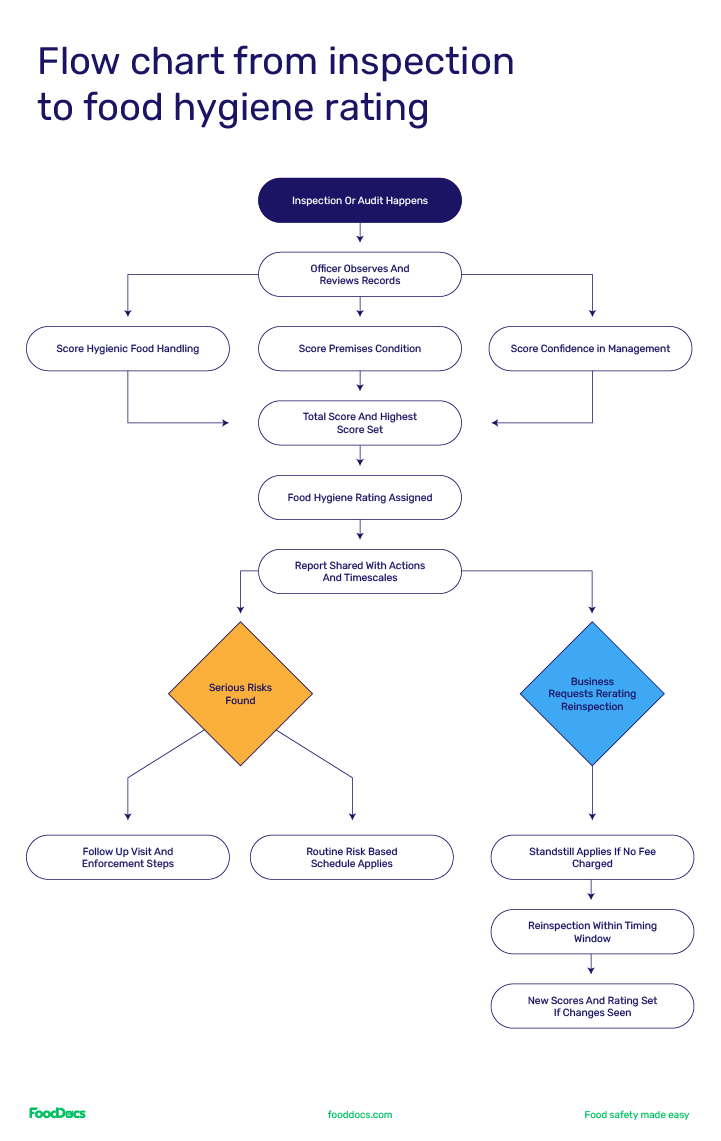
The flow below reflects the official scheme logic used in England, Wales, and Northern Ireland. In many cases, the inspection itself is unannounced and can even occur on national holidays.
The rating comes from the three scored areas. Routine revisit timing follows the risk category schedule. Requested re-rating visits follow the Brand Standard timing rules.
What does a food hygiene rating measure?
A food hygiene rating is a snapshot of the hygiene standards seen on the inspection day. It reflects how well you are doing on food handling, storage, preparation, cleanliness, and food safety management.
The rating does not judge taste, service, or plating. It’s about hygiene controls and how well the business meets legal hygiene expectations at the time of the visit.
If you're used to letter grades in parts of the United States, read this as a simple scale. Five is the top score. Zero is the bottom.
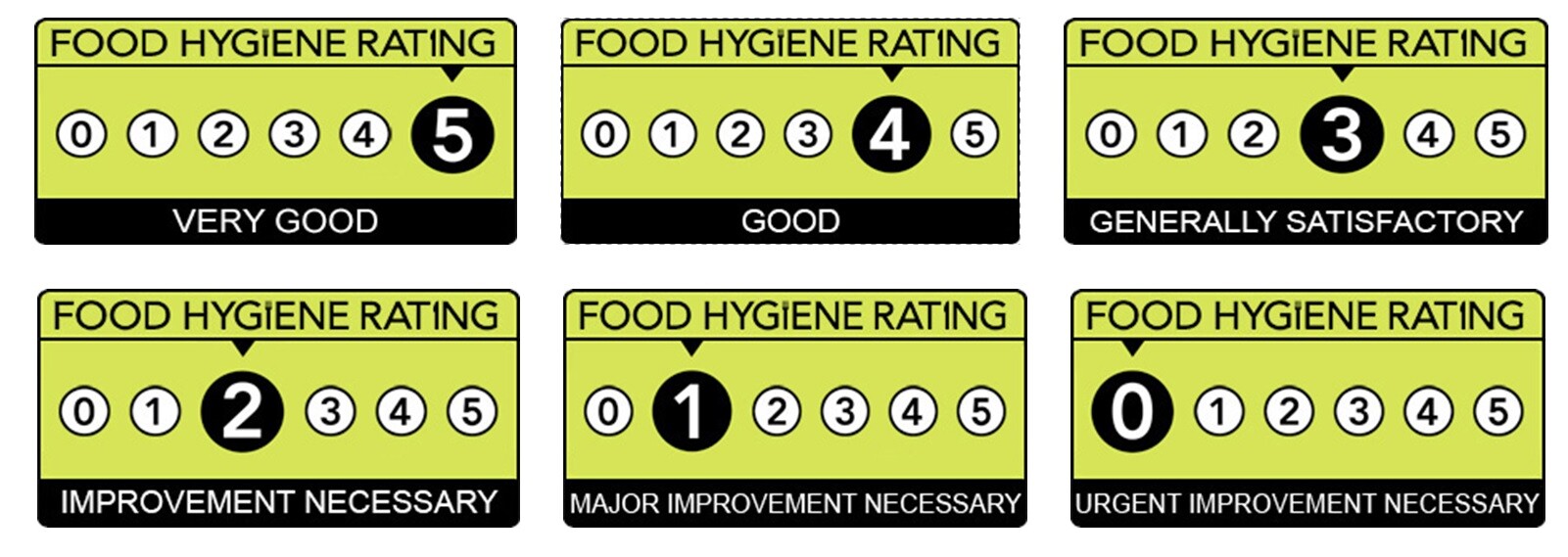
Food hygiene ratings are shown online and often on-site. Sticker display is required by law in Wales and Northern Ireland. In England, display is optional and encouraged.
What’s on a food hygiene rating checklist?
A food hygiene rating checklist is a self-check that lines up with the three scoring areas used in the rating scheme. If your internal checks match those three areas, your teams learn to run the site the same way on a quiet Tuesday as they do on inspection day.
Here is what those three areas mean in plain language.
- Hygienic food handling: That includes prep, cook, reheat, cool, and storage practices that keep food out of conditions that let harmful microorganisms grow.
- The physical condition of the site: Think cleaning, layout, lighting, ventilation, pest control, and the condition of rooms, equipment, and surfaces that touch food.
- Confidence in management: In practice, this is the officer asking, “Will this site keep standards steady next week?” It covers your procedures, how well staff know them, and your track record of acting on past advice.
If you want your checklist to match how inspectors think, open each walkthrough with that third area. Start with, “Is the plan clear, do people follow it, can we show evidence without hunting for it?” That sets the tone for the entire visit.
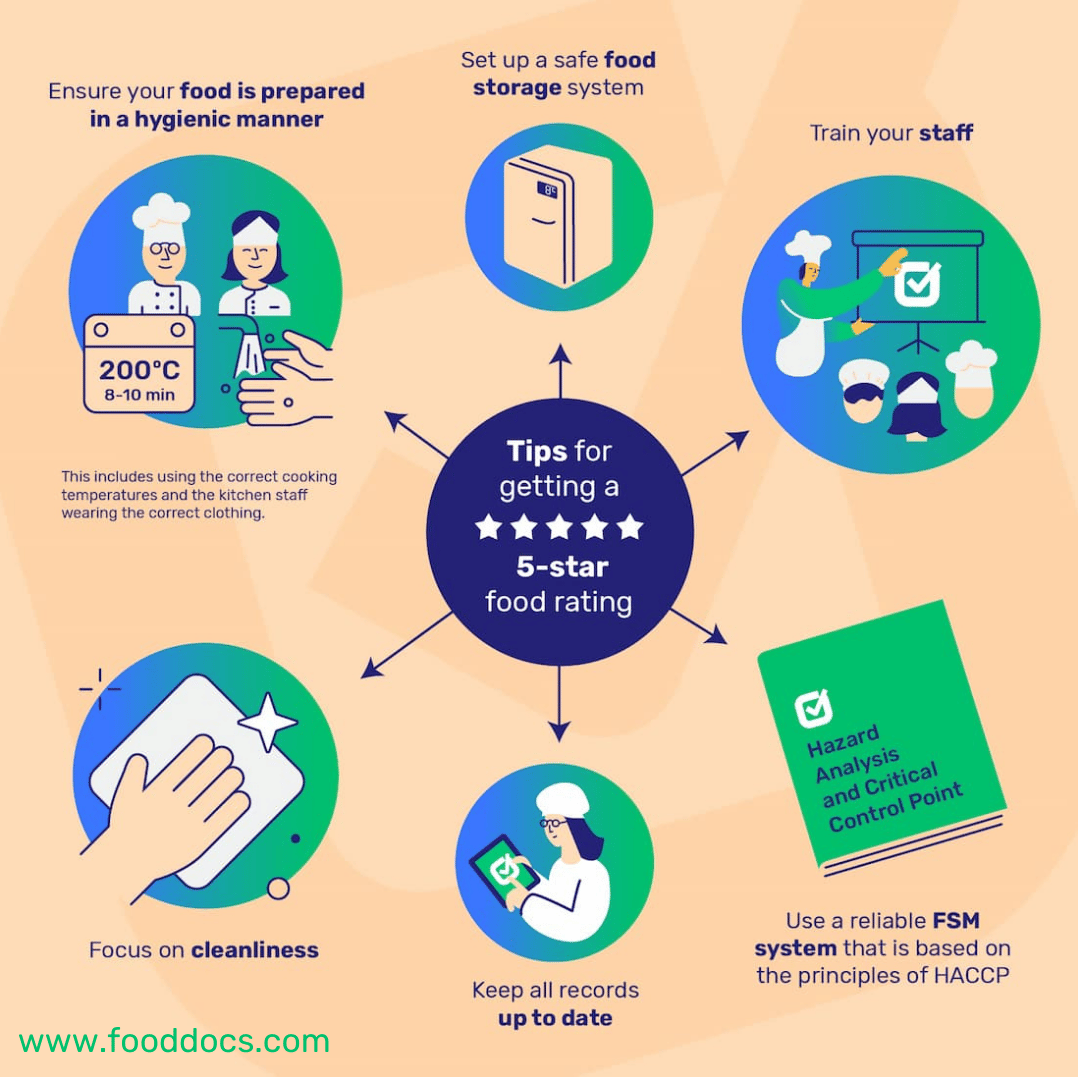
When you are working toward a higher rating, there are formal options. Businesses can appeal, add a public “right to reply,” and request a re-rating inspection after fixes are in place. The appeal window is 21 days from the date of notification in England, Wales, and Northern Ireland.
Food hygiene ratings of 5 are published as soon as the local authority uploads them. Ratings of 0 to 4 are published about three to five weeks after the inspection, so you have time to appeal. In England and Wales, you can ask for early publication during the appeal period.
Plan for the cost of a re-rating service. In England, some local authorities charge a fee. In Wales and Northern Ireland, local authorities charge a fee under their statutory schemes.
What should your inspection checklist include?
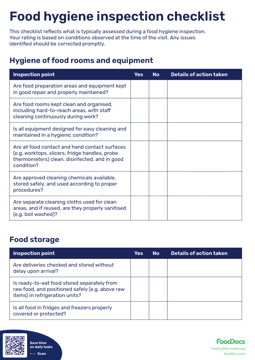
The most useful checklist reads like a site walk. It follows the same path an inspector takes, with checks that map to the official inspection checklist used in the Food Standards Agency’s UK guidance.
Below is a practical version you can run weekly, with a shorter daily version pulled from the same items. Treat each item as a yes or no, then note the action taken when you fix something.
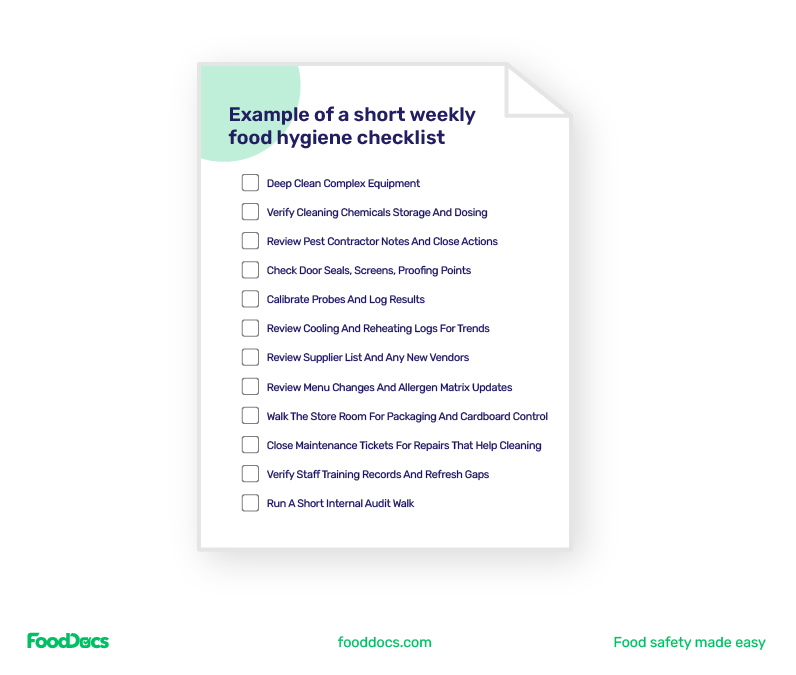
Are food rooms and equipment clean and maintained?
- Food rooms are clean and teams clean as they go, including hard-to-reach areas.
- Equipment and food contact surfaces are in good condition and are cleaned and disinfected on a schedule.
- Cleaning chemicals are suitable, stored, and used the right way.
- Cloths and tools used in cleaner zones stay separated or get laundered properly.
Is storage set up for safe segregation and rotation?
- Deliveries go into the right storage right away.
- Ready-to-eat foods stay above or separate from raw foods in cold storage.
- High-risk foods have date coding and stock rotation (e.g., first-in first-out) that teams follow every day.
- Dry goods are stored six inches off the floor in covered containers in a suitable space.
Do teams control time and temperature every day?
- Ready-to-eat foods are prepped in a clean area with separate equipment, or equipment is cleaned and disinfected before use.
- Food is cooked to safe time and temperature targets, and teams can show how they check.
- Hot food held for service stays at 63°C or above. If food comes out for display, the two-hour allowance is managed as a single controlled period.
- Chilled foods that support pathogen growth are kept at 8°C or below in England, Wales, and Northern Ireland.
- Cooling happens as quickly as possible under hygienic conditions so food reaches a temperature that does not create a health risk.
Do teams follow handwashing and allergen routines?
- Handwash basins are clean, supplied with hot water, soap, and hygienic hand drying.
- Staff follow personal hygiene rules and wear suitable, clean protective clothing.
- Teams wash their hands after handling raw food, then move back to clean tasks like serving and register use.
- Allergens are controlled with clear allergen warning information for customers and clear kitchen routines for staff.
Are pests, waste, and unfit food handled well?
- Premises are pest-proofed, with signs of pests checked and acted on quickly.
- Waste is stored and removed in a way that keeps food rooms clean.
- Unfit food is labelled and stored separately so it’s never served by mistake.
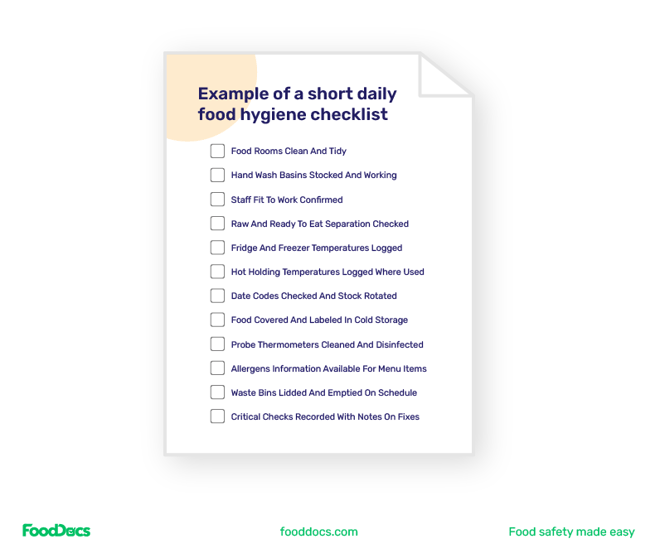
Which food hygiene records help on inspection day?
Inspectors can only score what they see. Records still matter since they back up training, monitoring, and corrective action. That’s a major part of the “confidence in management” judgement.
Start with your food safety management system. Food businesses must put in place, implement, and maintain procedures based on HACCP principles, plus records that fit the nature and size of the business.
Training records belong in the same folder. Hygiene rules require food handlers to be supervised and instructed or trained in food hygiene in a way that matches their job. They add a second training expectation for people who develop and manage HACCP-based procedures.
From there, keep records that link directly to the checklist above.
- Temperature and hot holding checks, plus what you did when you found an issue.
- Cleaning schedules, verification, and sign off by a manager.
- Pest monitoring and contractor notes, tied to actions taken on site.
- Allergen information method and staff training, with special focus on distance selling and PPDS labelling where it applies.
If you operate in Scotland, Food Standards Scotland runs a similar but separate public scheme called the Food Hygiene Information Scheme (FHIS). Sites can be given Pass or Improvement Required. Some low-risk premises may be marked Exempt.
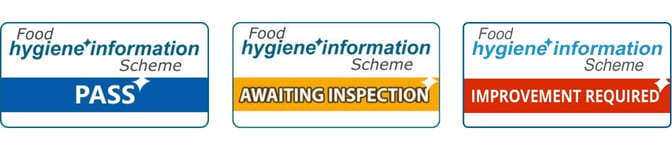
The three different ratings in more detail are:
- Pass: The food outlet meets the legal requirements for food hygiene.
- Improvement Required: The food outlet didn’t meet the legal requirements and needs to make improvements.
- Exempt Premises: The food outlet has been inspected by a local authority food safety officer, met the pass criteria, but doesn’t meet the criteria to be part of the scheme (i.e., these businesses are low risk to people’s health in terms of food safety and you might not normally think of them as a food business, for example newsagents, chemists or visitor centres selling tins of biscuits).
Temperature rules differ, too. For example, Scottish reheating rules require food that’s reheated for service or sale to reach at least 82°C, with a quality-based defence written into the regulations.
If you are opening a new site, food business registration is part of inspection readiness. The Food Standards Agency says you are required to register at least 28 days before trading.
What can help your food business get and keep 5-star Food Hygiene Ratings?
Hint: the best food hygiene app.
But first, consider what your team is dealing with every day.
Your staff are working in fast, high-pressure environments. They are cooking, serving, cleaning, and managing multiple tasks at once. In the middle of that, they are expected to stop, find a pen, and fill out paper records correctly and on time.
That is where things start to break down. Not because people do not care, but because the system makes it hard to succeed.
Now ask this: How do you know every hygiene check is actually being completed, every shift, across every location? Not just when a manager is present or on slower days, but consistently, even when the kitchen is under pressure.
As you grow from one site to 10 to 100 or more, this becomes impossible. You’re forced to rely on different teams, different habits, and paper records that may be incomplete, delayed, or filled in differently.
This is where a food hygiene app changes how your operation works because instead of relying on memory and manual effort, the right tool:
- Reminds staff to complete tasks on time
- Guides them through each step so checks are done correctly
- Reduces manual input by making logging faster and more intuitive with pre-filled data for certain tasks
- Gives your team the tools to work more effectively and maintain standards without constant supervision
In many cases, this can save a significant amount of time each shift while improving consistency across the team. FoodDocs’ customers have shared that it’s saved at least 20% of their time on food safety management and saved the cost of at least one full-time employee.
Once you look at it this way, moving from paper to digital hygiene systems becomes a practical decision.
Plus, food businesses are expected to have HACCP-based procedures, plus records that fit the nature and size of the operation.
In a multi-location operation, many teams choose to digitize food safety monitoring and compliance with software because it saves time on supervision (especially when leaders aren't on-site), gives them one place to monitor, store the records, and pull them up fast during a visit.
When you compare tools, look for fit with real inspection work.
- A checklist that matches the local authority inspection style, including yes or no items and space for actions taken.
- A clear trail for temperature checks and corrective actions, tied to a time, a person, and a specific location.
- Support for routines that show up in UK guidance, like cleaning, chilling, cooking, management checks, and diary style recording.
- Allergen support that makes written allergen information simple to keep current, backed by staff knowledge and a customer conversation. For PPDS foods, labels need the name of the food and a full ingredients list with allergens emphasized.
Rollout works best as a simple routine. Pick one region, train one site leader, run weekly manager walks for a month, then expand with the same checklist. That rhythm supports confidence in management, since it shows standards are likely to stay steady in the future.
How to help your team fill all those tasks in the food hygiene inspection checklist using FoodDocs
FoodDocs’ HACCP-based food safety app helps you and your team complete daily food safety tasks easily, quickly, and correctly. We built it specifically for busy food safety leaders, operations managers, and executive chefs who operate hospitality, retail, and healthcare chains.
You’ll be able to:
- Scale your business and grow your team with confidence
- Fully customise and control your HACCP system and plan anytime
- Stay compliant and EHO inspection-ready with automated monitoring and records
- Save hours weekly on food hygiene and safety management with real-time visibility
You can try it free for 14 days or book a 15-minute demo to see how FoodDocs can fit your specific operation.

Frequently asked questions about UK food hygiene inspections checklists
 An automated setup enables you to go digital in 15 minutes
Our app notifications help your team to remember all daily tasks bam
Save time on supervising and use automatically filled monitoring sheets