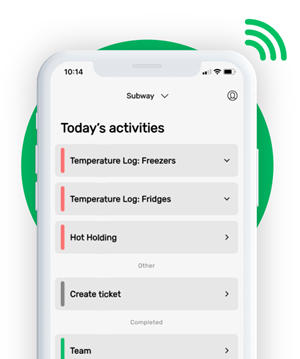





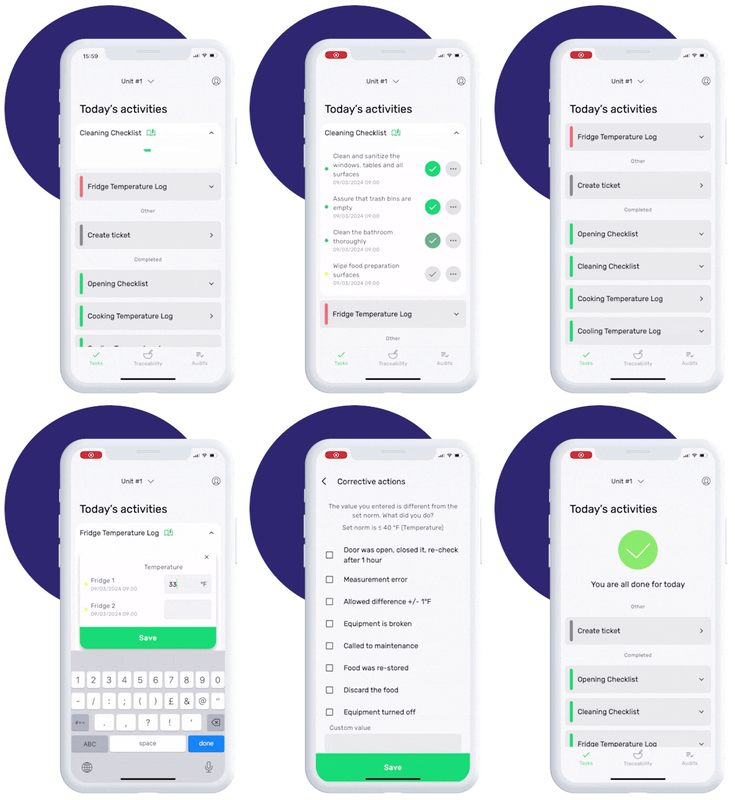
This is how our Digital Food Safety platform saves 20% of your time on daily tasks:
- Get upcoming task notifications
- Add data into the app
- Check the status of tasks in real-time


When food safety was still handled on paper, I typically spent a couple of hours per day getting the papers and going around checking or completing tasks… Now I can sit down and it's just all there in one place. It takes me 5-10 minutes.

Ruth B.
Store Manager
Freezing and refrigeration both slow bacterial growth, but they are used for different storage purposes. Refrigeration slows bacterial activity, while freezing significantly reduces microbial growth and extends shelf life for longer-term storage.
This guide explains how to use a freezer temperature chart, why consistent cold holding matters, and how food businesses can improve freezer monitoring procedures.
What is a freezer temperature chart?
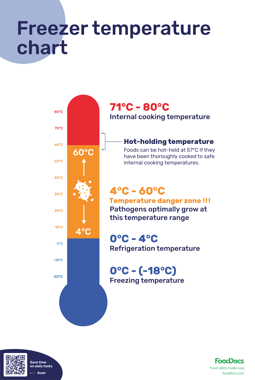
A freezer temperature chart is a reference guide that shows safe storage temperatures for frozen and chilled foods. Many charts also include hot holding temperatures and guidance on avoiding unsafe storage conditions.
The recommended freezer temperature for most food businesses is -18°C or below. At this temperature, bacterial growth slows dramatically and frozen foods remain stable for longer periods.
A chiller and freezer temperature chart helps kitchen teams:
- verify freezer performance
- complete daily temperature checks
- identify corrective actions quickly
- reduce spoilage risks
- support HACCP documentation
Temperature consistency is important. Frequent temperature fluctuations can damage food quality, increase freezer burn, and create conditions where bacteria may recover as products thaw.
This is why food handlers should regularly monitor freezer temperatures using calibrated thermometers and maintain accurate records using a temperature log sheet.
FoodDocs app notifications help your team keep track of and complete all temperature log tasks on time. Like this, all monitoring is always done on time.
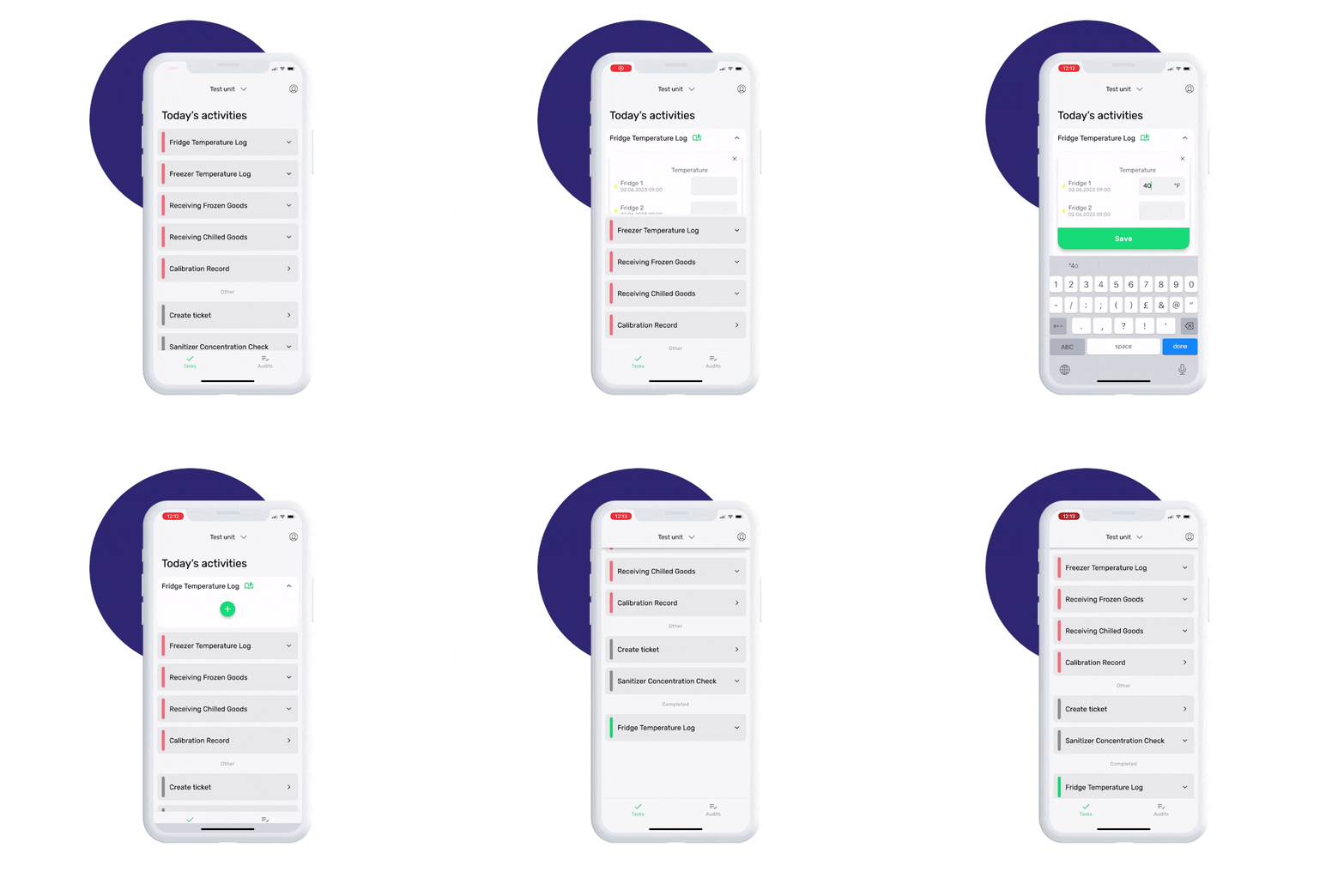
According to the Food Standards Agency, chilled and frozen storage controls are a critical part of preventing bacterial growth in high-risk foods.
Who needs a freezer temperature chart?
Any food business that stores chilled or frozen products can benefit from using a freezer temperature chart.
This includes:
- restaurants
- pubs
- care homes
- hospitals
- catering businesses
- school kitchens
- grocery retail kitchens
- central kitchens
- cafés and delis
Because the chart also supports cold-holding controls and temperature-monitoring procedures, it is useful for HACCP-based food safety systems across hospitality and healthcare operations.
What are the benefits of a freezer temperature chart?
A freezer temperature chart helps teams store food safely, reduce waste, and maintain consistent cold holding standards across kitchen operations.
Supports daily temperature monitoring
A freezer temperature chart gives staff a quick reference during opening and closing checks. Teams can quickly confirm whether freezer temperatures remain inside safe limits and apply corrective actions if temperatures rise unexpectedly.
This becomes particularly important during equipment faults, delivery delays, or busy service periods where cold storage doors may be opened frequently.
Improves food safety training
Temperature charts are useful training tools for new kitchen staff and temporary workers. They help explain safe storage temperatures, bacterial growth risks, and why temperature control matters in preventing foodborne illness.
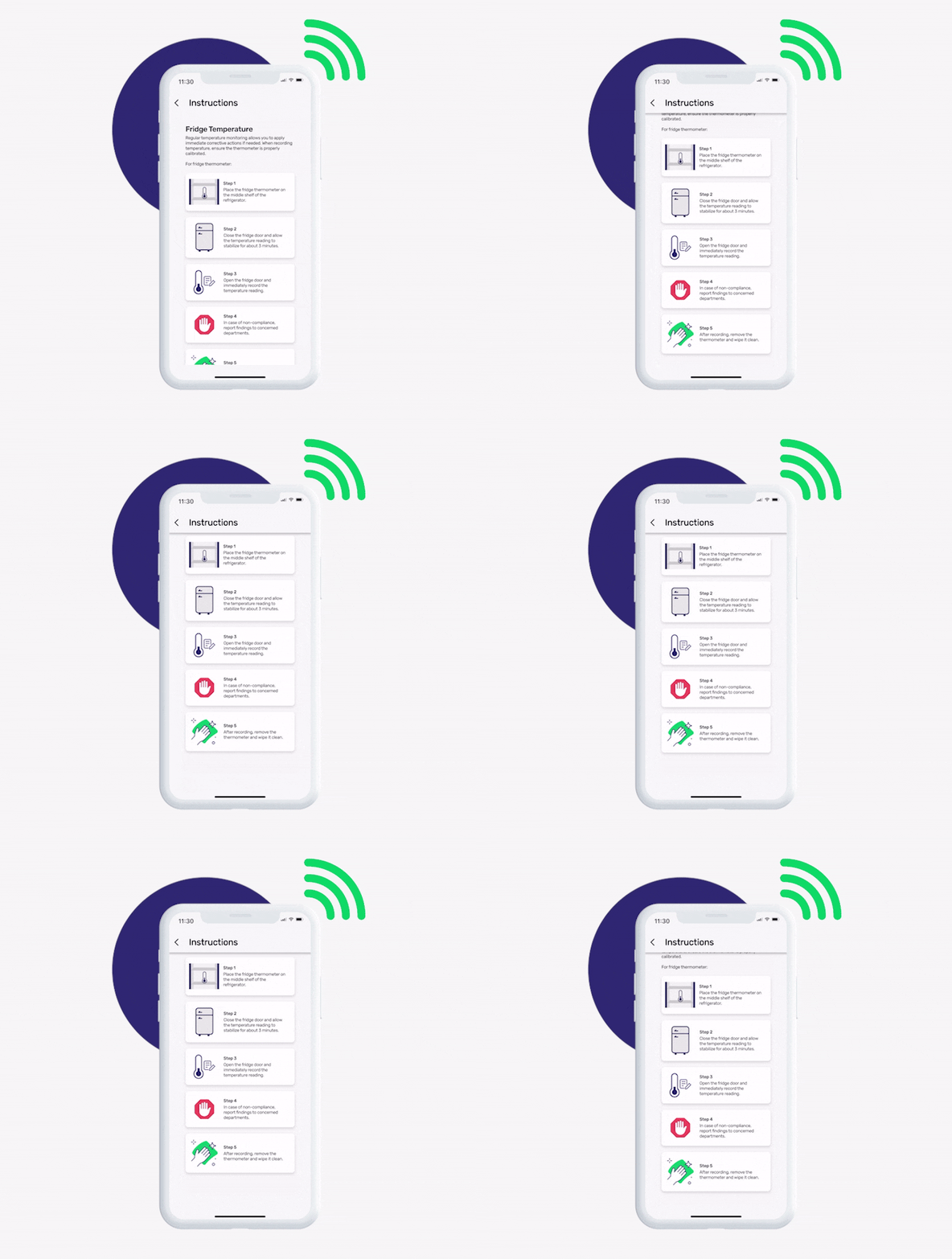
Digital monitoring checks include educational instructions. Team members can check the instructions to perform the food safety task correctly. You can use our pre-set instructions or create your own pictures or videos. Through this feature, you’ll save time on training your team members.
Many kitchens display freezer charts alongside a food cooling poster to reinforce safe cooling and storage procedures.
Helps reduce food waste
Correct freezer storage helps extend shelf life and reduce unnecessary ingredient loss. Products exposed to poor cold holding conditions may spoil faster, lose texture, or become unsafe to use.
This is especially important when handling prepared foods and leftovers. Understanding how long leftovers stay safe helps teams avoid unsafe reuse and reduce unnecessary waste.
Supports HACCP compliance
Temperature records are commonly reviewed during food safety audits and EHO inspections. Consistent monitoring helps demonstrate that frozen foods are stored safely and corrective actions are followed when problems occur.
Many businesses also combine freezer monitoring procedures with broader cold holding temperature controls across refrigeration units, prep areas, and delivery storage.
How to create a freezer temperature chart?
A freezer temperature chart should be simple, accurate, and easy to follow during busy kitchen operations.
Use reliable food safety guidance
Temperature information should be based on trusted food safety guidance from organisations such as the Food Standards Agency, NHS, or HACCP-based industry practices.
Include accurate storage temperatures
Safe storage temperatures should be clearly visible. Most UK food businesses store frozen food at -18°C or below and chilled food between 0°C and 5°C, depending on the product.
Keep information updated
Food safety guidance changes over time. Temperature charts should reflect current UK operational practices and EHO expectations.
Make the chart easy to read
Charts should be visible from a distance and easy for teams to follow quickly during service. Complicated layouts or unclear values increase the risk of incorrect freezer settings and missed checks.
At FoodDocs, we designed our freezer temperature chart to support practical kitchen operations and simplify cold storage monitoring for hospitality and catering teams.
How can digital food safety apps improve freezer temperature monitoring?
Digital food safety apps help kitchen teams complete freezer temperature checks consistently, reduce missed records, and improve visibility across daily operations.
Many hospitality and healthcare kitchens still rely on paper-based temperature logs. During busy shifts, this often leads to:
- missed freezer checks
- incomplete records
- delayed corrective actions
- inconsistent monitoring between locations
- difficulties preparing for EHO inspections
Digital monitoring systems simplify these daily tasks by giving staff clear reminders, mobile-friendly checklists, and centralised temperature records.
Instead of manually reviewing paper logs, managers can quickly identify:
- missed checks
- recurring freezer issues
- temperature fluctuations
- overdue corrective actions
- locations with repeated compliance gaps
.png?width=1650&height=1125&name=FSMS_hero%20(1).png)
Digital systems also make it easier to standardise freezer monitoring procedures across restaurant groups and healthcare companies with several locations.
FoodDocs helps teams manage freezer temperature checks through a digital Food Safety Management System designed for everyday kitchen operations. Staff receive automatic task reminders, complete temperature logs digitally, and managers can review records in real time across multiple locations.
This helps reduce paperwork, improve audit readiness, and make daily food safety supervision easier for operations and compliance teams.
Frequently asked questions
 An automated setup enables you to go digital in 15 minutes
Our app notifications help your team to remember all daily tasks bam
Save time on supervising and use automatically filled monitoring sheets