FoodDocs and Food Alert (often searched as Alert65) are two food safety software solutions used by hospitality and healthcare businesses across the UK. Both help food businesses move away from paper-based food safety records and improve compliance monitoring across multiple sites.
The two platforms take different approaches. Food Alert combines food safety software with consultancy-led services, while FoodDocs focuses on providing a flexible, self-service software platform that businesses can configure and manage independently.
Choosing between them often comes down to implementation preferences, ease of use, ongoing support requirements, and budget.
What is FoodDocs?
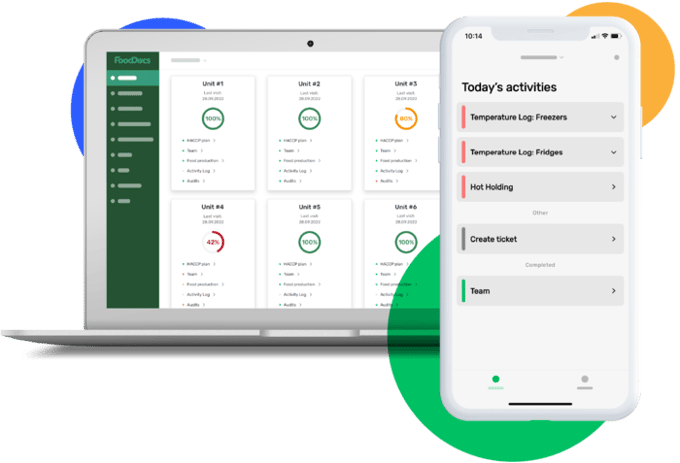
FoodDocs is a digital food safety management system designed for hospitality, healthcare, food-to-go operators, central kitchens, and multi-site restaurant groups.
The platform combines daily food safety monitoring with compliance management tools, allowing businesses to manage food safety from a single system.
FoodDocs is commonly used by:
- Restaurant groups
- Hotels
- Care homes
- Hospitals
- Catering companies
- Food-to-go chains
- Central kitchens
- Grocery foodservice operations
FoodDocs combines day-to-day food safety monitoring with broader compliance management, reducing the need for multiple systems.
What is Food Alert (Alert65)?
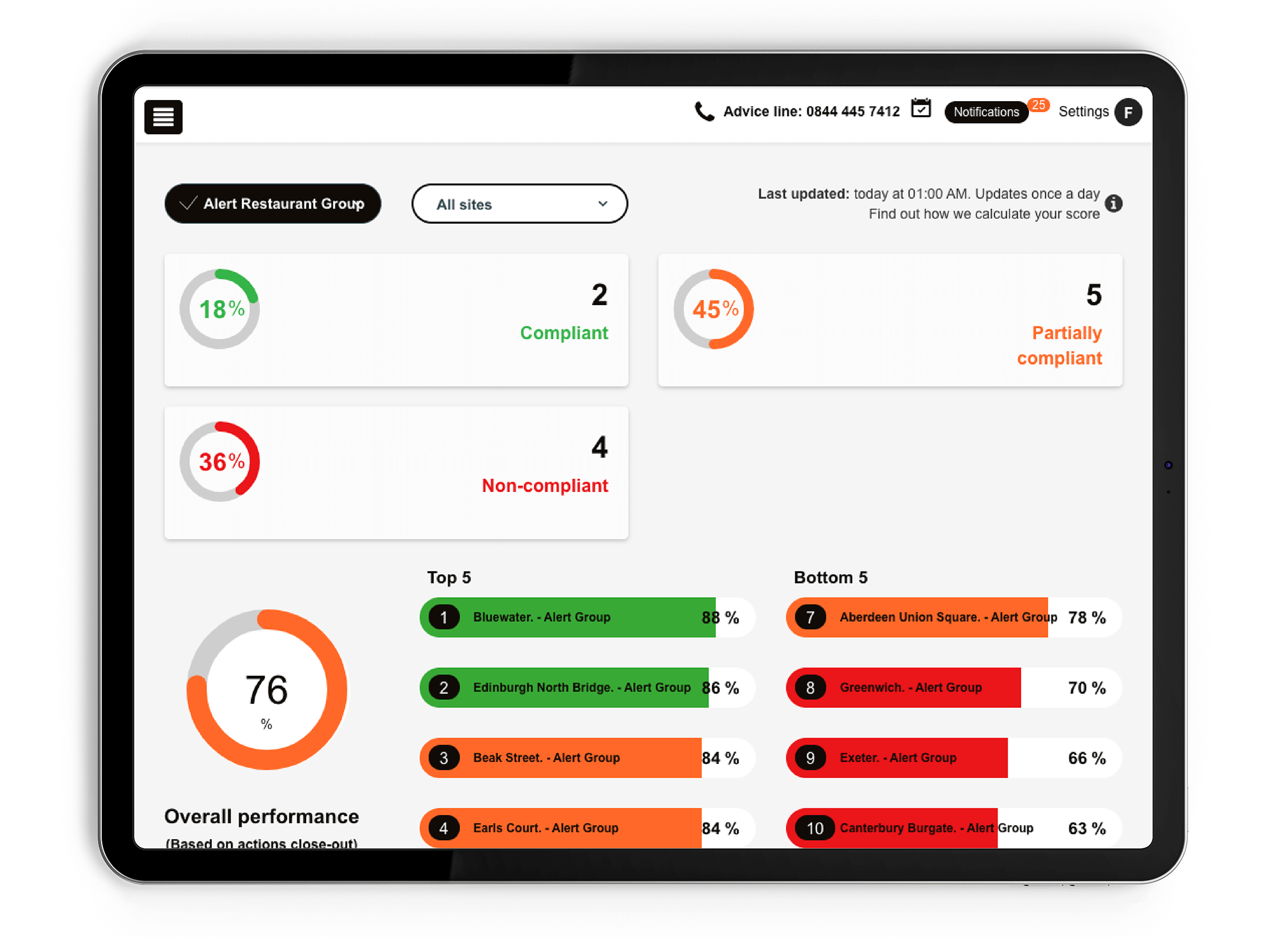
Food Alert is a UK food safety consultancy and compliance provider that offers food safety software alongside consultancy services, audits, inspections, and regulatory support.
The platform is commonly used by:
- Restaurant groups
- Hotels
- Contract caterers
- Healthcare providers
- Leisure operators
Food Alert's approach is often centred around consultancy-led implementation, with support from food safety specialists during onboarding and ongoing compliance activities.
For some organisations this level of support can be valuable. However, businesses looking for a faster and more flexible rollout may find the consultant-led model less convenient.
FoodDocs vs Food Alert feature comparison
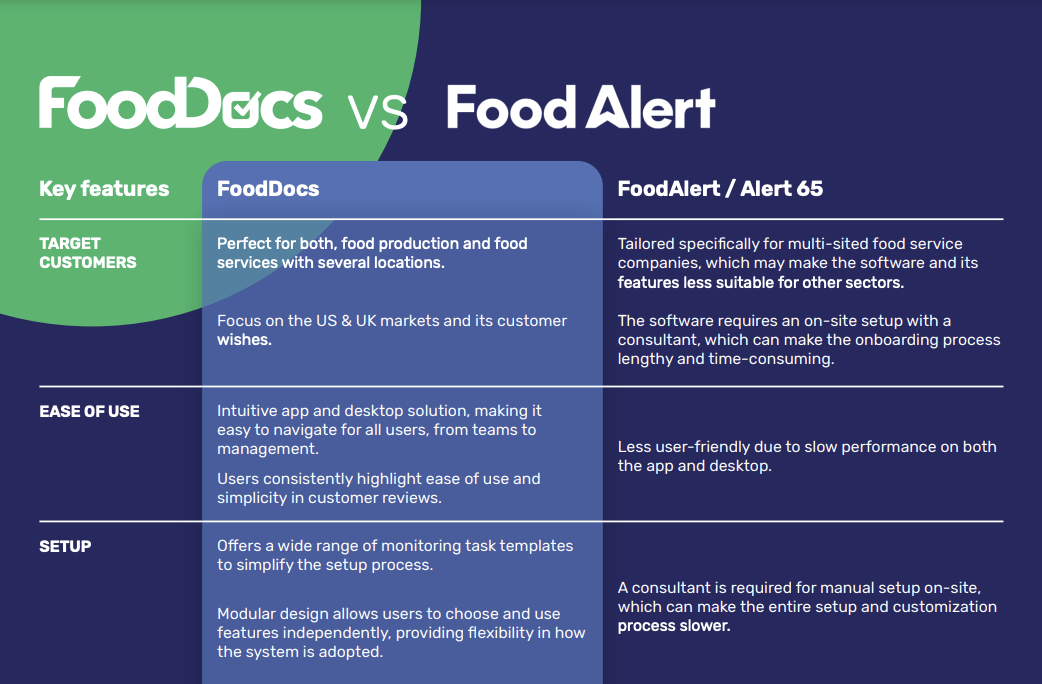
The following table summarizes the key features of both FoodDocs and Alert65, illustrating how each digital solution meets specific operational needs within the food service industries:
|
Key Features
|
FoodDocs
|
Alert65 (by FoodAlert)
|
|
TARGET CUSTOMERS
|
Perfect for both, food production and food services with several locations.
Focus on the US market and its customer wishes.
|
Tailored specifically for multi-sited food service companies, which may make the software and its features less suitable for other sectors.
The software requires an on-site setup with a consultant, which can make the onboarding process lengthy and time-consuming.
|
|
EASE OF USE
|
Intuitive app and desktop solution, making it easy to navigate for all users, from teams to management.
Users consistently highlight ease of use and simplicity in customer reviews.
|
Less user-friendly due to slow performance on both the app and desktop.
|
|
SETUP
|
Offers a wide range of monitoring task templates to simplify the setup process.
Modular design allows users to choose and use features independently, providing flexibility in how the system is adopted.
|
A consultant is required for manual setup on-site, which can make the entire setup and customization process slower and more time-consuming.
|
|
CUSTOMIZABILITY
|
All tasks are fully customizable to meet the chosen food safety standards.
|
Offers flexibility in customization options, but all adjustments require customer support involvement, making the process time-consuming.
|
|
HACCP PLAN
|
Enables you to create a HACCP Plan in 1 hour, using AI.
The setup process is fast and straightforward, thanks to pre-filled fields.
HACCP content is fully customizable for your company's specifics.
|
You can manually create your digital HACCP plan from scratch, though it can be time-consuming.
There is no option to download your HACCP plan after creating it in the software.
|
|
MONITORING
|
An all-in-one monitoring solution accessible from all devices
The mobile app includes educational instructions to help train the team effectively.
The smart app automatically fills in monitoring checks based on previously entered data.
|
Monitoring cannot be performed on a computer desktop, limiting functionality to mobile devices.
Includes dedicated supplier management feature.
There is no pre-fill option; all data must be entered from scratch, which can be time-consuming.
|
|
TRACEABILITY AND RECALL MANAGEMENT
|
All-in-one traceability solution simplifies the process, enabling logs to be completed quickly and efficiently.
Everything you need is available in a single view, making the process intuitive and easy to navigate.
|
❌
|
|
TEMPLATES &EDUCATIONAL RESOURCES
|
200+ free templates available for managing your company's food safety.
|
❌
|
|
DATA & OVERVIEW
|
You can extract all data as CSV or XLS files, allowing you to select the monitoring log, date range, and export data in a format that's easy to analyze.
|
Great general reporting options allow you to select one or multiple locations or groups (regions) to display results whether in XLS, PNG, JPG, PDF, SVG format.
|
|
TEAM MANAGEMENT
|
Monitoring tasks can be set up by roles, equipment, or rooms, improving team efficiency in completion.
Smart notifications allow tracking the validity of team certificates and training documents.
|
Highly advanced task assignment management.
|
|
RECIPE MANAGEMENT
|
Includes allergen management, including an automatically created allergen matrix.
|
Comprehensive menu management, including recipe and allergen management with a matrix.
|
|
INTEGRATION WITH SENSORS
|
YES
|
❌ (Food Alert does not have an API available)
|
|
WEB & MOBILE ACCESSIBILITY
|
iOS
Android
Web
|
iOS
Android
Web
|
|
FREE TRIAL AVAILABILITY
|
YES (14 days)
|
❌
|
|
PRICING
|
Starts at €165/month for up to 5 users.
Tailor-made pricing is available for larger teams upon request.
|
Prices start at £20,000 per year.
An annual membership is required for access.
|
|
ONBOARDING
|
Full 45-day support with your dedicated support manager.
Price starts with 999$ one-time fee.
|
Seems to offer only on-site onboarding that makes the service slow and expensive.
Onboarding pricing and process details are available upon request.
|
|
CUSTOMER SUPPORT & HELP
|
Top-notch customer support with a satisfaction rate of 98% from our NPS survey.
A comprehensive Knowledge Base with educational instructions and resources.
|
Chat, 24/7 (live rep), Phone Support, Knowledge Base, FAQs/Forum, Email/Help Desk.
|
|
CUSTOMER FEEDBACK & REVIEWS
|
4.8+ customer feedback score on all major review sites, including Capterra, SourceForge, and G2.
|
Lots of feedback on the most common sites, but unfortunately all feedback is about on-site audit consultants, not about the software.
|
Three key differences between FoodDocs and Food Alert
1. Ease of use and frontline adoption
One of the biggest differences between the platforms is how easily teams can use them during daily operations.
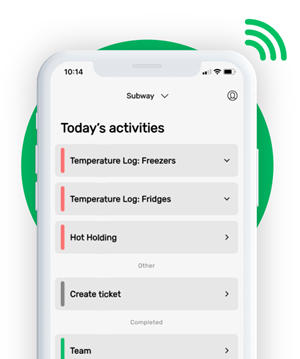
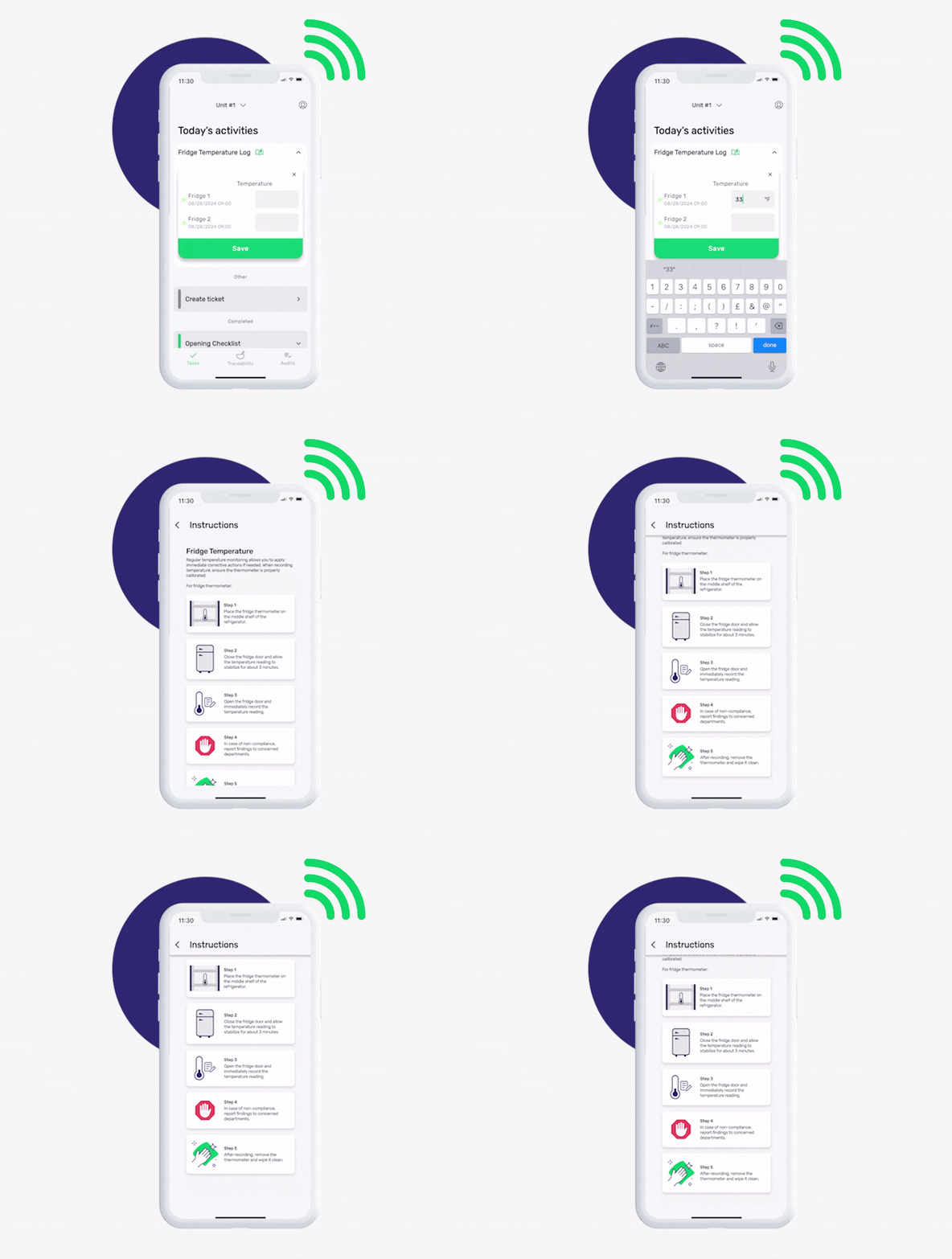
FoodDocs was designed specifically for frontline food safety monitoring. Kitchen teams can complete checks through dedicated iOS and Android applications, receive notifications, upload photos, and complete corrective actions directly from their phones.
The mobile experience includes:
- Push notifications
- Photo evidence
- Corrective action workflows
- Clear task instructions
- Fast task completion
FoodDocs monitoring tasks include instructions and corrective actions, helping staff complete checks correctly while reducing the time food safety leaders spend on supervision and training.
Food Alert's software is generally considered less intuitive for day-to-day users. Some customers report slower performance on both desktop and mobile environments, which can affect user adoption and increase the time required to complete routine food safety tasks.
For hospitality businesses completing dozens or hundreds of checks every day, usability can have a significant impact on compliance consistency.
2. Faster implementation and greater flexibility
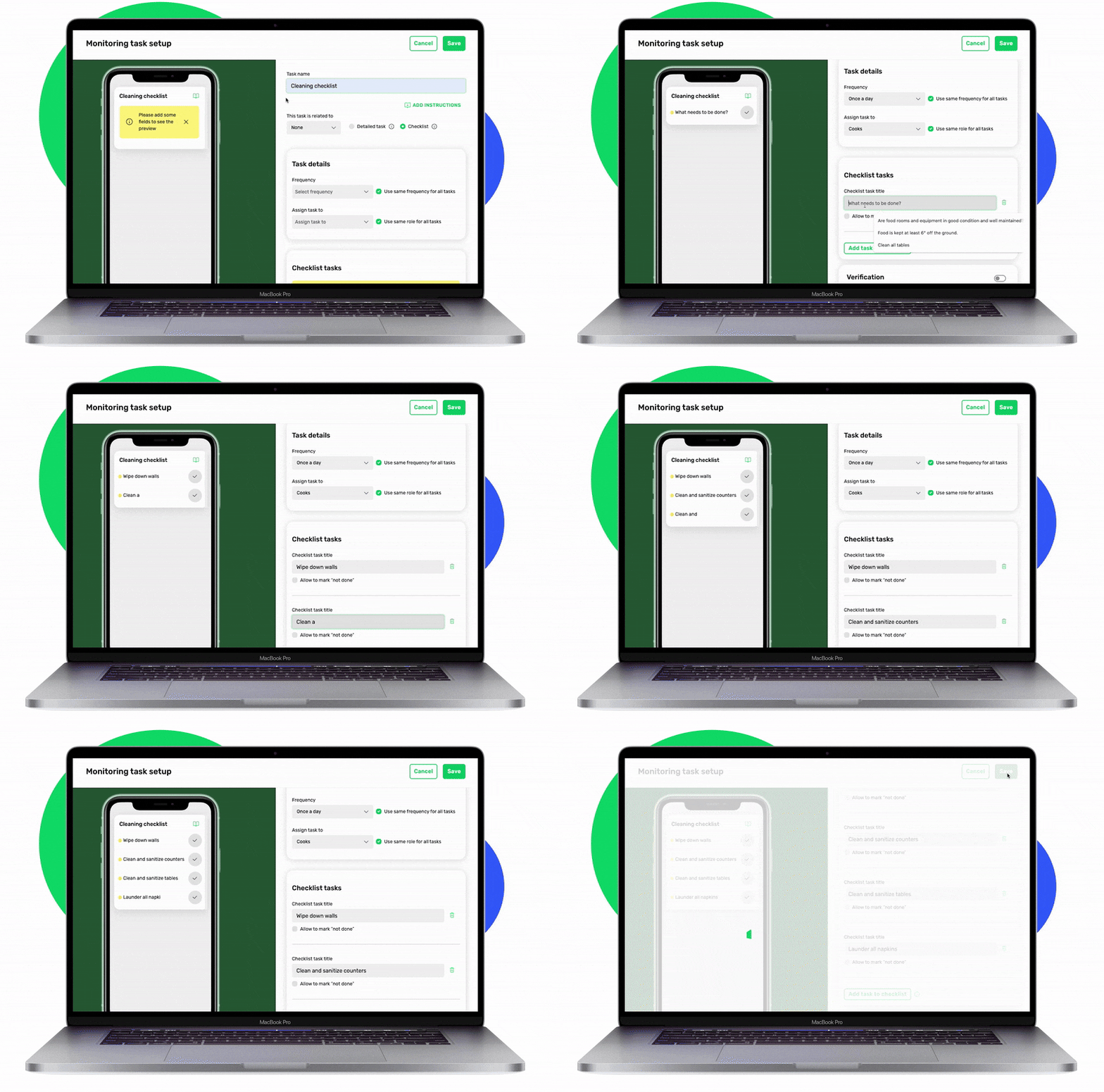
FoodDocs can typically be implemented quickly without requiring on-site consultancy visits.
Businesses can:
- Start a free trial immediately
- Configure monitoring tasks
- Create HACCP documentation
- Add locations
- Launch across teams
This flexibility is particularly valuable for restaurant groups, catering businesses, care homes, and hotel operators that need to move quickly.
Food Alert generally follows a consultant-led implementation process. While this can provide additional support, it often results in longer onboarding times and less flexibility when businesses want to make changes independently.
For growing organisations opening new locations, the ability to update processes without waiting for consultant involvement can save considerable time.
3. Pricing and accessibility
Cost is often one of the biggest factors when choosing food safety software.
FoodDocs offers transparent pricing and a free trial, allowing businesses to evaluate the system before making a commitment.
Food Alert generally operates within the premium end of the market and often bundles software with consultancy services. Costs can start at around £20,000 per year depending on organisation size, locations, and service requirements.
For large enterprises that require extensive consultancy support, this may be acceptable.
For many hospitality businesses, however, the additional consultancy costs may not deliver enough value compared with a modern self-service platform.
Reporting and management visibility
Both platforms provide reporting tools that help managers oversee compliance performance across multiple sites.
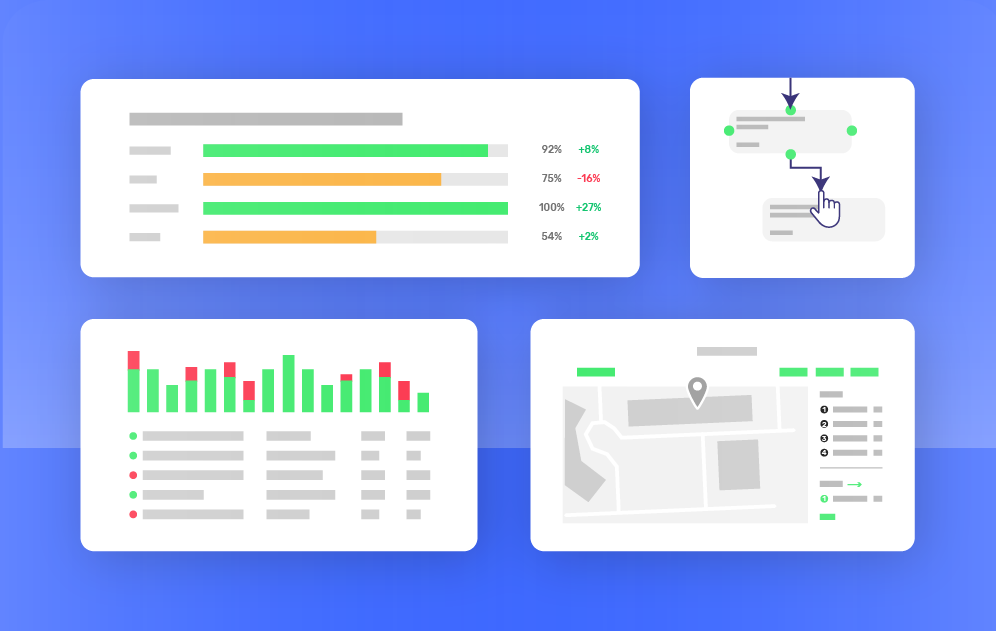
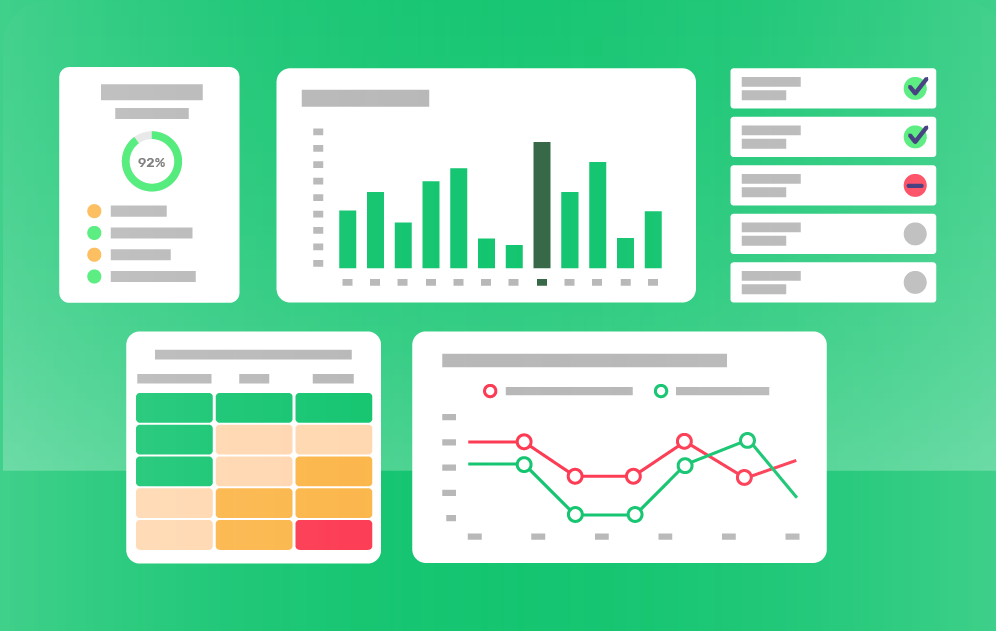
FoodDocs gives food safety leaders and operations managers visibility into:
- Task completion rates
- Corrective actions
- Compliance trends
- Site performance
- Audit readiness
- Outstanding actions
This real-time visibility is particularly valuable for businesses managing multiple locations where identifying problems early can prevent larger compliance issues.
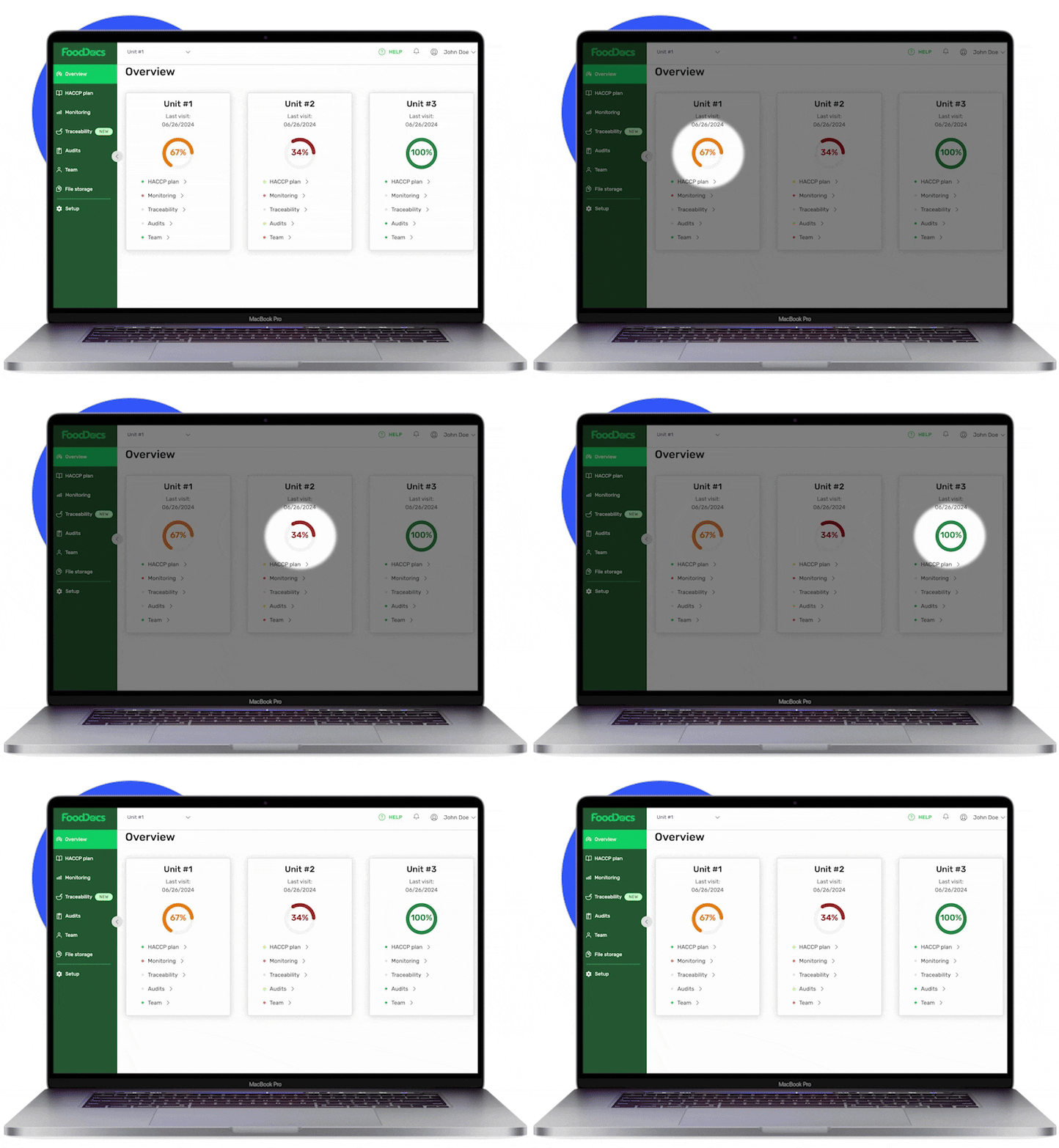
Businesses looking for broader digital compliance solutions may also want to explore modern digital HACCP compliance tools.
Which businesses are best suited to each platform?
FoodDocs may be a stronger fit for:
- Restaurant groups
- Hotels
- Care homes
- Hospitals
- Catering businesses
- Food-to-go operators
- Central kitchens
- Grocery foodservice operations
Particularly where businesses want a user-friendly platform, rapid implementation, mobile-first monitoring, and lower total cost of ownership.
Food Alert may be a stronger fit for:
- Large enterprise organisations
- Businesses seeking extensive consultancy involvement
- Operators requiring regular external compliance support
- Organisations with dedicated compliance budgets
Particularly where consultancy services are a core requirement alongside software.
FoodDocs or Food Alert: Which should you choose?
Both FoodDocs and Food Alert help hospitality businesses improve food safety compliance and move away from paper-based records.
Food Alert may suit organisations that prefer a consultancy-led approach with external support throughout implementation and ongoing compliance management.
FoodDocs may be a better choice for businesses that want a simpler and more flexible platform. Teams can start immediately, complete checks through a dedicated mobile app, receive task reminders, follow corrective actions, and manage compliance across all locations without relying on external consultants.
For many restaurant groups, hotels, care homes, healthcare caterers, and food-to-go operators, the deciding factors are ease of use, speed of implementation, flexibility, and adoption by frontline teams. In those areas, FoodDocs often provides a more practical long-term solution.
Note: This comparison is based on detailed reviews from both websites, direct user feedback, and insights gained from using the software, along with additional online sources. We strive for accuracy and relevance in our content and welcome any feedback to improve the usefulness of this resource.