Find the best food hygiene apps that save time on training, task-filling, supervision, and scaling by use case, features, pros, cons, device and pricing.
Food hygiene apps help teams complete everyday hygiene tasks that prevent contamination in the first place. Things such as cleaning schedules, temperature checks, safe storage routines, delivery checks, and proof that teams completed tasks correctly, consistently, and on time by the right people.
Your team works in fast, high-pressure kitchens. They are cooking, serving, cleaning, and juggling multiple tasks at once. In the middle of that, they are expected to stop and fill out paper records correctly and on time. That is where things start to break down. Not because people do not care, but because the system makes it hard to stay consistent.
As you grow across locations, this becomes even harder. You are relying on different teams, different habits, and records that may be delayed or incomplete. A food hygiene app changes this by making tasks easier to complete, guiding staff through each step, and giving managers a clear view of what is done and what is not, without constant chasing.
Quick comparison of the best food hygiene apps
|
Software
|
Best for
|
Key strength for hygiene operations
|
Pricing starting point (GBP)
|
|
FoodDocs
|
Multi-site restaurants, food to go, healthcare kitchens
|
Real-time multi-location visibility plus guided daily checks and built in HACCP foundation
|
14-Day free trial with paid plans from approx. £59 per month per site
|
|
SFBB+
|
Smaller to mid-size operators wanting a digital SFBB-style record set
|
Simple digital diary and temperature records with export and share for inspectors
|
3-month (iOS) or 90-day (Android) free trials with paid plans starting at £4.99 per site per month
|
|
SFBB Pro
|
Restaurants, cafes, and takeaways wanting SFBB-style records with checklists
|
Digital opening, closing, and weekly checklists plus temperature logging stored in the cloud
|
14-Day free trial with paid plans starting at £24.95 per month per location
|
|
Leafe
|
Chef-led teams wanting fast hygiene records plus broader kitchen management
|
Fast temperature records and checklists that sync across the team, with reminders
|
7-Day free trial; paid plans start at £28 per month per site
|
|
Trail
|
Multi-site hospitality teams that want hygiene tasks integrated into daily ops execution
|
Digital checklists, record logs, dashboards, and corrective actions priced per site
|
14-Day free trial; paid plans start at £38 per month per site with limited features
|
|
Alert65 (from Food Alert)
|
Larger hospitality groups with formal governance and centralized documentation
|
Centralised multi-location documentation and reporting for compliance visibility
|
Exact price not published; sources show plans starting at £20,000 per year
|
|
Navitas Safety
|
Operators who want software plus optional hardware for temperature automation
|
Digital checklists plus automated appliance temperature checks and traceability of actions
|
From approx. paid plans start at £39 per month with a 1-2 year contract commitment
|
|
Food Safety Guru
|
Operators who want software plus expert support and multi-site oversight
|
Real-time dashboards and alerts across sites, plus HACCP and risk assessments support
|
Quote-based, one monthly plan described, no exact price published
|
|
Hubl
|
Independent and multi-site hospitality teams that want simple daily logs and oversight
|
Simple dashboard, calendar-based record retrieval, and temperature guidance with alerts
|
14-Day free trial with paid plans starting from £17 per month per site
|
In-depth reviews of the top 9 food hygiene apps
FoodDocs

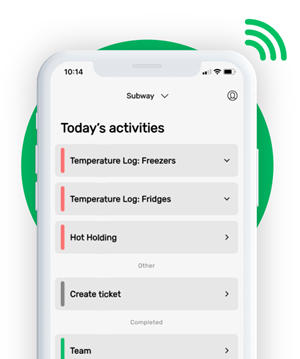
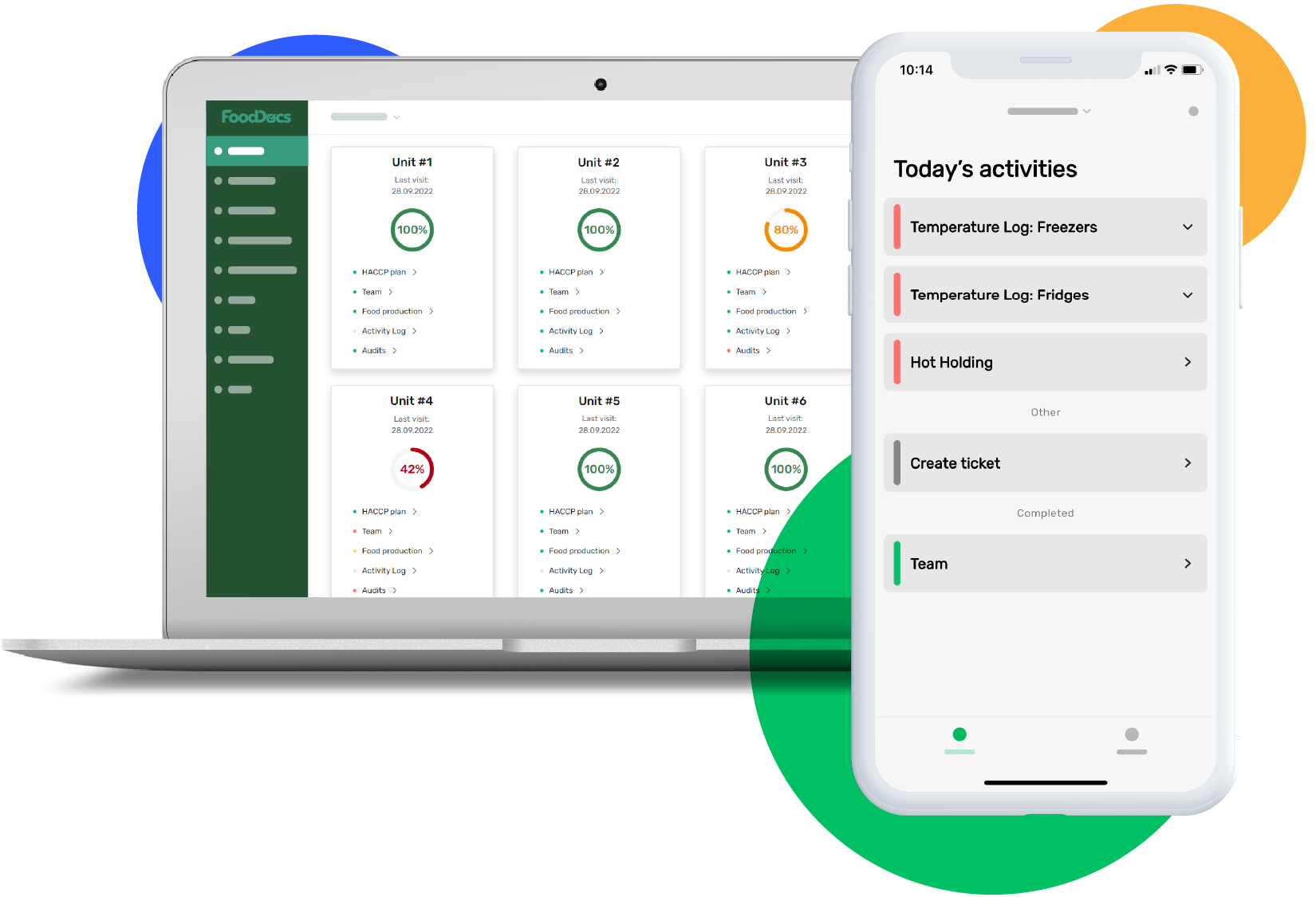
FoodDocs’ platform pairs a food hygiene mobile app with a HACCP-based monitoring system that guides teams through daily checks, then gives managers a real-time overview across locations. Its food safety and hygiene app has digital checklists and logs, with smart setup and notifications designed to prevent missed tasks.
Best for:
Multi-site restaurant groups, food-to-go or takeaway retail, healthcare foodservice, and central kitchens that need consistent hygiene execution plus a strong HACCP-based structure.
Key features:
- Digital hygiene checklists guide staff through daily tasks, so nothing is missed during busy shifts.
- Mobile notifications and reminders keep hygiene checks on schedule and reduce end-of-shift catch-up.
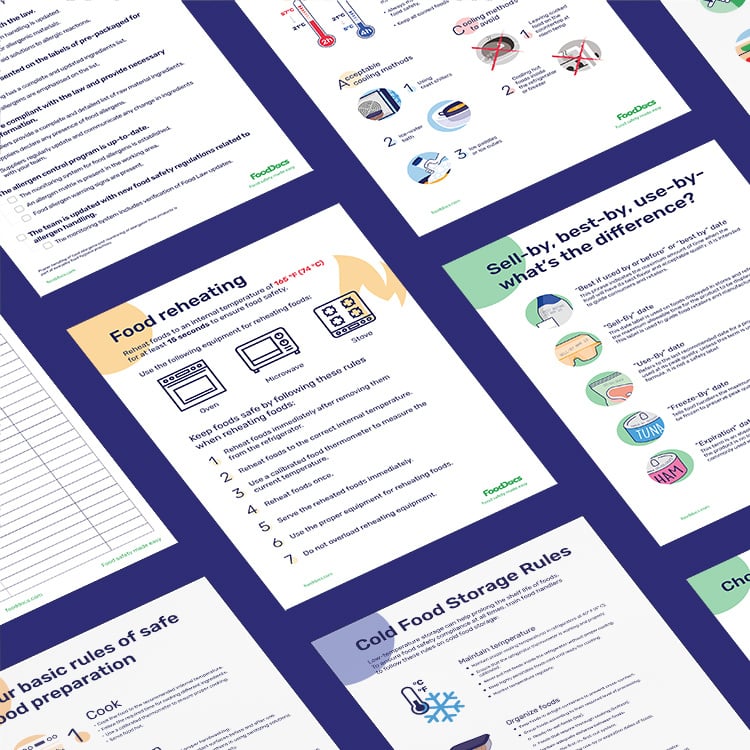
- Visual step-by-step instructions built into each task help teams learn as they work and keep standards consistent across all staff.
- HACCP plan builder creates a complete system quickly, so hygiene routines are always tied to defined controls rather than guesswork.
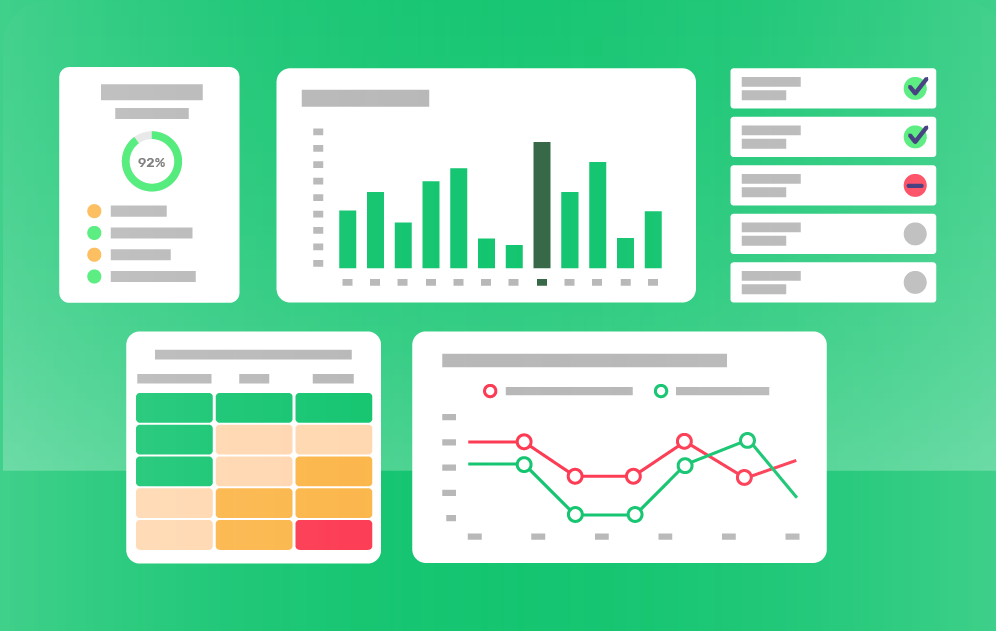
- Real-time dashboards show hygiene performance across all locations, giving leaders a clear view of what is done and what is not.
- Traceability tools connect hygiene routines to ingredients and batches, helping teams respond faster when issues arise.
Pros:
- Very easy to use across mobile and desktop, which helps teams complete checks correctly without extra training.
- Strong automation reduces manual chasing, with monitoring task tracking, corrective action prompts, and workflows that keep hygiene routines on track without constant oversight.
- True multi-site operational control, with real-time dashboards and AI-driven reporting (such as heatmaps and trends) that highlight where performance is slipping across locations.
- Designed for operational efficiency at scale, helping teams save time on supervision, reduce manual admin, and improve consistency as the business grows.
- Fast audit readiness with minimal effort, as all records are searchable, exportable, and accessible instantly, removing the need to organise paperwork before inspections.
Cons:
- May be more advanced than needed for very small teams, especially those only looking to digitise basic hygiene logs without improving workflows.
- Operators who want to customise the entire food safety management system within FoodDocs have that ability, but it may delay your digital setup and launch.
- Not designed for large food production or manufacturing operations with complex inventory systems.
Web and mobile accessibility
Web, iOS, and Android.
Pricing:
FoodDocs pricing plans start from approximately £59 per month per site on an annual plan, with a 14-day free trial.
SFBB+
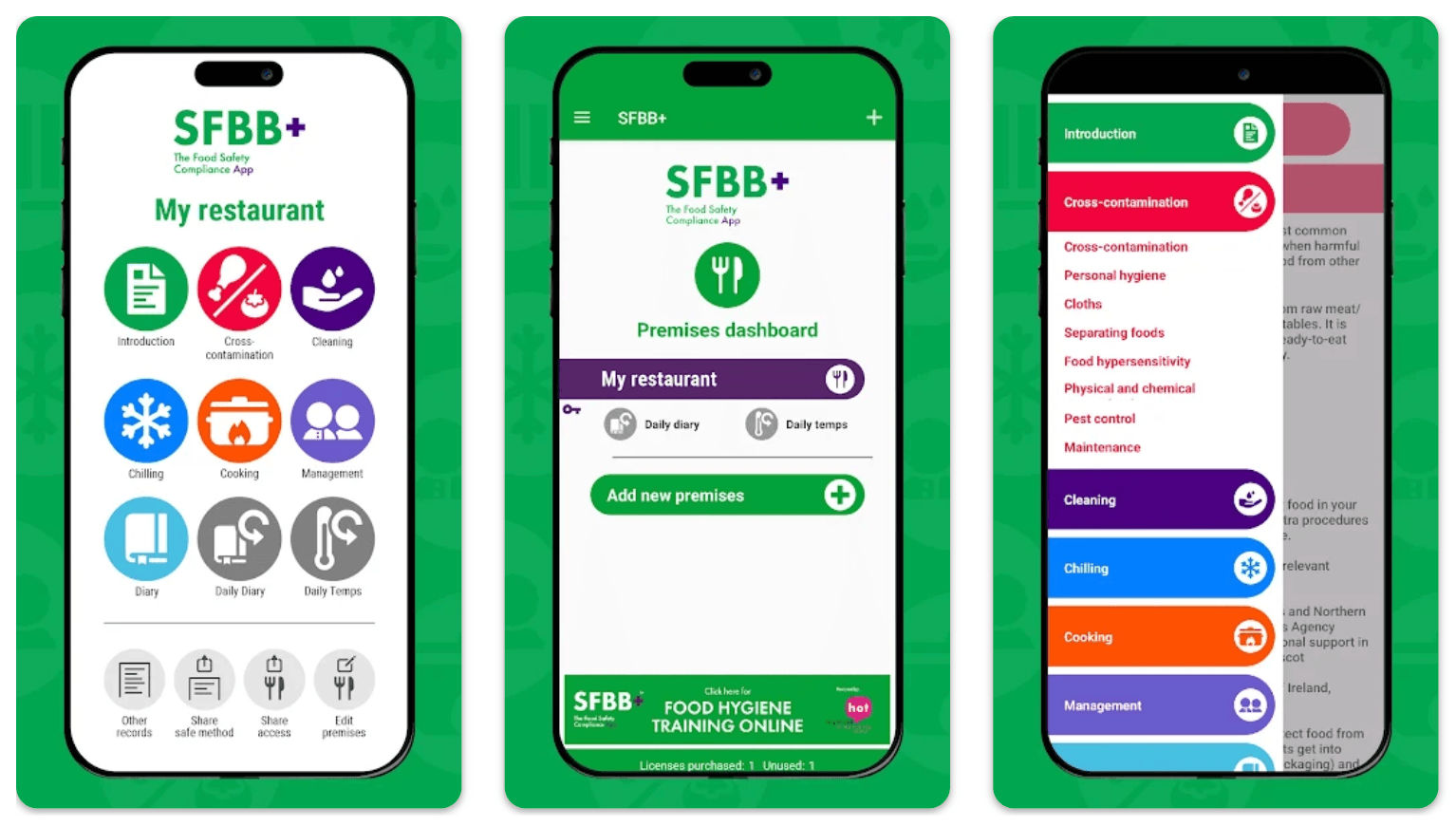
SFBB+ from All Environmental Health Services Ltd. is positioned as a digital way to keep SFBB-style food hygiene records in order, including daily diary and temperature checks, with the ability to export and share records for inspectors. It also supports scanning and storing other hygiene documents like training certificates and delivery notes.
Best for:
Single-site and smaller multi-premises operators who want a low-cost SFBB-aligned record-keeping app, especially where the main goal is replacing paper packs and keeping records tidy for inspections.
Key features:
- Digital diary and temperature checks reduce missing paperwork and make daily hygiene record completion more consistent.
- Version control and record ordering keep documentation organised, so teams spend less time trying to keep files updated (if at all) before inspections.
- Export and share features let you send a full digital pack to inspectors quickly, reducing inspection friction.
- Scan and attach supporting evidence (e.g., pest control records, certificates, PDFs) so hygiene proof stays in one place instead of scattered across folders.
- Multi-user and multi-premises support helps you collect records from several staff and oversee record keeping across sites.
Pros:
- Since the app follows the same structure as SFBB, it’s easy for teams to adopt and should reduce the learning curve.
- Organised digital records that can be easily shared with inspectors at any time make it a good contender for inspection-readiness.
- Reliable record storage and version control, so hygiene logs are always available, ordered correctly, and not lost or damaged
- Supports multi-site record tracking at a basic level, allowing businesses to monitor whether records are being maintained across locations
Cons:
- More of a digital diary than an operational tool, meaning it does not actively guide staff through hygiene tasks during service.
- Limited automation and reminders, so hygiene routines can still rely on staff remembering to complete records rather than being prompted in real time.
- Basic multi-site visibility, with a focus on record keeping rather than live dashboards that highlight missed checks or performance gaps across locations.
- Limited real-time oversight, which makes it harder for managers to spot issues early and intervene before inspections.
- May be outgrown by growing businesses, especially those needing stronger reporting, automation, traceability, or real-time control across multiple sites as your business expands.
Web and mobile accessibility
iOS and Android.
Pricing:
£4.99 per month per premises, with a 3-month free trial period.
SFBB Pro
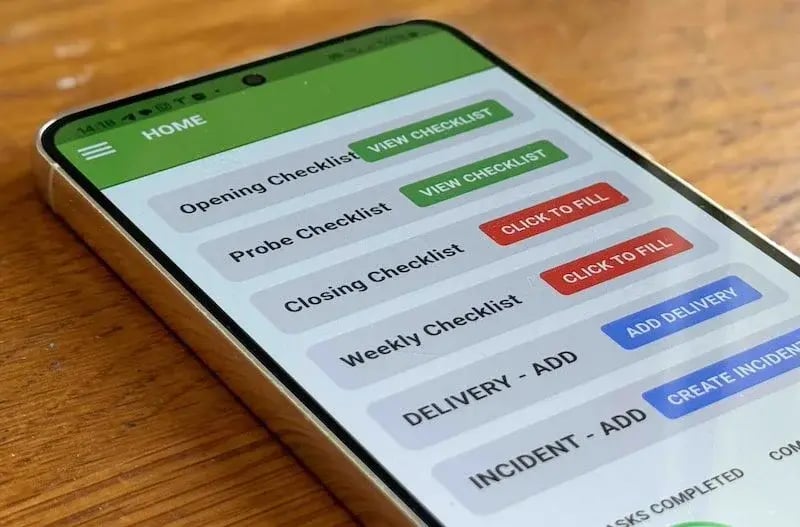
SFBB Pro from Guardstar Food Safety positions itself as a cloud-based SFBB-aligned food safety app for restaurants, cafes, and takeaways, with digital checklists and temperature logging that are designed to keep businesses inspection ready. It highlights opening and closing checklists alongside fridge and freezer temperature recording.
Best for:
Independent hospitality operators who want SFBB style compliance records plus practical daily checklists for opening, closing, and weekly routines.
Key features:
- Digital opening and closing checklists reduce shift-to-shift variation, so every site completes the same hygiene basics each day.
- Fridge and freezer temperature recording is designed to be quick, which helps teams keep up during service rather than skipping logs.
- Cloud storage reduces lost paperwork and makes inspection retrieval faster.
- Multi-device support lets teams complete checks on phones, tablets, or desktops.
- Editable checklists support basic site customisation, so you can align routines to your actual workflow.
Pros:
- Easy for kitchen teams to use, with simple checklists and fast temperature logging that can be completed in seconds during service.
- Familiar SFBB structure, making it easy for teams transitioning from paper to digital without changing existing workflows.
- Built-in reminders and alerts help staff stay on track with daily hygiene tasks, reducing reliance on memory and manual follow-up.
- Strong inspection readiness, with all hygiene records stored in the cloud and available instantly for EHO visits.
Cons:
- Limited multi-site oversight, with basic visibility rather than a true real-time dashboard showing performance across all locations.
- Focused on record-keeping rather than guided execution, so it may not actively train staff or standardise how hygiene tasks are completed.
- Less advanced reporting and trend visibility, making it harder for managers to identify patterns or improve performance over time.
- Primarily designed for smaller or single-site businesses, which means growing operations may outgrow its capabilities.
- Automation is limited to reminders, without deeper workflow features like corrective action tracking or escalation.
Web and mobile accessibility
iOS and Android.
Pricing:
£24.95 per month per premises, with a 14-day free trial option.
Leafe

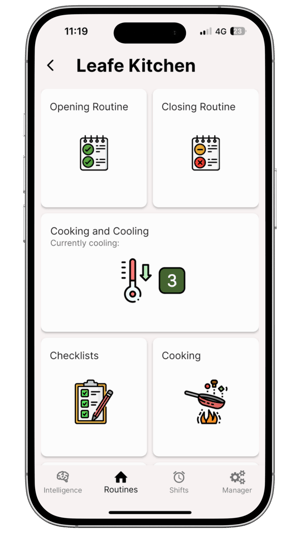
Leafe positions itself as an all-in-one tool for kitchen management, with a strong emphasis on food hygiene records on your phone, including fridge and freezer temperatures and compliance checklists that sync across the team. It also extends into shift management, inventory, and menu allergens.
Best for:
Chef-led teams and venue operators who want hygiene records plus broader daily kitchen operations tooling in one app.
Key features:
- Pre-built hygiene routines and HACCP-aligned processes help teams follow consistent daily practices without building everything from scratch
- Documents stored in the cloud give staff quick access to hygiene procedures and policies during inspections
- Built-in training and certificate tracking help ensure staff stay qualified and follow correct hygiene practices
- Incident and complaint tracking supports proper follow-up, so hygiene issues are recorded and resolved clearly
- Mobile logs allow teams to record temperatures and hygiene checks during service, reducing missed or delayed entries
- Compliance dashboards and alerts show hygiene performance by location and highlight when checks are missed
Pros:
- Strong support model helps ensure hygiene processes are set up correctly from the start
- Mobile-first workflows make it easier for teams to complete hygiene checks during busy shifts
- Clear dashboards provide visibility into hygiene performance across multiple locations
Cons:
- A browser-based experience can lead to less reliable notifications, which increases the risk of missed hygiene tasks.
- HACCP plans are managed externally and stored as documents, so teams cannot easily edit or adapt processes on demand.
- Limited flexibility in tasks means teams may struggle to adapt hygiene routines to their specific operations.
- Fixed temperature limits and lack of corrective action workflows reduce the ability to respond to hygiene issues in real time
- No built-in traceability system, which makes it harder to investigate hygiene-related incidents linked to ingredients or batches.
Web and mobile accessibility
Web, iOS, and Android.
Pricing:
Leafe’s pricing page indicates plans priced per venue per month (excluding VAT), and search snippets list plans starting at £28 per venue per month.
Trail
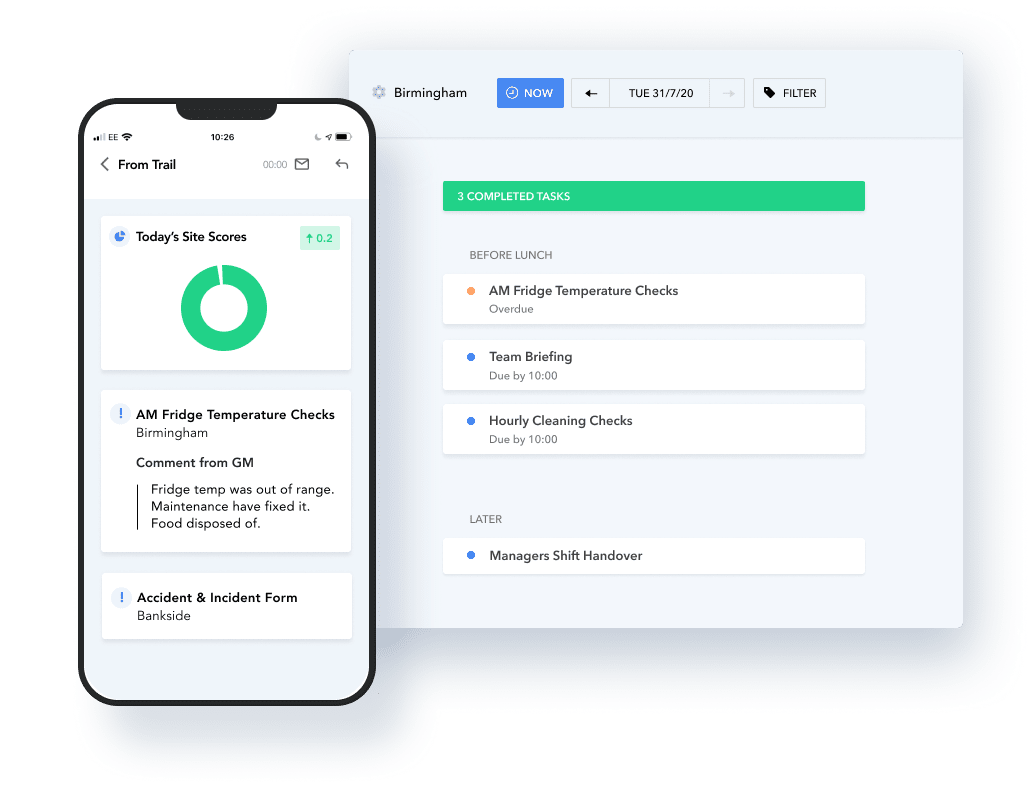
Trail positions itself as a hospitality checklist app that folds food hygiene into daily operational task execution. It supports checklists, record logs, audits, and dashboards, with pricing per site and a self-configurable approach aimed at fast rollouts for growing brands.
Best for:
Multi-site hospitality groups that want one execution layer for daily tasks, including hygiene, with predictable per-site pricing.
Key features:
- Fast daily temperature recording makes hygiene compliance easier to sustain during busy service, reducing gaps in logs.
- Team-synced routines keep everyone aligned, so managers do not have to reconcile separate paper forms by shift.
- Intelligent checklists with automatic reminders reduce missed cleaning tasks and trying to backfill logs at the end of the day.
- Training tracker and certificate handling support consistent hygiene behaviour across new starters and rotating teams.
- Inventory and delivery management with batch and use-by tracking can strengthen hygiene and due diligence, especially for multi-site operations.
Pros:
- Simple task workflows make it easy for kitchen teams to follow daily hygiene routines without extra training
- Automated reminders help teams stay on track with cleaning checks and hygiene tasks during busy shifts
- Photo, timestamp, and comment capture provide clear proof that hygiene checks were completed properly
- Cloud-based records replace paper logs, making it easier to access hygiene history during inspections
- Works well for multi-site hospitality groups that need consistent hygiene processes across locations
Cons:
- Limited access to device features like the camera can slow down how quickly staff complete hygiene checks.
- Reporting layout can make it harder for managers to quickly spot hygiene gaps or trends across locations.
- Several performance and outcome claims are stated in marketing terms without a methodology visible on the referenced pages, so buyers should validate with a trial in their own operation.
- Some advanced features like push notifications are promoted on higher tiers, so make sure the plan you choose matches your compliance risk tolerance.
Web and mobile accessibility
Web only, but optimized for mobile.
Pricing:
Plans start at £38 per site per month, with a 14-day free trial.
Alert65

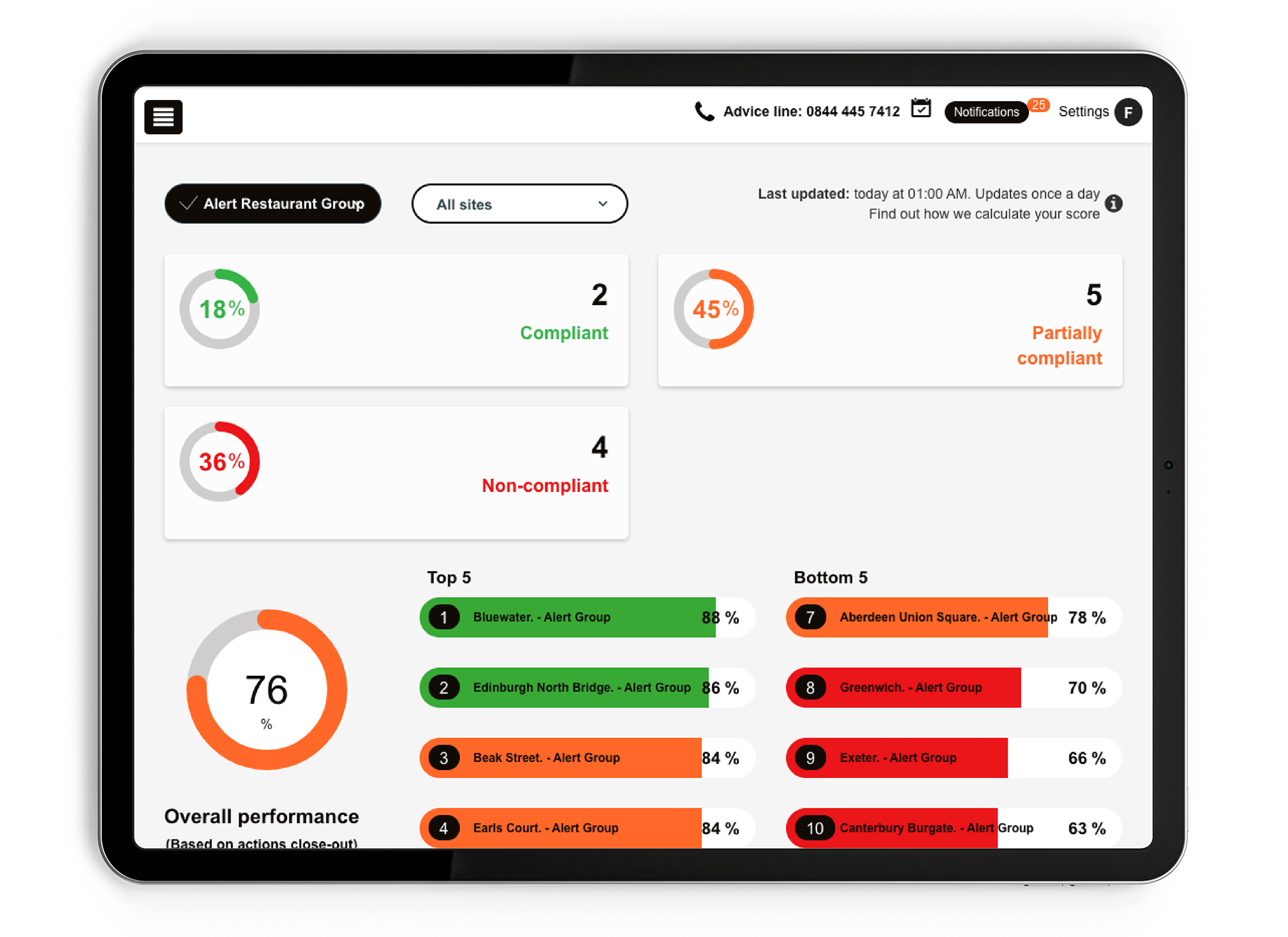
Alert65 is positioned as cloud-based safety compliance software designed to store compliance information centrally, automate manual tasks, and provide customisable reporting and analytics. It explicitly references multi-location visibility and is supported by a broader consultancy and membership model for audits, HACCP development, and expert support.
Best for:
Larger hospitality groups that want a structured, governed approach with documentation centralisation, reporting, and access to expert consulting support.
Key features:
- Centralised hygiene system keeps all daily checks and procedures in one place, so teams can follow consistent routines across every shift.
- Task assignments and competency tracking ensure hygiene checks are completed by the right staff, reducing gaps caused by unclear responsibilities.
- Risk mapping highlights high-risk hygiene tasks, helping teams focus attention where stricter controls are needed.
- Standardised process flows guide teams through key hygiene routines, reducing errors during busy service periods.
- Version tracking shows the latest approved procedures, so staff always follow current hygiene standards.
- Custom reports and dashboards help managers identify trends and address hygiene issues before they escalate.
Pros:
- Structured approach supports consistent hygiene practices across larger teams and multiple locations.
- Includes consulting, audit support, and supplier management features, which can support hygiene investigations when issues arise.
- Suitable for larger hospitality groups that need more control over how hygiene processes are defined.
Cons:
- Slower performance across app and desktop can make it harder for teams to complete hygiene tasks quickly during service
- Setup and onboarding often require consultant support, which can delay rollout and increase time to value
- Customisation changes depend on external support, reducing flexibility for teams that need to adjust hygiene routines quickly
Web and mobile accessibility
Web, iOS, and Android.
Pricing:
Third party listings such as Capterra cite a starting price of £20,000 per year, with a free trial indicated. High starting price may place it outside the budget of many small- and mid-size operators.
Navitas Safety
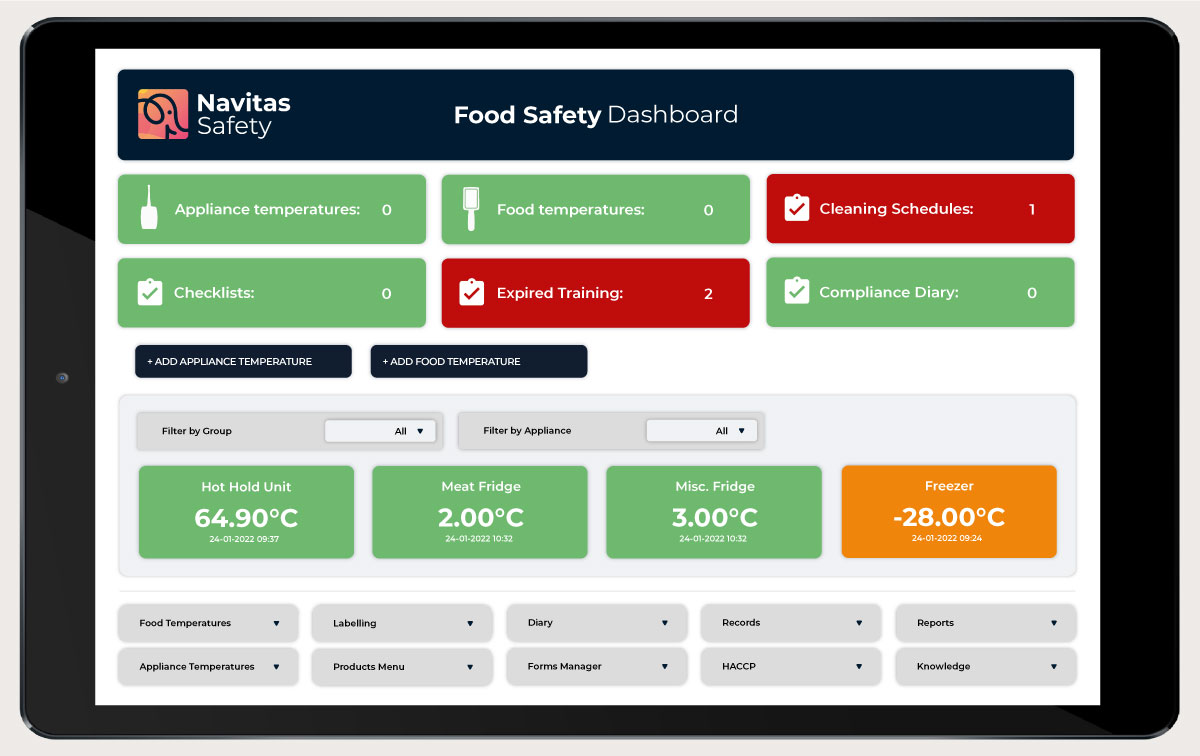
Navitas Safety positions its digital food safety offering as a way to eliminate paper logs, reduce human error, and give audit-ready data with real-time access. It also emphasises optional automation through hardware like temperature monitoring Pods and gateways in some packages.
Best for:
Restaurants, contract caterers, and care homes that want paperless hygiene checks and may benefit from automated temperature monitoring to reduce missed logs.
Key features:
- Digital hygiene checklists replace paper diaries, making it easier for teams to complete daily cleaning and hygiene tasks consistently
- Built-in temperature guidance helps staff quickly identify when readings fall outside safe limits, so action can be taken during service
- Real-time task dashboards show which hygiene checks are done, missed, or overdue, giving managers immediate visibility
- Centralised document storage ensures teams always follow the latest hygiene procedures during daily work or inspections
- Supplier and ingredient tracking supports faster investigation when hygiene issues link back to deliveries or stock
- Staff training and records are stored alongside hygiene logs, making it easier to confirm team readiness during audits
Pros:
- Moves hygiene routines away from paper and into a structured digital system
- Real-time visibility helps managers catch missed hygiene checks early
- Built-in guidance supports better decision-making during daily temperature checks
- Scales from single kitchens to larger operations with multiple locations
- Combines hygiene tasks, documentation, and staff records in one place
Cons:
- Limited multi-site reporting makes it harder to get a full hygiene overview across all locations.
- Task updates and changes often require support, which can slow down improvements to hygiene routines.
- Onboarding tied to longer contracts can delay rollout for teams that want to move quickly.
Web and mobile accessibility
Web, iOS, and Android.
Pricing:
A limited time offer states packages from £39 per month. Contract terms for some packages are stated as 12 months for Essentials and 24 months for Pro.
Food Safety Guru

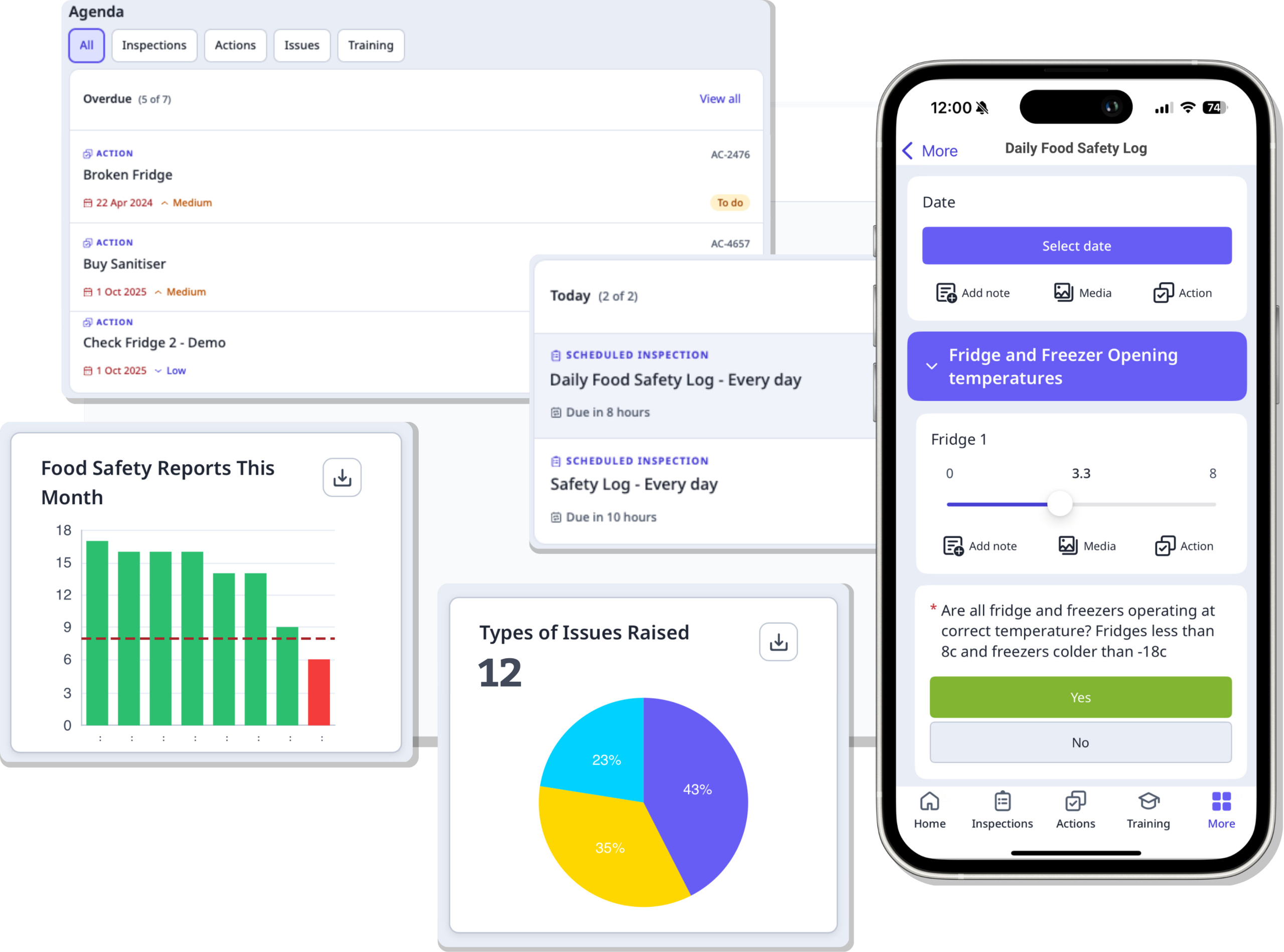
Food Safety Guru positions itself around digital food safety checks and analytics that deliver real-time dashboards, alerts, and reporting across sites. It also emphasises HACCP and risk assessments support and expert help alongside software.
Best for:
Operators who want multi-site oversight and real-time alerts with a guided setup model, especially where leadership wants help embedding consistency as well as the software itself.
Key features:
- Customisable hygiene checklists help teams complete daily cleaning tasks, logs, and routines consistently across every shift
- Mobile-first design allows staff to complete hygiene checks on the go while managers monitor activity across locations
- Real-time dashboards and alerts highlight missed hygiene tasks or potential issues, so action can be taken quickly
- Allergen tracking tools support safer food handling by helping teams identify and manage risks during service
- Automated reporting provides a clear view of hygiene performance, making inspection prep faster and less stressful
- Ongoing updates ensure hygiene processes stay aligned with current UK guidance and regulatory expectations
Pros:
- Brings key hygiene and compliance tasks into one system, reducing the need for multiple tools
- Time-stamped records make it easier to prove hygiene checks were completed correctly during inspections
- Real-time alerts and dashboards support better oversight across multiple locations
- Flexible subscription model allows teams to get started without long term commitment
Cons:
- Pricing is not publicly available, which can make early comparison more difficult.
- Strong focus on UK frameworks may require validation for businesses operating across multiple regions.
- Limited detail on integrations and data export may be a concern for teams with more complex reporting needs.
Web and mobile accessibility
Web, iOS, and Android.
Pricing:
Quote-based, described as one monthly plan with no hidden extras and no contracts, but with no published starting price.
Hubl

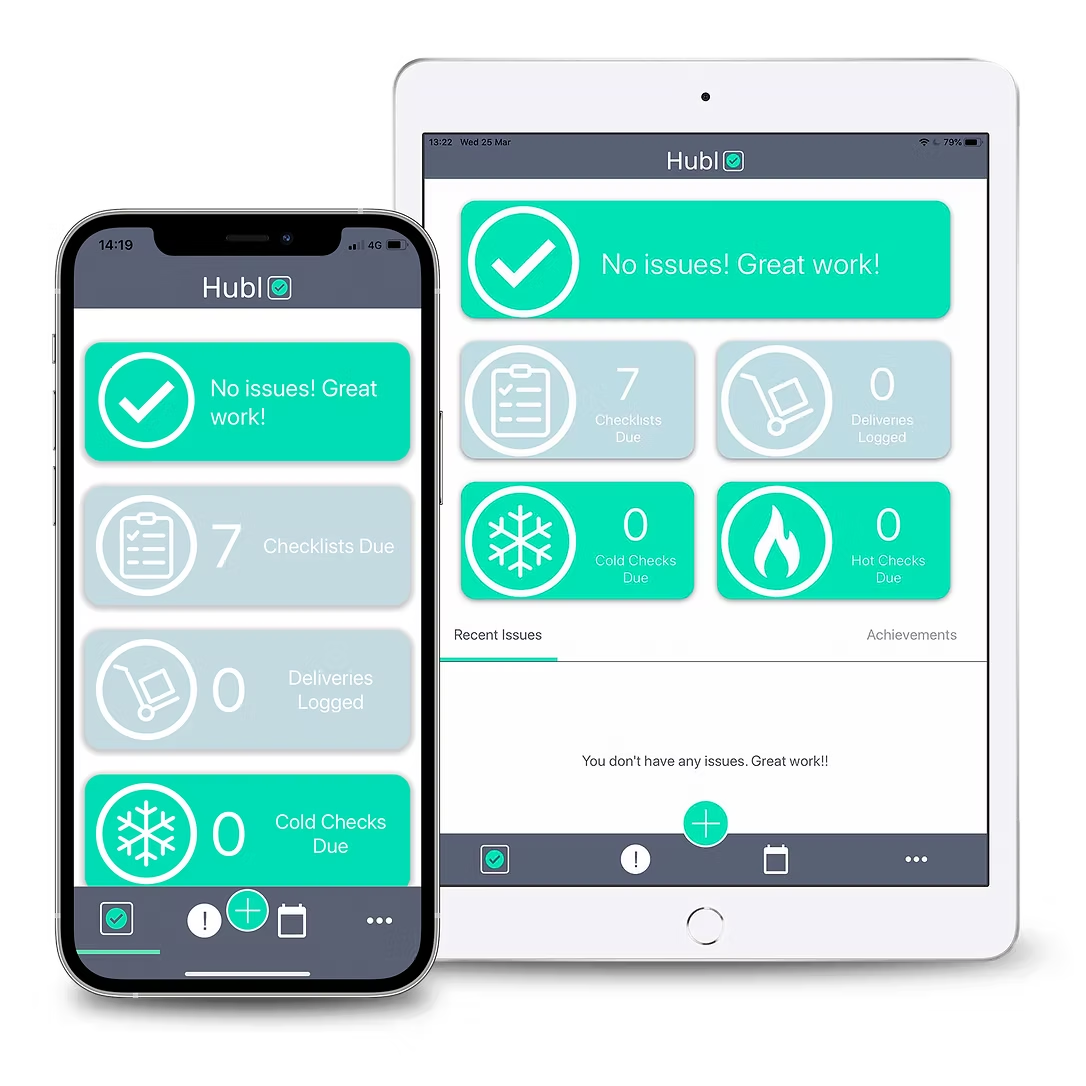
Hubl positions itself as a hospitality checklist app that covers cleaning, temperature checks, and key daily tasks, with a dashboard for oversight and calendar-based record retrieval for inspections. It also highlights built-in temperature logging guidance and alerts.
Best for:
Independent sites and small to midsize multi-site hospitality teams that want simple daily hygiene checks, faster record retrieval, and clear oversight without heavyweight implementation.
Key features:
- Dashboard oversight helps teams prioritise what must be done today and gives managers a quick view of compliance status.
- Calendar view record retrieval reduces inspection stress because you can pull up records by date quickly.
- Temperature logging with best practice guidance and built-in alerts helps staff respond immediately when readings drift.
- Scheduled reminders support consistent completion of checks across the day, reducing missed hygiene records.
- Reporting dashboard and weekly summaries support multi-site management visibility.
Pros:
- Easy-to-use for kitchen teams due to simple, mobile-first checklists that can be completed quickly during service
- Built-in notifications and scheduled checklists help remind staff to complete hygiene tasks on time, reducing reliance on memory.
- Strong inspection readiness, with time-stamped digital records, easy retrieval, and EHO-reviewed checklists that support due diligence.
- Improved visibility over paper systems, with dashboards that help managers monitor hygiene activity and prioritise issues across locations.
Cons:
- Limited flexibility on lower-tier plans, with full checklist customisation only available on higher plans (i.e., Grande and Venti), which can restrict how well and quickly hygiene routines match your operations.
- Multi-site visibility is present but not deeply analytical, with less advanced reporting and trend analysis compared to more operationally focused platforms.
- More focused on record keeping than guided execution, which means it may not train staff or standardise task completion as deeply as more structured systems.
Web and mobile accessibility
iOS, Apple Macs with an M1 chip, and Android.
Pricing:
Starts at £17 per month per site, with higher tiers listed at £30 per month and from £65 per month. They also offer a 14-day free trial. Some key features sit behind higher pricing tiers, including advanced reporting, audits, and support, so total cost may increase as needs grow
Final recommendation: Which best food hygiene app should be at the top of your shortlist?
For UK food businesses comparing the best food hygiene apps, FoodDocs stands out as the strongest overall choice for multi-site operations.
The advantage is that it not only digitises hygiene tasks, but also improves how food safety is actually executed day to day. FoodDocs is built around the outcomes food safety leaders care about most:
- An easy-to-use app that teams actually adopt for the long-term
- Time-saving monitoring tasks that also double as training
- Clear visibility across all locations
- Consistent task completion across rotating teams
- Less time spent chasing food hygiene records.
It also supports hygiene routines within a complete HACCP-based system. UK guidance expects businesses to follow HACCP-based procedures and maintain accurate records.
FoodDocs brings this together in one place, from HACCP plan creation to daily monitoring and inspection-ready documentation, so your system stays aligned with what inspectors expect.
Where it becomes especially valuable is in daily operations:
- Easy-to-use across mobile and desktop so teams complete checks quickly and correctly during service.
- Step-by-step guidance built into each task so new and experienced staff follow the same standard every time.
- Real-time dashboards across all locations so leaders can spot gaps early and reduce time spent supervising.
For growing groups, this combination translates into fewer missed checks, more consistent hygiene standards, and significant time saved each week on oversight and training.
If you are moving from research to shortlist, FoodDocs is one of the few tools designed to support both compliance and real-world kitchen operations at scale. Start with a short demo focused on your daily routines and multi-site visibility needs, rather than a generic feature walkthrough.
How to choose the right food hygiene app
If you are searching for the best food hygiene app, you are usually trying to solve one core problem. You need hygiene tasks to be completed consistently, and you need a clear view of what is done and what is not across your locations.
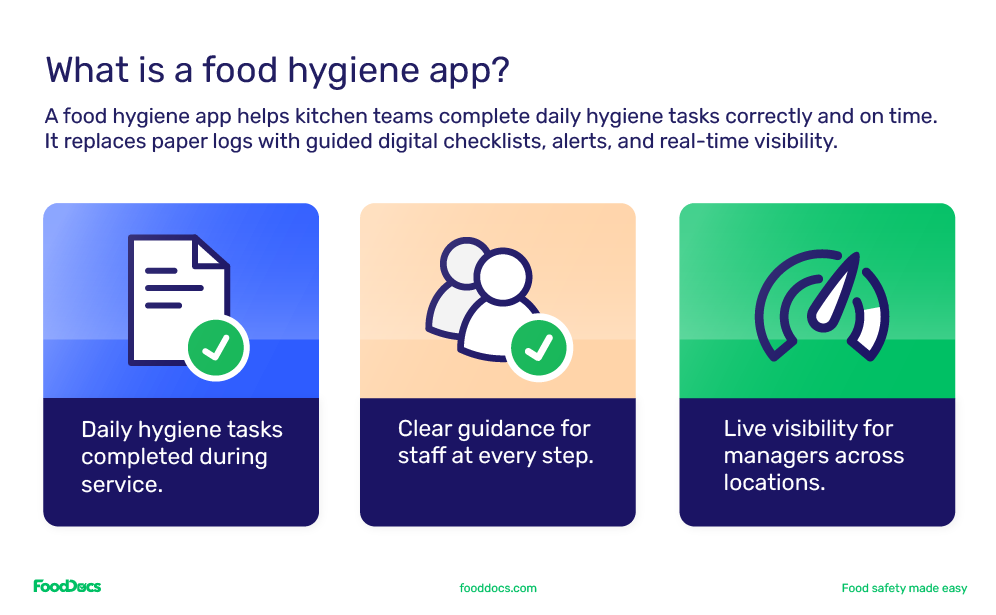
Here’s a practical framework to select a food hygiene app that will result in the best fit:
1. Multi-site visibility and oversight
Start with visibility so that Food Safety Leaders, Operations Managers, Executive Chefs, and similar roles can act early instead of reacting during inspections. If you cannot see what is happening across locations in real time, you’re managing blind.
Look for a cenralised dashboard that shows:
- Which sites are on track
- Which tasks are missed or overdue
- Where intervention is needed
2. Ease of use during service
Hygiene apps only work if teams use them properly, easily, and quickly during busy shifts. If an app slows staff down, your team’s completion will drop and records will become unreliable.
Focus on tools that:
- Make checks quick to complete on mobile
- Guide staff through each task clearly
- Reduce the need for training or supervision
3. Automation and reminders
Hygiene routines should not depend on memory. When a food hygiene app helps automate reminders down to specific staff member’s exact responsibility, leaders spend less time chasing and more time optimising completion rates and other operational efficiencies.
The right app:
- Sends reminders when checks are due
- Flags missed or overdue tasks
- Prompts action when something goes wrong
4. Audit and inspection readiness
UK inspections assess both hygiene practices and how your system is managed. Your app should reflect how your kitchen actually operates, not just store data. You should be able to prove what happened, without digging through paperwork.
Look for:
- Time stamped records
- Clear completion history
- Easy access to logs and reports
5. Pricing clarity for UK businesses
Make sure pricing is clear and predictable. Hidden costs or unclear pricing can slow down rollout, especially for multi-site groups.
Check:
- Cost per site or per user
- What is included in the base plan
- Whether pricing is shown in GBP
Want to simplify food hygiene, make compliance easy, and save time on supervision across all your locations? Book a 15-minute demo with our team or start a 14-day free trial today! No credit card required.

What features should a food hygiene app include?
The best food hygiene standards app is not the one with the longest feature list. It’s the one that turns hygiene standards into daily, repeatable execution and gives leaders proof on demand.
UK food hygiene guidance stresses that good hygiene helps prevent food poisoning, and businesses should follow HACCP principles to manage hygiene and safety procedures.
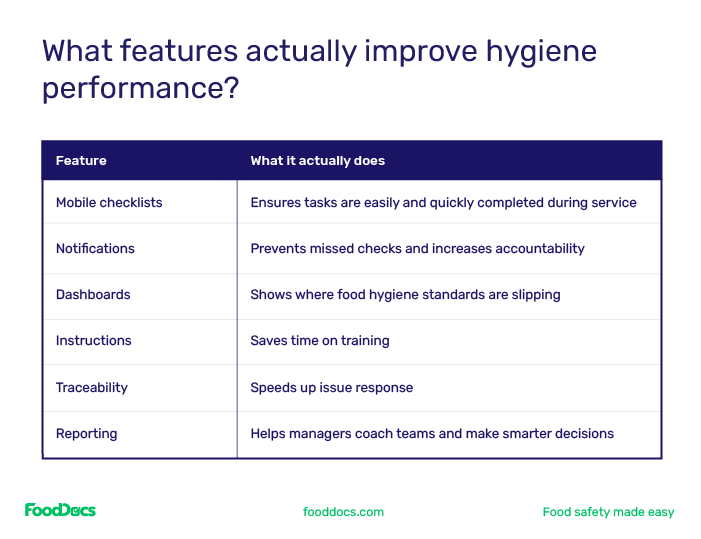
The features below are the practical baseline for most hospitality groups, retail operators, healthcare kitchens, and central kitchens.
Keep your HACCP system active in daily work
Hygiene tasks are only effective when they follow a clear system. A strong app connects every check back to your HACCP controls, so your team is not guessing what to do and inspectors see a structured, consistent approach across every shift.
Help teams complete checks correctly, every time
The best hygiene apps remove friction during service. Staff can complete checks quickly on their phone with clear guidance, so tasks get done in the moment instead of being missed or filled in later from memory.
Catch issues before they become problems
Temperature control often slips when kitchens get busy. A good app makes logging fast and flags anything missed or out of range, so teams can act immediately instead of discovering issues during an audit.
Stay ready and confident when questions come up
When something goes wrong, you need answers fast. Built-in traceability helps you track ingredients and batches without digging through records, so you can respond with confidence and reduce disruption.
Make sure food hygiene incidents are actually resolved
Recording an issue is not enough. The right app guides your team on what to do next and tracks that it was completed, so nothing falls through the cracks and standards improve over time.
See where your food hygiene performance stands
Strong reporting turns daily checks into clear insights. You can quickly spot which locations or tasks need attention, so you can coach teams early instead of reacting under pressure.
Get a clear view of compliance across every location in real time
For multi-site operations, visibility is everything. A single live dashboard shows what is done and what is not across all locations, so you can step in early and keep standards consistent as you grow.