Hot holding temperature controls are critical in hospitality, healthcare, and food-to-go businesses. If cooked food drops into the temperature danger zone for too long, bacteria can grow quickly and increase the risk of foodborne illness.
For UK food businesses, hot holding is also a key focus during Environmental Health Officer (EHO) inspections. Kitchen teams must be able to show that hot food is consistently held at safe temperatures, monitored properly, and supported by clear corrective actions when temperatures fall below target levels.
This guide explains the UK hot holding temperature requirements, how long food can stay in hot holding, and how food safety teams can improve compliance across daily kitchen operations.
What is hot holding temperature?
Hot holding temperature is the temperature used to keep cooked food safe before service. After cooking, food must stay hot enough to prevent harmful bacteria from multiplying.
In the UK, the general minimum hot holding temperature is 63°C. This guidance is widely referenced by the Food Standards Agency and is commonly used across hospitality, healthcare, and retail operations.
Hot holding applies to foods such as:
- cooked chicken
- soups and sauces
- rice dishes
- pizza
- fried foods
- hot dogs
- cooked vegetables
- gravies
- buffet foods
- prepared hot meals in care homes or hospitals
The goal is simple: keep food out of the temperature danger zone where bacteria grow fastest.
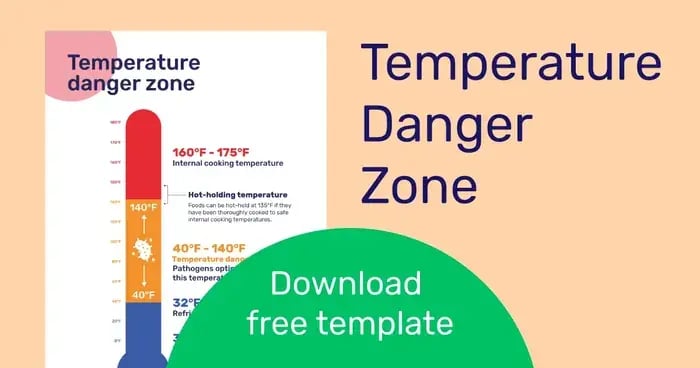
What should the temperature be when hot holding food?
For most UK foodservice operations, hot food should be held at:
63°C or above
This is the minimum hot holding temperature commonly used in UK HACCP procedures and EHO inspections.
Some operations choose slightly higher internal targets, such as 65°C or 70°C, to create an additional safety margin during busy service periods.
Examples include:
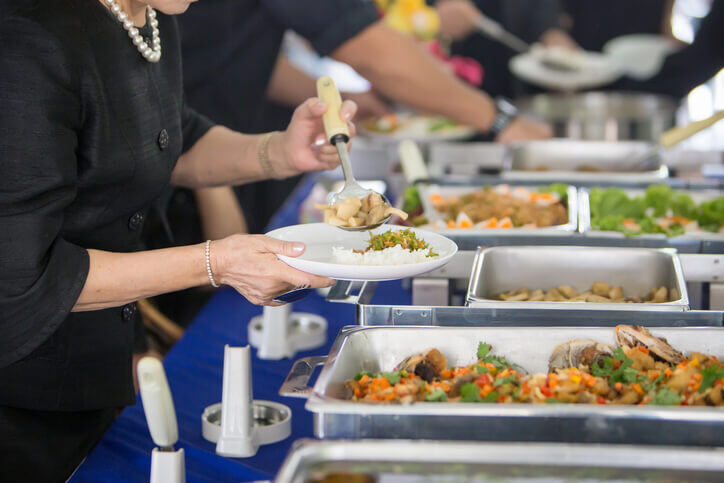
- carvery stations in hotels
- hot food counters in grocery retail
- school and hospital catering
- buffet service
- food-to-go hot cabinets
Kitchen teams should also remember that equipment display temperatures are not always the same as the actual food temperature. Core temperature checks are still important during service.
Why hot holding temperatures matter
Hot holding failures are a common food safety risk in busy kitchens.
Problems usually happen when:
- service periods run longer than expected
- food is left on counters during rush periods
- buffet trays are overfilled
- hot holding equipment is overloaded
- staff skip temperature checks
- food is prepared too early before service
When food drops below safe temperatures for too long, bacteria such as Salmonella, Clostridium perfringens, and Bacillus cereus may multiply rapidly.
According to the NHS food safety guidance, temperature control is one of the most important ways to reduce food poisoning risks.
This is especially important in:
- care homes
- hospitals
- schools
- high-volume restaurant kitchens
- central kitchens supplying multiple locations
The 2 hour rule for hot holding food
UK guidance allows some flexibility when hot food temporarily falls below 63°C.
Under the commonly used 2-hour rule:
- food can be held below 63°C for up to 2 hours once
- after this period, the food should be consumed, rapidly cooled, or discarded
- food should not repeatedly move in and out of hot holding temperatures
This rule is often used during:
- buffet service
- temporary food displays
- transport between kitchen areas
- food-to-go service peaks
However, kitchen teams must still control and document the process properly within their HACCP system.
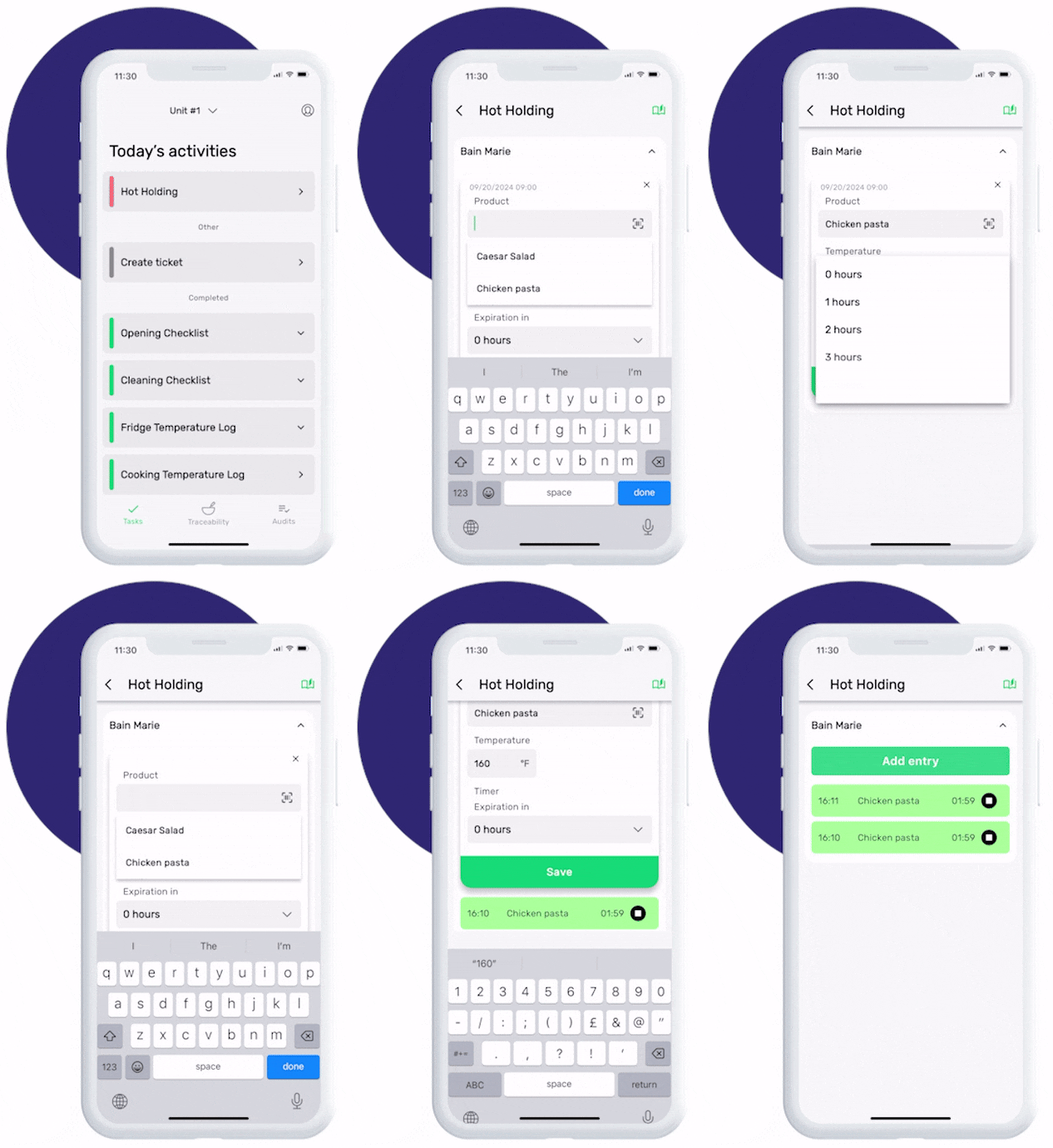
Many operations use a digital hot holding food temperature to help your team to log to complete all daily food safety tasks on time.
How long should food stay in hot holding?
There is no single maximum holding time that applies to all foods.
It depends on:
- the type of food
- holding temperature consistency
- equipment performance
- kitchen procedures
- frequency of monitoring
In practice, many food safety teams limit hot holding times to maintain food quality as well as food safety.
For example:
- fried foods may lose texture after extended holding
- rice dishes can dry out
- pizza quality declines quickly in overheated cabinets
- sauces may separate during long service periods
Operationally, many kitchens rotate smaller batches more frequently instead of holding large quantities for long periods.
This approach also helps reduce food waste and improves consistency across service.
Common hot holding equipment in foodservice operations
Different kitchens use different types of hot holding equipment depending on service style.
Common examples include:
- bain-maries
- heated display cabinets
- hot cupboards
- heated pass areas
- soup kettles
- buffet stations
- heated delivery shelving
Each piece of equipment should be:
- checked regularly
- cleaned properly
- included in calibration procedures
- monitored within the HACCP plan
Food safety teams should also ensure staff understand where to measure temperatures correctly. Measuring surface temperature alone may not reflect the true internal temperature of the food.

Hot holding checks during EHO inspections
Environmental Health Officers often review hot holding procedures during inspections.
Typical checks include:
- hot holding temperature records
- staff knowledge
- thermometer calibration
- corrective action records
- HACCP documentation
- consistency across shifts and locations
Poor monitoring records can create compliance concerns even when food appears visually safe.
Multi-site operations especially struggle with consistency when checks are paper-based or managed differently between locations.
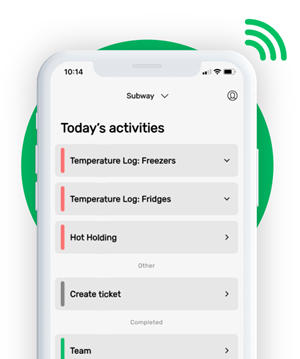
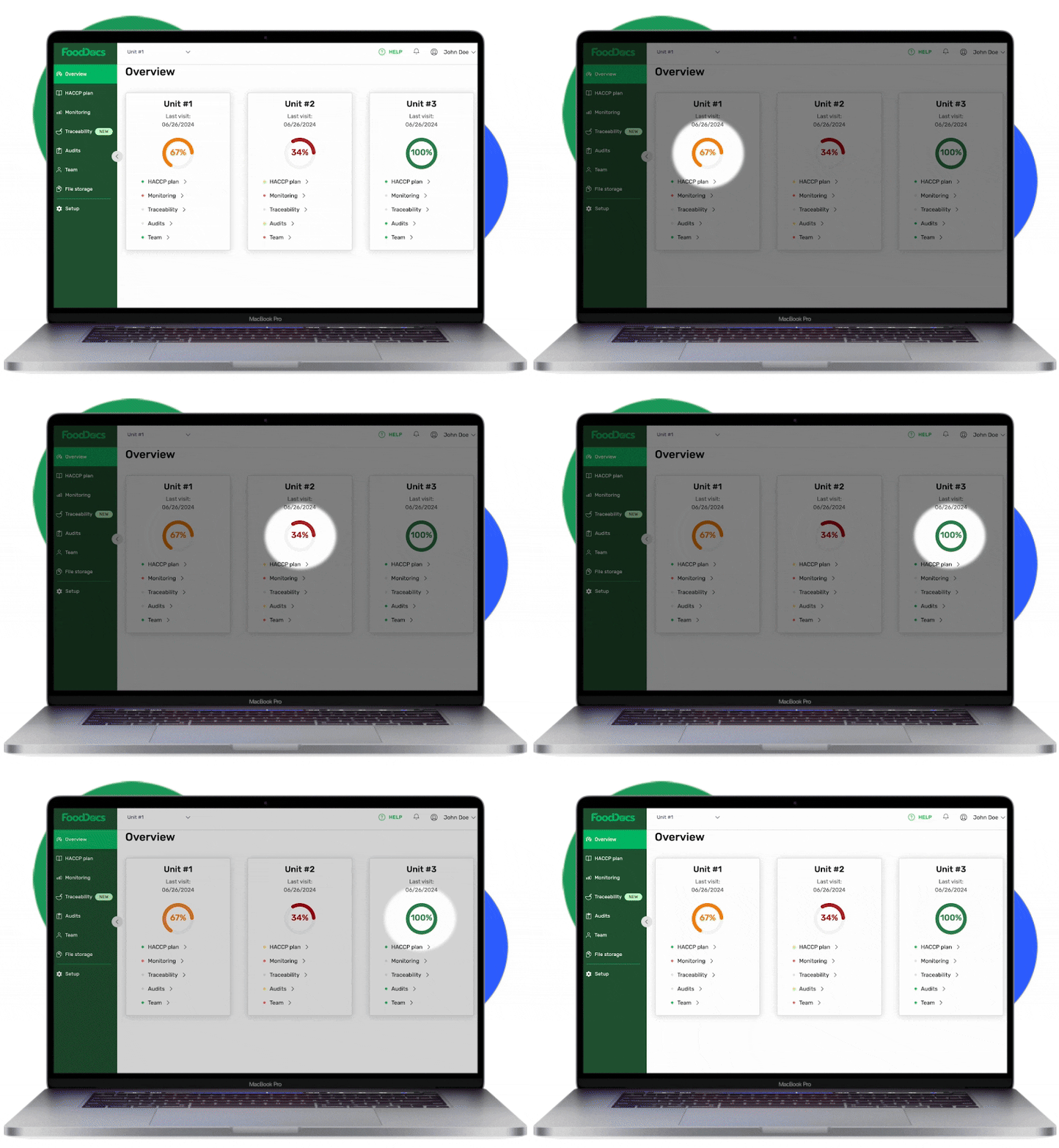
Digital systems such as FoodDocs help food safety teams standardise hot holding checks, reduce missed records, and improve visibility across sites through centralised monitoring.
Examples of minimum hot holding temperatures
Different foods may require additional operational controls depending on how they are served.
Examples include:
These foods are commonly monitored closely in food-to-go operations, retail hot counters, and quick-service kitchens.
Best practices for hot holding compliance
Strong hot holding procedures usually include:
- clear temperature limits in HACCP plans
- routine temperature verification
- calibrated food thermometers
- documented corrective actions
- staff training during onboarding
- smaller food batch rotation
- regular equipment maintenance
- clear escalation procedures for failed checks
In larger hospitality groups and healthcare operations, consistency between locations is often one of the biggest challenges.
Standardised digital monitoring procedures can help regional managers and compliance teams identify repeated issues before they become audit findings or EHO concerns.
See how the FoodDocs Monitoring solution works in this quick explainer video!
Frequently asked questions