Food safety monitoring is the process of regularly checking and recording food safety controls to ensure food remains safe to eat and your business stays compliant with food hygiene regulations.
For restaurants, care homes, hospitals, catering companies, hotels, and food-to-go operators, monitoring food safety helps identify issues before they become risks to customers. It also provides evidence that your HACCP system is working effectively during Environmental Health Officer (EHO) inspections.
What is food safety monitoring?
Food safety monitoring involves observing, measuring, and recording food safety controls on an ongoing basis.
The purpose is to confirm that food handling processes remain within safe limits and that any issues are identified quickly. Monitoring activities form a key part of every HACCP-based food safety management system.
Examples include:
- Fridge and freezer temperature checks
- Cooking temperature records
- Hot holding monitoring
- Cooling checks
- Cleaning verification
- Allergen control checks
- Delivery inspections
- Staff hygiene observations
Monitoring food safety allows businesses to detect problems before they result in unsafe food, customer complaints, or enforcement action.
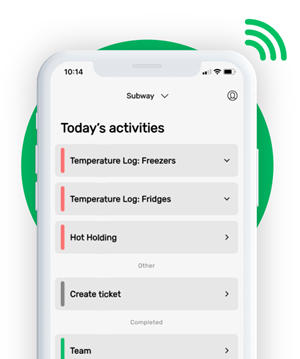
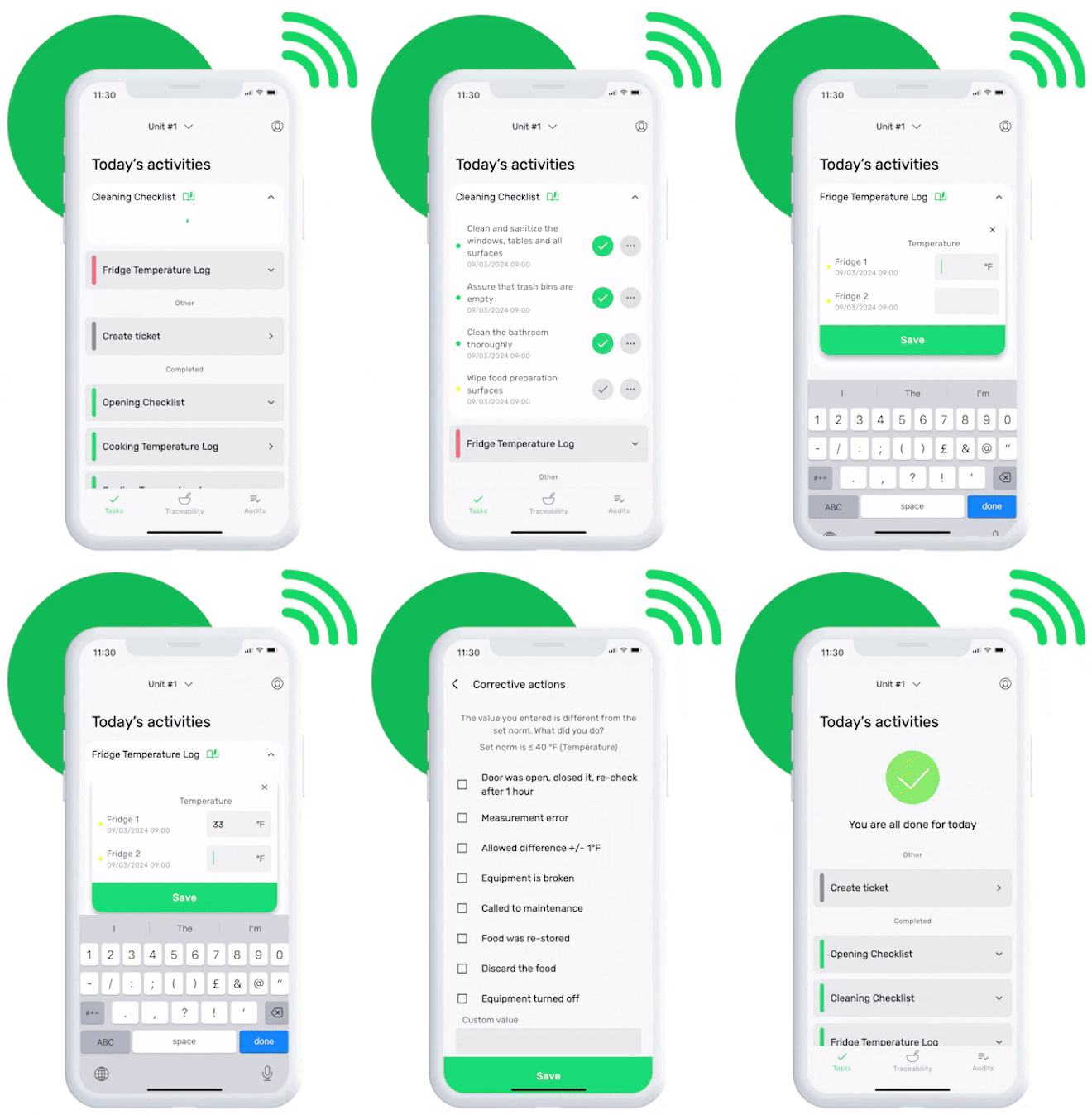
Digital food safety software is the best way to help your team in monitoring. App notifications help your team keep track of and complete all daily food safety tasks on time.
Why is food safety monitoring important?
Food safety monitoring provides proof that food safety procedures are being followed consistently.
Without monitoring, businesses may not notice equipment failures, incorrect temperatures, cleaning issues, or staff non-compliance until a problem has already occurred.
Effective food safety compliance monitoring helps businesses:
- Reduce food safety risks
- Protect customers
- Demonstrate due diligence
- Prepare for EHO inspections
- Maintain HACCP compliance
- Improve consistency across sites
The Food Standards Agency (FSA) expects food businesses to have appropriate monitoring procedures as part of their food safety management system.
Types of food safety monitoring
Different monitoring activities are required depending on the hazards identified in your HACCP plan.
Temperature monitoring for food safety
Temperature monitoring is one of the most important food safety controls.
Food safety temperature monitoring helps prevent the growth of harmful bacteria by ensuring food remains within safe temperature limits throughout storage, preparation, cooking, cooling, reheating, and service.
Common examples include:
| Monitoring activity |
Typical UK requirement |
| Chilled food storage |
8°C or below |
| Freezer storage |
-18°C or below |
| Hot holding |
63°C or above |
| Reheating |
At least 75°C |
| Cooking high-risk foods |
According to validated cooking procedures |
Temperature monitoring food safety records should be completed consistently and reviewed regularly.
Cleaning and sanitation monitoring
Cleaning checks verify that equipment, surfaces, and food preparation areas are cleaned according to schedule.
Monitoring may include:
- Cleaning checklists
- Visual inspections
- Verification activities
- Corrective action records
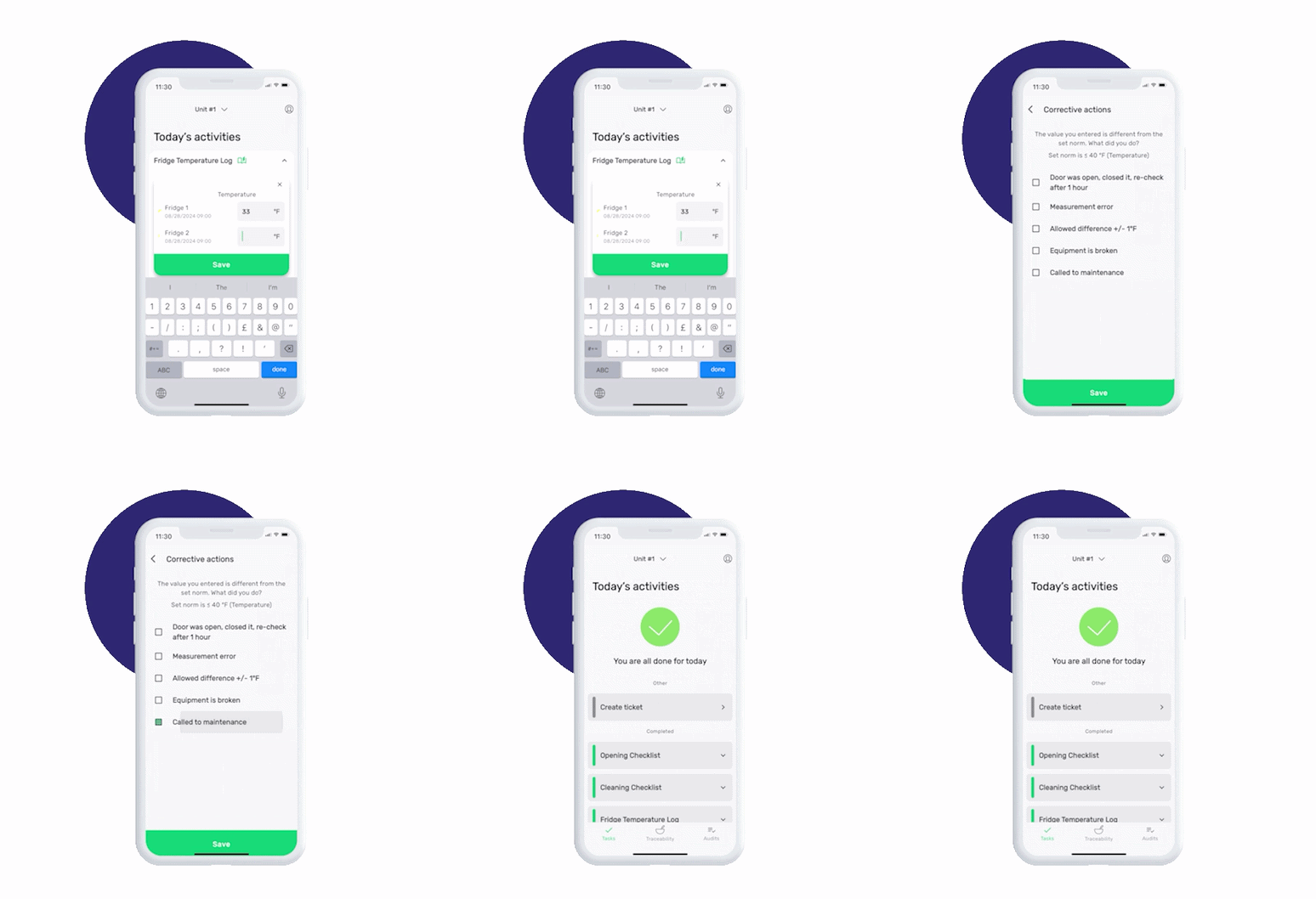
Digital monitoring checks include corrective actions. If a task is out of range, a prompt will guide your team on how to respond, ensuring food safety and saving time on training.
Delivery and supplier monitoring
Incoming deliveries should be checked for:
- Product condition
- Packaging integrity
- Temperature
- Use-by dates
- Signs of contamination
These checks help identify food safety risks before products enter production or service.
Allergen monitoring
Monitoring allergen controls helps reduce the risk of cross-contact.
Businesses should verify:
- Ingredient information
- Allergen labelling
- Cleaning procedures
- Storage segregation
- Staff understanding of allergen controls
Food safety monitoring records
Food safety monitoring records provide evidence that monitoring activities have been completed and reviewed.
Examples include:
- Fridge temperature logs
- Freezer temperature logs
- Cooking temperature records
- Hot holding records
- Cooling records
- Cleaning schedules
- Corrective action reports
- Delivery inspection forms
- Allergen control records
The digital HACCP app includes all of the monitoring records mentioned above. Simply sign up to try it. To make onboarding easier, we've already set up the most common monitoring records, so you can quickly see how the system works in a real environment.
What should a food safety monitoring system include?
A food safety monitoring system should clearly define:
- What will be monitored
- How monitoring will be carried out
- Who is responsible
- Monitoring frequency
- Critical limits
- Corrective actions
- Recordkeeping requirements
The monitoring procedures should align with the hazards and controls identified in the HACCP plan.
Businesses looking to digitise compliance often combine monitoring procedures with a FoodDocs HACCP app to simplify daily checks and recordkeeping.
Automated food safety monitoring
Automated food safety monitoring uses digital tools, sensors, and software to reduce manual recordkeeping and improve visibility.
Examples include:
- Wireless temperature sensors
- Automated alerts
- Mobile monitoring apps
- Digital checklists
- Real-time dashboards
- Corrective action workflows
Automated monitoring can help reduce missed checks while providing faster access to compliance records during inspections.
For multi-site operators, automated food safety monitoring also makes it easier to identify trends and compliance gaps across locations.
Food safety monitoring software
Many businesses are replacing paper records with food safety monitoring software.
Digital systems can help:
- Standardise monitoring procedures
- Improve record accuracy
- Reduce paperwork
- Support audit preparation
- Track corrective actions
- Provide real-time compliance visibility
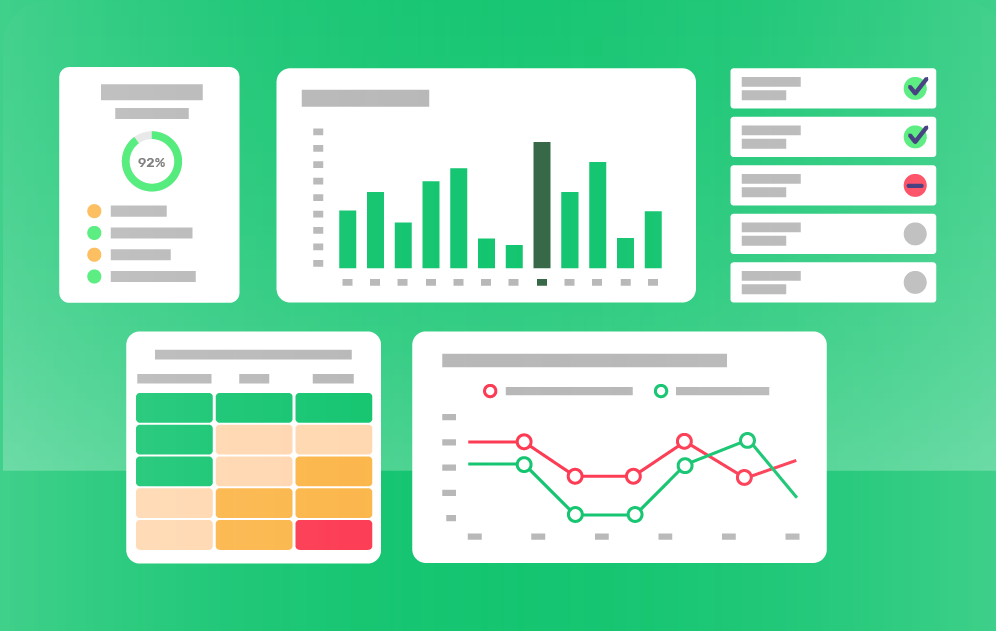
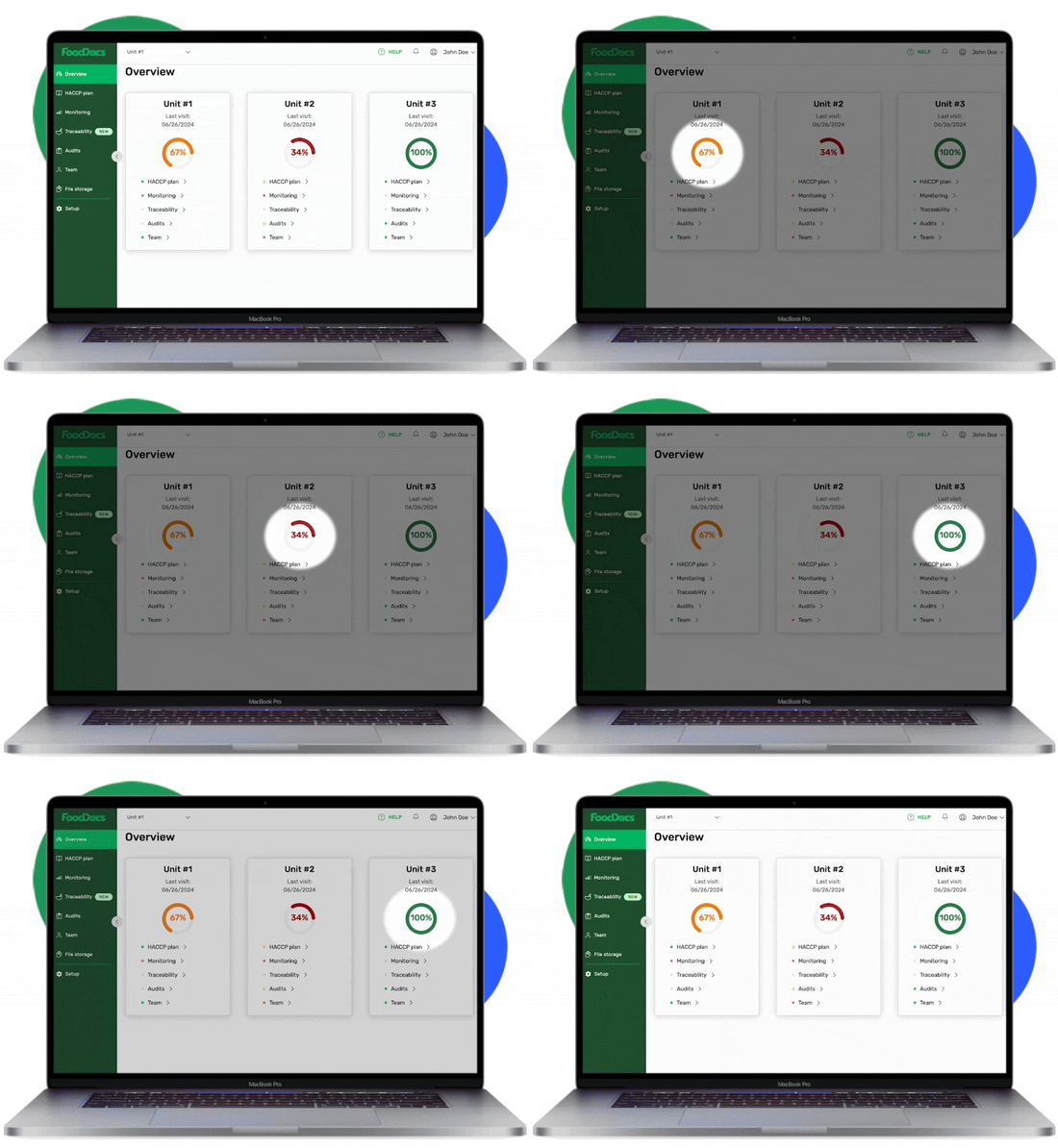
A modern food safety monitoring software solution allows managers to view food safety performance across multiple locations without manually reviewing paper records. This saves more than 2 hours of valuable time every week.
Businesses looking to digitise HACCP monitoring can also explore digital HACCP compliance tools to simplify monitoring, reporting, and corrective actions.
Common food safety monitoring mistakes
Several issues commonly reduce the effectiveness of monitoring programmes:
- Completing records after the event
- Missing temperature checks
- Recording data without verification
- Failing to take corrective action
- Using outdated forms
- Inconsistent monitoring between sites
- Poor staff training
Regular reviews help ensure monitoring activities remain effective and relevant.
Choosing the right food monitoring software
When evaluating food monitoring software, consider:
- Mobile app availability
- HACCP integration
- Corrective action management
- Temperature monitoring capabilities
- Multi-site reporting
- Audit readiness
- User-friendliness for frontline teams
The best solution should make monitoring easier for staff while providing managers with clear visibility of compliance performance.
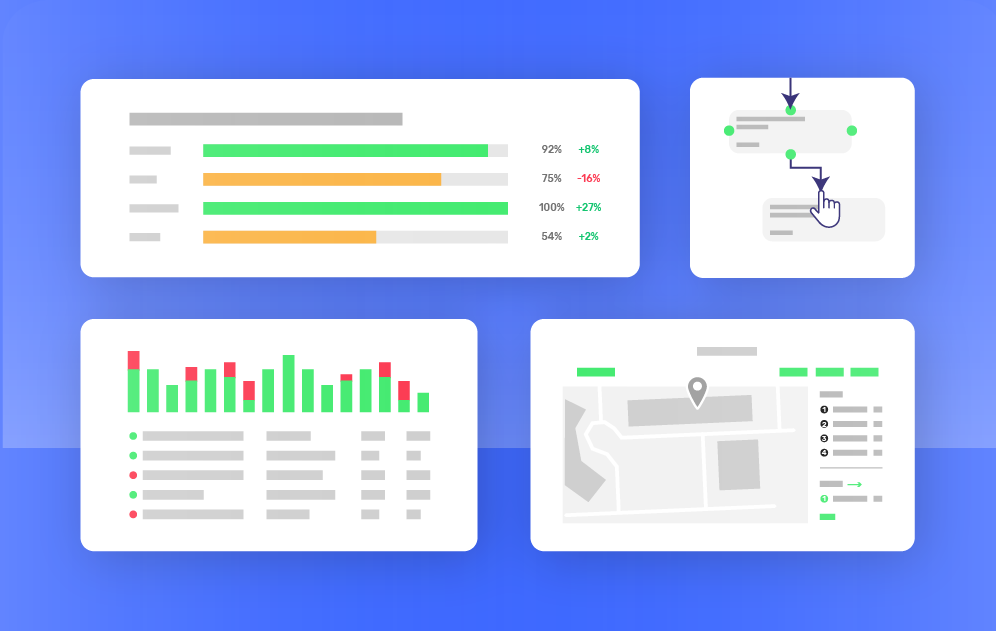
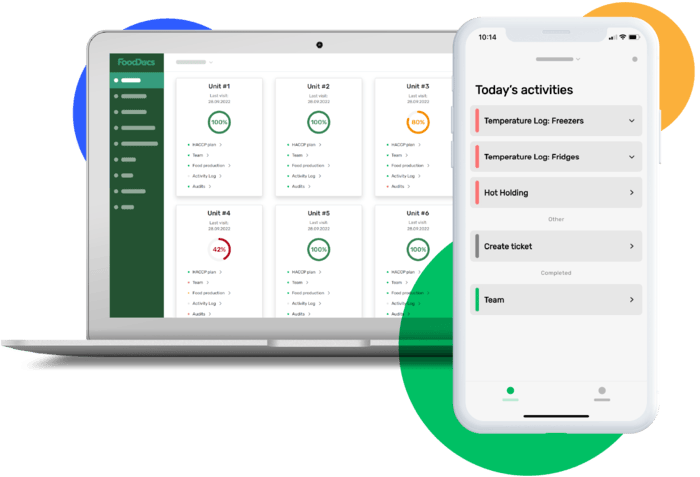
FoodDocs food safety management software combines an easy-to-use mobile app with a powerful supervisory dashboard. The app helps your kitchen team complete food safety tasks on time, while the dashboard gives food safety leaders real-time visibility into compliance and food safety performance across every location.
Improve food safety monitoring with digital tools
Consistent food safety monitoring is essential for maintaining compliance, protecting customers, and demonstrating due diligence. As monitoring requirements grow, many businesses move from paper records to digital systems that provide better visibility, faster reporting, and more reliable compliance management.
Businesses looking to simplify monitoring and HACCP compliance can explore FoodDocs digital food safety software and create monitoring systems that are easier for teams to follow and easier for managers to oversee.
Frequently Asked Questions