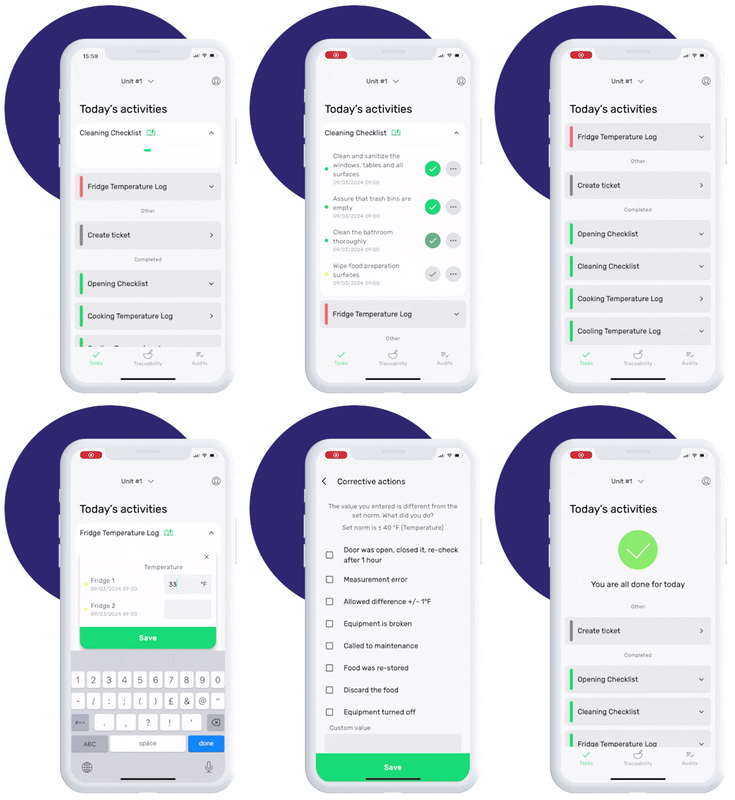
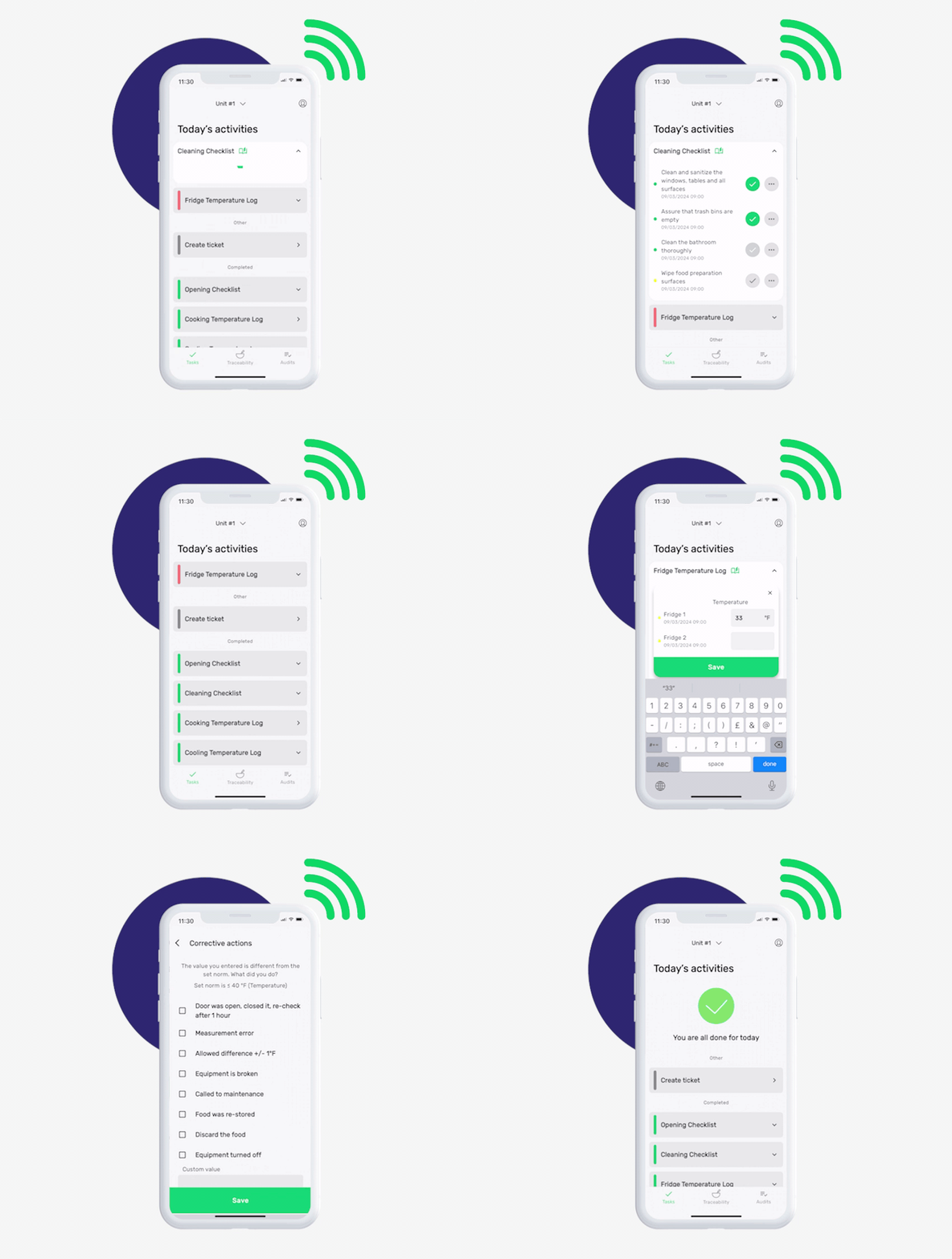
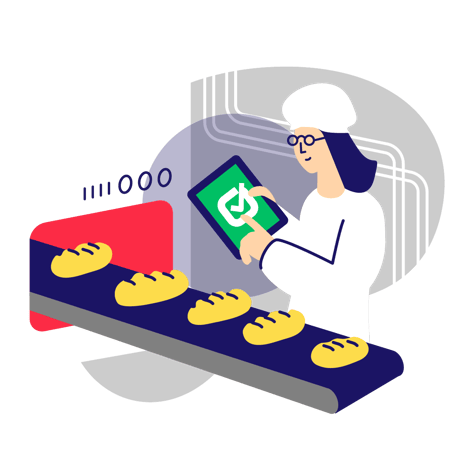
This is how our Digital Food Safety platform saves 20% of your time on daily tasks:
When food safety was still handled on paper, I typically spent a couple of hours per day getting the papers and going around checking or completing tasks… Now I can sit down and it's just all there in one place. It takes me 5-10 minutes.
Ruth B.
Store Manager
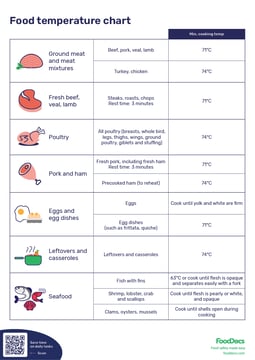
A food temperature chart helps kitchen teams cook food safely and consistently. It gives food handlers a quick reference for safe internal cooking temperatures, helping reduce the risk of undercooked food, foodborne illness, and failed food safety checks.
For hospitality businesses and healthcare teams, temperature control is one of the most important parts of a HACCP-based food safety system. Using a calibrated food thermometer together with a clear food safety temperature chart helps teams verify that food has reached safe cooking temperatures before service.
Poultry should reach a minimum internal temperature of 74°C before service.
Ground meat products such as burgers and sausages should reach 71°C.
Resting meat after cooking helps maintain safe temperatures and improves consistency.
A printable food temperature chart helps kitchen teams reduce missed checks and cooking errors.
Temperature monitoring is an important part of HACCP compliance and EHO inspections.
Food safety teams should always use a calibrated probe thermometer when checking cooked foods.
Multi-site operations benefit from digital monitoring systems like FoodDocs to standardise temperature monitoring and food safety compliance across all locations.
Different foods require different cooking temperatures to control pathogens such as Salmonella and Campylobacter.
Temperature charts support staff training, audit readiness, and operational consistency across locations.
FoodDocs' food safety management software makes compliance with standards easy by automating monitoring and ensuring tasks are completed on time, improving overall efficiency and sustainability.
One of the most important food handling practices in foodservice operations is proper cooking. Undercooked food significantly increases the risk of foodborne illness.
According to the UK Food Standards Agency (FSA), poultry products such as chicken require thorough cooking to reduce harmful bacteria such as Salmonella and Campylobacter. Cooking food to the correct internal temperature is one of the most reliable ways to control these risks in commercial kitchens.
A food temperature chart is a quick-reference guide showing the safe internal cooking temperatures for different foods such as poultry, minced meat, seafood, egg dishes, and reheated foods.
Kitchen teams use food safety temperature charts to verify that food has reached safe cooking temperatures during preparation and service. These charts are commonly displayed near cooking stations, prep areas, combi ovens, and pass sections to support fast decision-making during busy service periods.
A HACCP food temperature chart usually includes:
Because different foods carry different food safety risks, required cooking temperatures vary. For example:
Using a calibrated probe thermometer together with a clear food temperature chart helps food handlers confirm that food is fully cooked and safe to serve.
For additional guidance on cooking temperatures and the food danger zone, see FoodDocs’ guide to food safety temperatures.
Any food business preparing or reheating food should use a printable food temperature chart as part of daily kitchen operations.
This includes:
Temperature charts help kitchen teams standardise cooking procedures across shifts and locations. In multi-site operations, they also support operational consistency during audits and EHO inspections.
For example, a care home kitchen preparing cooked chicken for vulnerable residents must consistently verify that food reaches safe temperatures before service. In restaurant groups, temperature charts help maintain the same food safety standards across all locations.
Temperature charts are also useful for staff onboarding and refresher training, especially in fast-paced hospitality environments with high staff turnover.
A food temperature chart helps food safety teams reduce cooking errors and improve kitchen compliance.
Commercial kitchens prepare many different food types every day. Internal cooking temperatures can vary depending on the product, cooking method, and risk level.
A food temperature chart gives teams a quick operational reference during service and helps reduce confusion around safe cooking temperatures.
For example:
Using visual reminders helps teams maintain consistency during busy service periods.
Temperature monitoring is a core part of HACCP-based food safety management systems.
Food safety leaders and compliance managers often use temperature charts alongside:
If your teams also manage high-risk chilled foods, FoodDocs’ guide to TCS foods explains which foods require stricter temperature control.
Clear temperature procedures help teams prepare for:
Consistent temperature records demonstrate that food safety procedures are being followed correctly across kitchen operations.
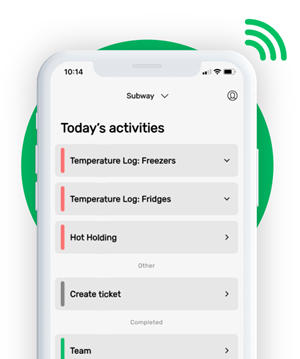
FoodDocs app notifications help your team keep track of and complete all daily food safety tasks on time.
Incorrect cooking temperatures increase the risk of foodborne illness outbreaks, customer complaints, and food waste.
Temperature charts help reduce:
If your operation serves ready-to-eat chilled foods, proper date marking is also important. Read FoodDocs’ guide on ready-to-eat TCS food labelling requirements.
There are many printable food temperature charts available online, but not all are suitable for multi-site hospitality and healthcare operations.
An effective HACCP food temperature chart should be:
Always use reliable food safety guidance from sources such as:
Using incorrect temperatures can increase food safety risks and create compliance issues during inspections.
Kitchen teams need quick information during busy shifts.
Use:
Avoid overcrowding the chart with unnecessary information.
Food safety guidance can change over time. Review your charts regularly to make sure temperatures and procedures still align with current UK guidance.
A useful food safety temperature chart should support real kitchen workflows.
For example:
Many hospitality and healthcare foodservice teams still rely on paper temperature logs, manual checks, and inconsistent kitchen routines. This often creates problems such as:
FoodDocs helps food safety teams digitise daily monitoring and standardise food safety procedures across locations.
Using FoodDocs’ digital food safety management system, teams can:
For multi-site operations, digital monitoring also helps regional managers and compliance teams quickly identify missed checks or recurring food safety issues.
Chicken and other poultry should reach a minimum internal temperature of 74°C before service.
In UK foodservice operations, reheated food should normally reach at least 75°C.
A food temperature chart helps kitchen teams verify safe cooking temperatures, reduce food safety risks, and maintain HACCP compliance.
Use a calibrated probe thermometer and insert it into the thickest part of the food without touching bone or trays.
According to UK food safety guidance, hot food should generally be kept above 63°C during hot holding.