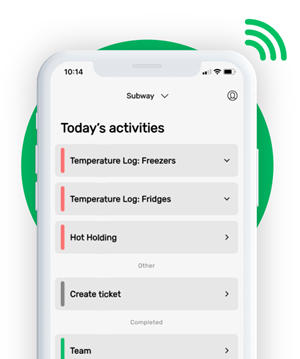





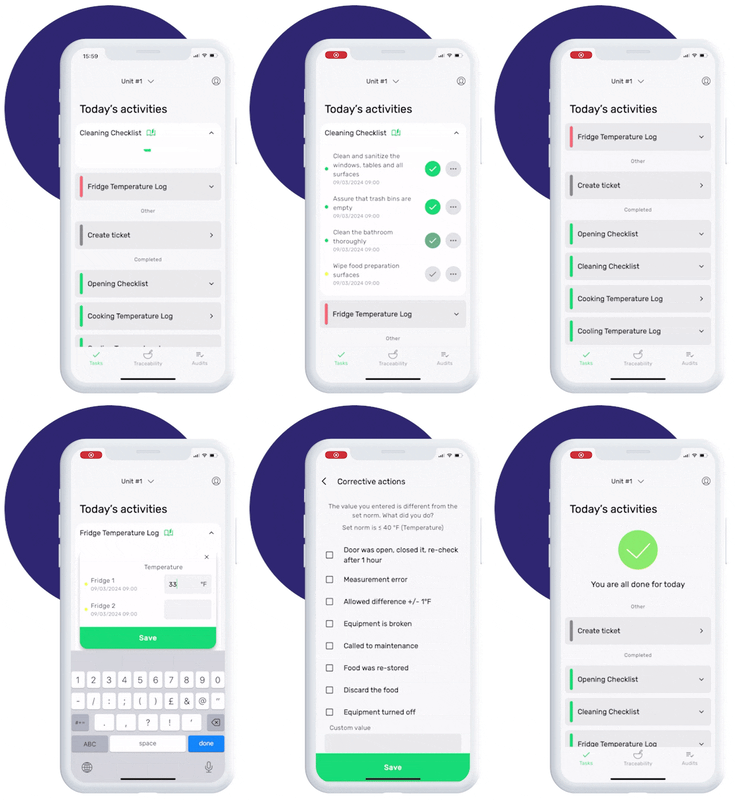
This is how our Digital Food Safety platform saves 20% of your time on daily tasks:
- Get upcoming task notifications
- Add data into the app
- Check the status of tasks in real-time


When food safety was still handled on paper, I typically spent a couple of hours per day getting the papers and going around checking or completing tasks… Now I can sit down and it's just all there in one place. It takes me 5-10 minutes.

Ruth B.
Store Manager
What temperature should reheated food reach?
Reheated food should reach a core temperature of at least 75°C before service. This is the generally accepted UK food safety benchmark for ensuring food is heated thoroughly and safely.
Food temperature should always be checked using a clean and calibrated probe thermometer inserted into the thickest part of the food.
For liquid foods such as soups, gravies, sauces, and stews, bringing the product to a full rolling boil provides additional assurance that the entire batch has been heated evenly.
Reheating may be required for:
- cooked meat and poultry
- rice dishes
- prepared meals
- sauces and gravies
- cooked vegetables
- chilled ready-to-eat foods
Teams responsible for both cooking and reheating often use a dedicated cooking temperature guide to verify safe temperatures across different food types and preparation methods.
Why is monitoring reheating food temperature important?
Monitoring reheating food temperature confirms that food has reached a safe temperature before it is served.
If food is reheated unevenly or fails to reach 75°C, harmful bacteria may survive and continue to multiply. This increases the risk of foodborne illness and can be particularly dangerous in healthcare foodservice operations, care homes, and other settings serving vulnerable groups.
Temperature monitoring also supports HACCP procedures by providing evidence that food safety controls are working effectively.
Using a calibrated thermometer and maintaining a documented temperature record can help demonstrate compliance during EHO inspections. Many food businesses use a standardised cooking log template to ensure temperature checks are completed consistently across every shift.
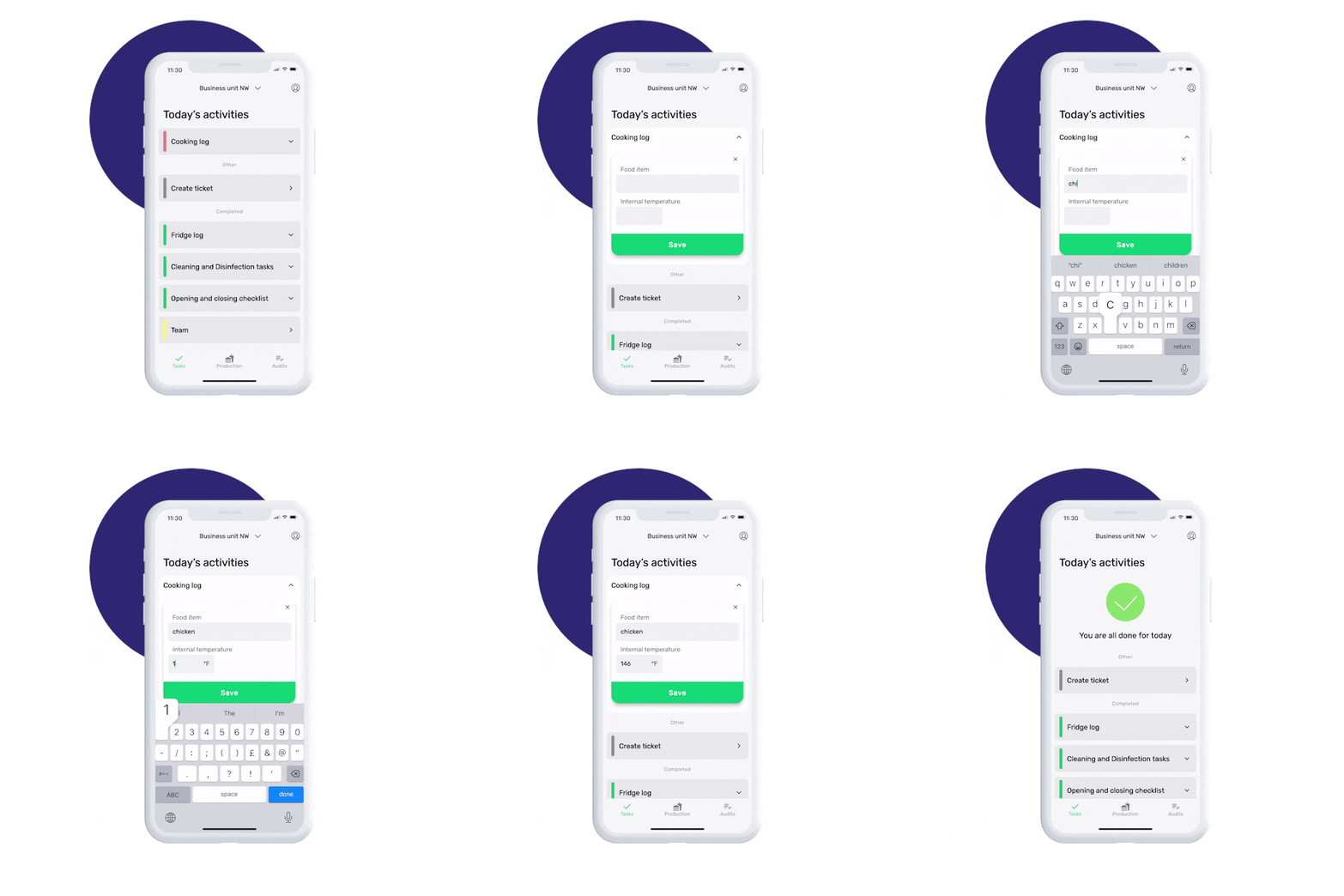
Digital cooking logs help teams complete cooking checks consistently, reducing food safety risks and saving time on supervision and training.
Who should monitor reheating temperatures?
Any food business that reheats food before service should monitor reheating temperatures.
This includes:
- restaurant groups
- care homes
- hospitals
- schools and universities
- food-to-go operators
- pubs and hotels
- catering businesses
- grocery foodservice counters
- central production kitchens
Kitchen staff, supervisors, executive chefs, and food safety managers all play a role in ensuring reheating procedures are followed correctly.
For multi-site operations, standardised monitoring procedures help maintain consistent food safety standards across all locations.
Best methods for reheating food
Food should be reheated using equipment capable of heating it quickly, evenly, and safely to at least 75°C.
Common reheating methods include:
- microwave ovens
- conventional ovens
- combi ovens
- stovetops and saucepans
The best method depends on the type of food and batch size. Soups and sauces are often reheated efficiently on a stovetop, while ovens and combi ovens are commonly used for larger prepared meals.
Regardless of the method used, temperature verification remains essential. Many kitchens keep cooking temperature charts available near preparation areas to help staff confirm safe temperatures during cooking and reheating.
Equipment that should not be used for reheating
Hot holding equipment is designed to maintain temperature, not raise food to a safe reheating temperature.
Food should not be reheated using:
- Bain Maries
- steam tables
- chafing dishes
- slow cookers
- hot holding cabinets
These units typically heat food too slowly and may allow food to remain within the temperature danger zone for extended periods.
Food should first be reheated to at least 75°C before being transferred to hot holding equipment if required.
Rules for reheating food
Reheating food safely requires more than simply warming it until it appears hot. Following consistent procedures helps reduce food safety risks and improve compliance.
Reheat food immediately after removing it from refrigeration
High-risk foods such as cooked meat, poultry, seafood, rice dishes, and prepared meals should not spend unnecessary time outside chilled storage.
Reheat food to at least 75°C
Food must reach a safe core temperature before service. Warming food without reaching the required temperature is not sufficient.
Use a calibrated probe thermometer
A thermometer provides the only reliable confirmation that food has reached the required reheating temperature.
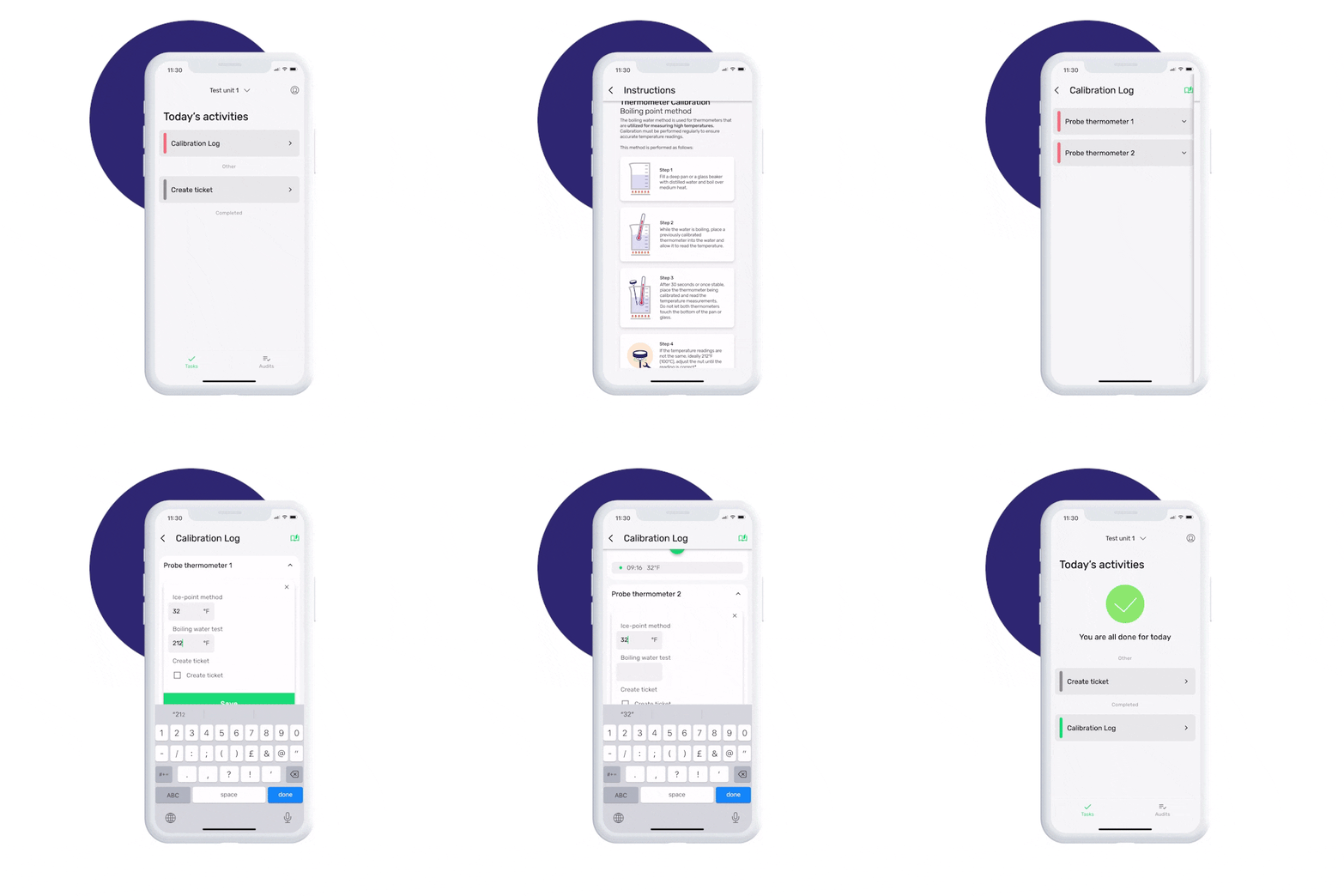
Digital calibration logs help ensure calibration checks are completed correctly and consistently, improving measurement accuracy.
Reheat food only once where possible
Repeated reheating increases contamination risks and can reduce food quality.
Serve food promptly
Food should be served immediately after reheating or transferred directly into suitable hot holding equipment.
Use appropriate reheating equipment
Microwaves, ovens, combi ovens, and stovetops are generally suitable for reheating. Hot holding equipment is not.
Avoid overloading equipment
Overloading ovens or microwaves can create uneven heating and cold spots, increasing food safety risks.
Common reheating mistakes and food safety risks
Most reheating failures occur when food does not reach a safe temperature throughout or spends too long in the temperature danger zone.
Food does not reach the required temperature
The most common mistake is assuming food is hot enough without checking its internal temperature.
Food that looks hot on the outside may still contain cold spots where harmful bacteria can survive. This is particularly common when reheating large portions, dense foods, or meals in a microwave.
Always verify that the thickest part of the food has reached at least 75°C using a calibrated probe thermometer.
Food is held for too long after reheating
Once food has been reheated, it should be served promptly or transferred directly into suitable hot holding equipment.
Leaving reheated food at room temperature for extended periods increases the opportunity for bacterial growth and can compromise food safety.
Food was stored incorrectly before reheating
Safe reheating starts with safe storage.
If food has not been cooled, labelled, stored, or refrigerated correctly, reheating alone may not eliminate all food safety risks. Chilled foods should be stored in clean, covered containers and kept at safe refrigeration temperatures until required.
Food was thawed incorrectly
Improper thawing can significantly increase bacterial growth before reheating even begins.
Frozen food should ideally be thawed under refrigeration. Thawing food at room temperature can allow bacteria to multiply rapidly, making safe reheating more difficult.
Reheating equipment is overloaded
Overloading microwaves, ovens, or other reheating equipment can lead to uneven heating.
Smaller batches generally heat more consistently and make temperature verification easier.
Corrective actions when reheating temperatures are not reached
If food has not reached 75°C, continue reheating and recheck the temperature before serving.
Additional corrective actions may include:
- stirring liquid foods to distribute heat evenly
- rotating food during microwave reheating
- reducing portion sizes
- extending heating times
- checking equipment performance
- recalibrating thermometers if readings appear inaccurate
Digital food safety software guides staff through corrective actions, helping ensure issues are resolved correctly every time.

Food should never be served if the required reheating temperature cannot be verified.
Repeated failures may indicate equipment issues, staff training gaps, or weaknesses in monitoring procedures that should be addressed through HACCP reviews.
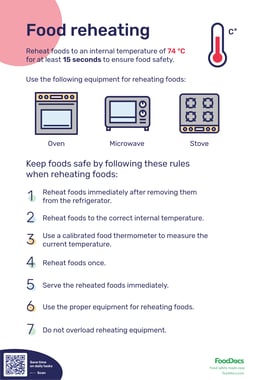
Download and use the reheating temperature poster
Food handlers often work in busy environments where temperature requirements can be forgotten or applied inconsistently.
A reheating temperature poster provides a quick visual reminder of:
- required reheating temperatures
- safe reheating practices
- temperature monitoring expectations
- HACCP requirements
- food safety responsibilities
Displaying the poster near preparation, cooking, and service areas can help reinforce training and support day-to-day compliance.
The poster is particularly useful in:
- restaurant kitchens
- care homes
- hospitals
- school kitchens
- catering operations
- food-to-go businesses
- central production kitchens
How digital temperature monitoring helps teams reheat food correctly?
Temperature checks are most effective when they are completed consistently.
Paper records can be difficult to supervise, especially across multiple sites. Missed checks, incomplete records, and delayed corrective actions often create unnecessary compliance risks.
Digital food safety systems such as FoodDocs help standardise temperature monitoring by guiding staff through each check and ensuring records are completed correctly.
Benefits include:
- scheduled reminders for temperature checks
- digital reheating records
- built-in task instructions
- corrective action workflows
- real-time compliance visibility
- simplified audit preparation
.png?width=1650&height=1125&name=FSMS_hero%20(1).png)
Frequently asked questions
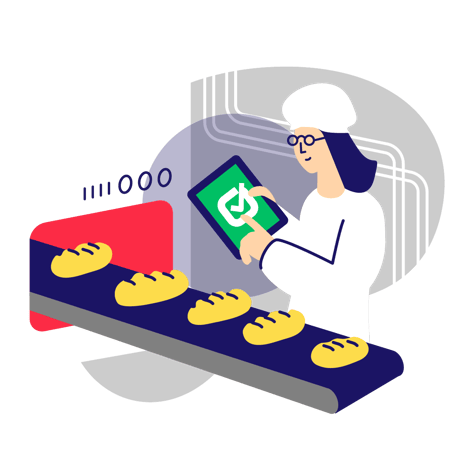
 An automated setup enables you to go digital in 15 minutes
Our app notifications help your team to remember all daily tasks bam
Save time on supervising and use automatically filled monitoring sheets