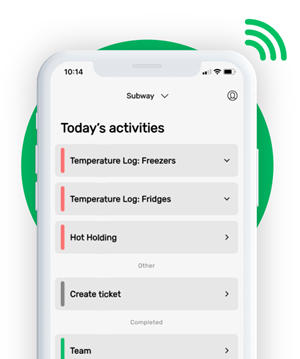





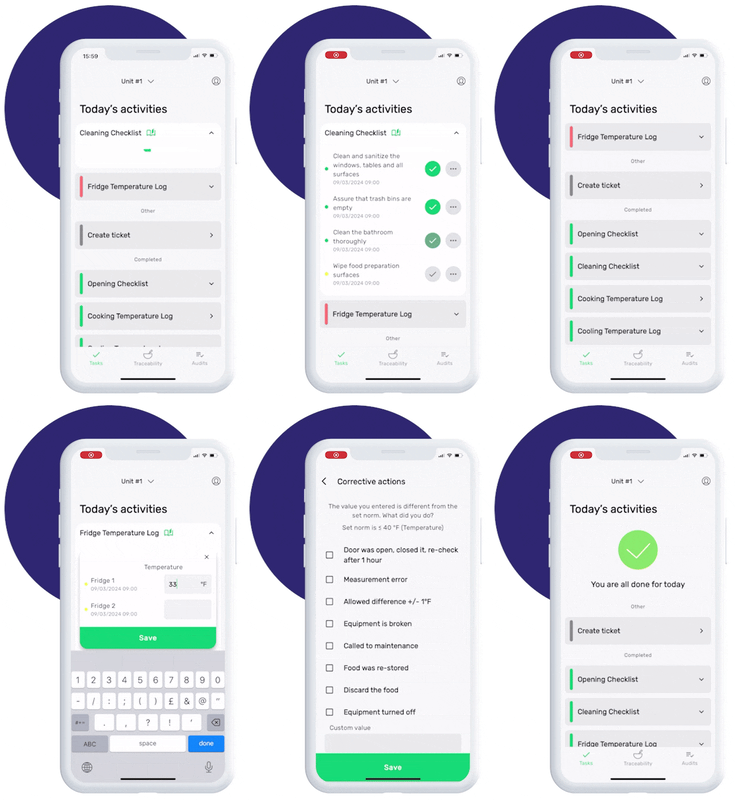
This is how our Digital Food Safety platform saves 20% of your time on daily tasks:
- Get upcoming task notifications
- Add data into the app
- Check the status of tasks in real-time


When food safety was still handled on paper, I typically spent a couple of hours per day getting the papers and going around checking or completing tasks… Now I can sit down and it's just all there in one place. It takes me 5-10 minutes.

Ruth B.
Store Manager
Why is a cooking temperature chart important?
A cooking temperature chart gives kitchen teams a clear reference for safe cooking temperatures across different food categories. Using standardised cooking temperatures helps reduce food safety risks and improves consistency during service.
According to the Food Standards Agency, food should normally reach at least 70°C for 2 minutes or an equivalent time and temperature combination to achieve safe cooking.
Cooking temperature checks are especially important for:
- Poultry
- Burgers and minced meat
- Seafood
- Rice dishes
- Sauces and gravies
- Prepared meals
- Reheated food
For more detailed guidance on safe cooking procedures, see our cooking temperature guide.
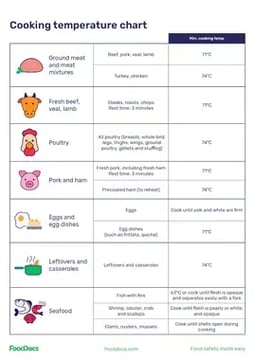
Cooking temperature chart for high-risk foods
Different foods require different target temperatures depending on risk level, cooking method, and product thickness.
| Food item | Recommended internal temperature |
|---|---|
| Chicken and poultry | 75°C |
| Minced meat and burgers | 75°C |
| Pork | 75°C |
| Reheated food | 75°C |
| Fish and seafood | 63°C |
| Hot-held food | 63°C or above |
Many kitchens use printable cooking temperature charts to standardise temperature checks across teams and shifts.
How to check food temperatures correctly?
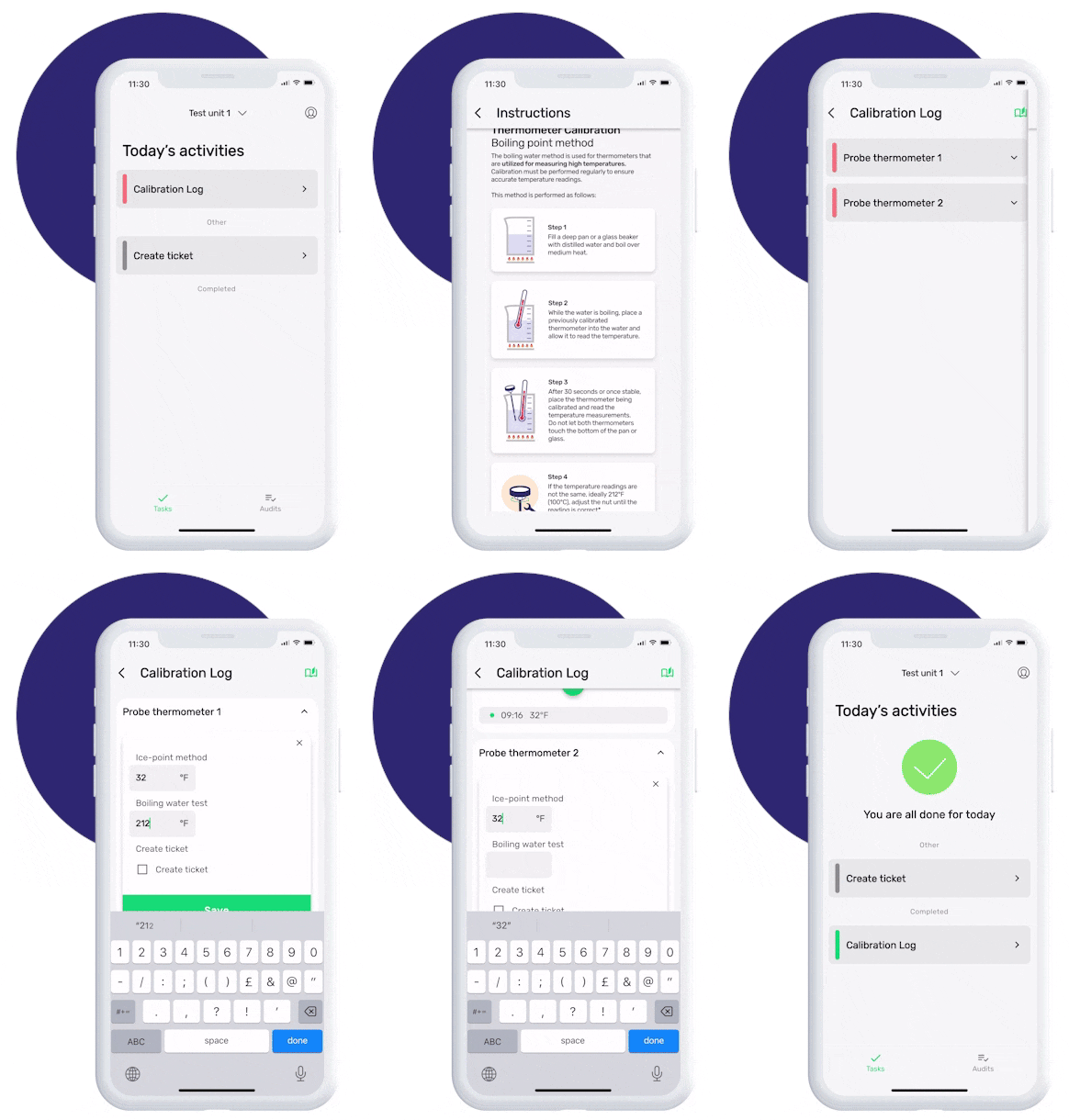
Food temperatures should always be measured using a calibrated food probe inserted into the thickest part of the food.
The FoodDocs app helps teams log food temperatures on time and includes instructions for completing checks correctly, saving food safety leaders time on training.
To improve accuracy:
- Avoid touching bones, trays, or pans
- Clean and sanitise probes between checks
- Wait for the reading to stabilise
- Recheck large or unevenly cooked products
- Calibrate probes regularly
The FSA Safer Food, Better Business guidance also recommends maintaining clear food safety monitoring procedures as part of HACCP-based kitchen operations.
Why cooking temperature records matter?
Cooking temperature records help businesses demonstrate that food safety checks are completed consistently. Accurate records support HACCP verification and help food safety teams prepare for EHO inspections.
Temperature logs are commonly used in:
- Restaurant groups
- Hotels
- Care homes
- Hospitals
- Catering businesses
- Central kitchens
- Food-to-go operations
Reliable monitoring is especially important in multi-site operations where consistency between locations matters.
Digital software enables remote review of who follows food safety tasks and which units or departments have issues in a timely manner. No need to go on-site to maintain consistency in food safety task completion.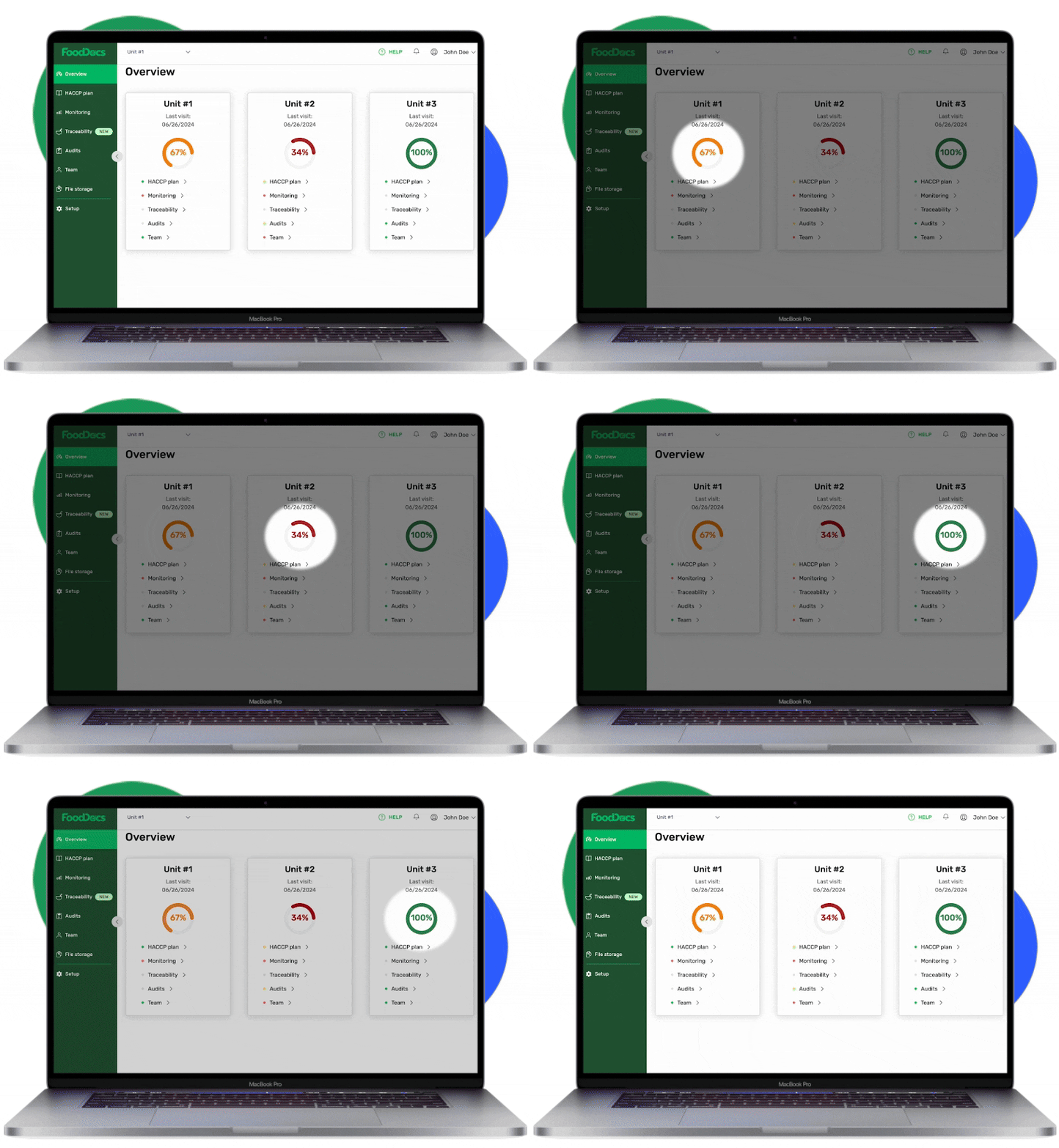
Reheating temperatures and secondary cooking checks
Food that is reheated before service must also reach a safe internal temperature throughout the product. Reheated meals, sauces, soups, and prepared foods should normally reach at least 75°C before serving.
Follow proper food reheating temperature procedures to reduce the risk of bacterial survival during reheating.
Common mistakes when using cooking temperature charts
Cooking temperature charts are only effective when checks are completed correctly.
Common issues include:
- Using uncalibrated probes
- Measuring the wrong part of the food
- Recording temperatures without taking actual readings
- Missing corrective action records
- Completing checks after service instead of during cooking
- Failing to recheck reheated foods
These mistakes can create problems during HACCP verification and food safety audits.
Digital cooking temperature monitoring
Many hospitality businesses still use paper temperature records, but paper systems can become difficult to manage across multiple kitchens and shifts.
Digital monitoring systems help standardise cooking checks by:
- Reducing missed records
- Improving operational visibility
- Simplifying audit preparation
- Supporting corrective actions
- Standardising kitchen routines
- Storing records automatically
FoodDocs helps food businesses digitise cooking temperature monitoring, organise HACCP records, and improve visibility across locations.
.png?width=1650&height=1125&name=FSMS_hero%20(1).png)
Frequently asked questions
 An automated setup enables you to go digital in 15 minutes
Our app notifications help your team to remember all daily tasks bam
Save time on supervising and use automatically filled monitoring sheets