
FRIDGE TEMPERATURE RECORD SHEET PDF | FREE TEMPLATE

Fooddocs collage of posters
digital-food-safety

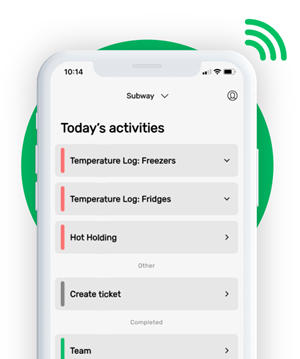
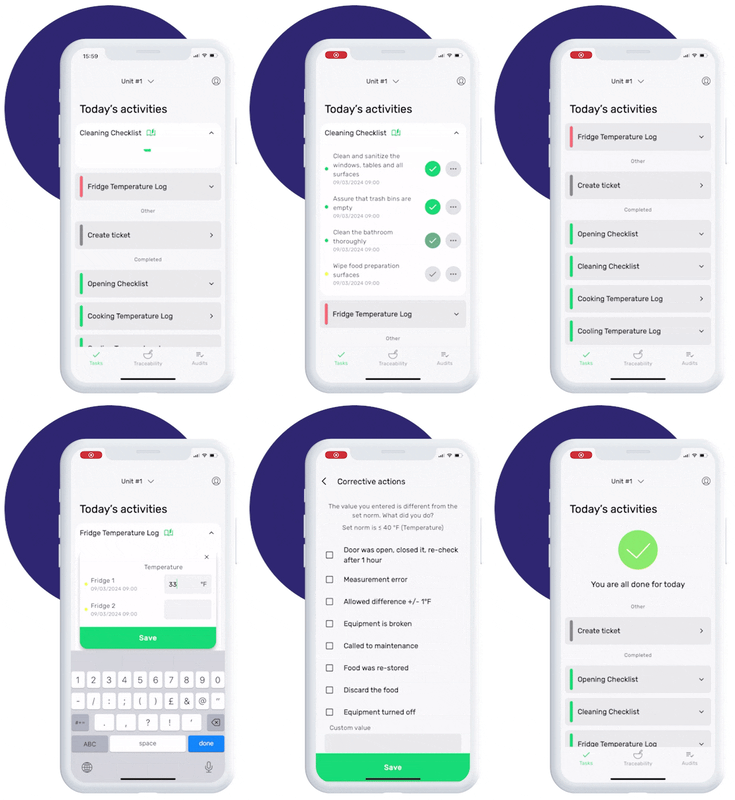
This is how our Digital Food Safety platform saves 20% of your time on daily tasks:

  1. Get upcoming task notifications
  2. Add data into the app
  3. Check the status of tasks in real-time
TRY 14-DAY FREE TRIAL
quotation marks

When food safety was still handled on paper, I typically spent a couple of hours per day getting the papers and going around checking or completing tasks… Now I can sit down and it's just all there in one place. It takes me 5-10 minutes.

Profile icon of Ruth B

Ruth B.

Store Manager

A fridge temperature record sheet helps to monitor chilled storage safely and maintain accurate HACCP records. In restaurants, care homes, and retail food operations, regular fridge temperature checks help prevent food from entering unsafe temperature ranges and support EHO compliance.

Use this free fridge temperature record sheet PDF to record refrigerator and freezer temperatures, monitor cold holding procedures, and improve food safety documentation across your kitchen operations.

ToC is currently active

Key points covered

  1. Fridge temperature checks help verify that chilled food stays within safe storage limits.

  2. UK food businesses commonly keep chilled food at 8°C or below, with many operations targeting 5°C or colder for higher-risk products.

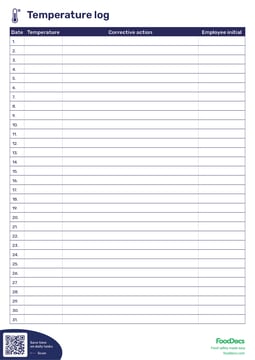
  3. A fridge temperature check sheet should include the time, actual temperature, target temperature, corrective actions, and staff initials.

  4. Separate temperature log sheets should be kept for each fridge, freezer, walk-in cold room, and refrigerated delivery vehicle.

  5. High-risk foods such as raw meat, dairy products, prepared salads, seafood, and cooked leftovers require stricter temperature control.

  6. Digital temperature monitoring, like FoodDocs,  reduces missed checks, improves audit readiness, and helps food safety leaders monitor multiple locations more efficiently.

  7. Temperature monitoring frequency should increase during hot weather, equipment faults, or periods of heavy kitchen activity.


Safe temperature control plays an essential role in food safety. Cold temperatures help slow bacterial growth and extend shelf life, while hot temperatures are used during cooking, reheating, and hot holding.

For foodservice operations, keeping accurate temperature records is one of the most important daily food safety tasks.


3 common types of temperature log sheets - where to use the template

1. Food temperature log sheet

A food temperature log sheet can be used for both hot and cold food monitoring during cooking, cooling, reheating, delivery, and storage procedures. Kitchen teams often use these logs during service to monitor high-risk foods and maintain HACCP records.

For additional guidance on cold food storage, see our guide on cold holding temperatures.

2. Refrigerator temperature record sheet

A fridge temperature record sheet is used to monitor refrigerators, freezers, prep counters, walk-in cold rooms, and chilled delivery vehicles.

Many hospitality businesses complete fridge temperature checks at least once or twice daily to maintain consistent cold holding procedures.

You can also use our fridge temperature chart for quick visual guidance in kitchens and storage areas.

3. Cooler temperature log sheet

Walk-in coolers and larger cold storage areas also require regular temperature recording. In central kitchens, hotels, and healthcare operations, cooler temperature logs help maintain consistency across multiple storage areas.

Whether you use this temperature log sheet PDF for refrigerators, freezers, or food temperature monitoring, key information should always be included:

  • Time of recording
  • Actual temperature
  • Target temperature
  • Date
  • Staff initials
  • Corrective actions if limits are exceeded

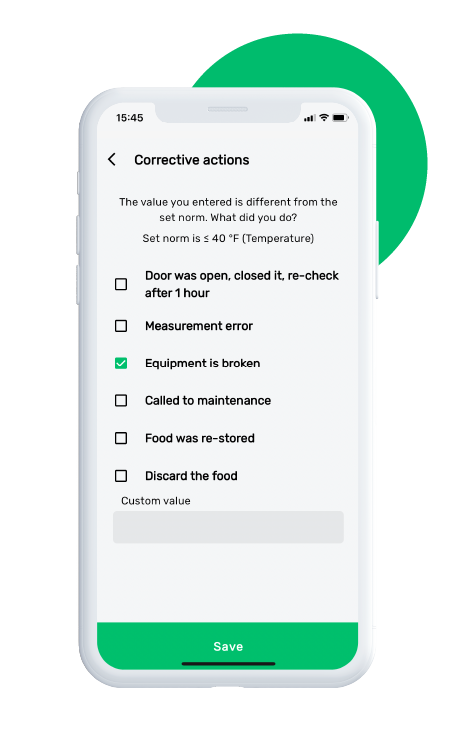
Digital monitoring checks include corrective actions. If a task is out of range, a prompt will guide your team on how to respond, ensuring food safety and saving time on training

Many food safety teams also include supervisor verification fields to support audit preparation and HACCP reviews.

Corrective_actions_2

Why is a temperature log sheet important?

Maintaining correct storage temperatures is one of the most basic food safety requirements in hospitality and healthcare foodservice.

According to the Food Standards Agency (FSA), chilled food should generally be kept at 8°C or below in UK food businesses. Many operations choose lower working limits for additional safety.

Once food moves outside safe temperature ranges for extended periods, bacteria can multiply rapidly and increase the risk of foodborne illness.

This is particularly important for high-risk foods such as:

  • Raw meat and poultry
  • Seafood
  • Dairy products
  • Cooked rice
  • Prepared salads
  • Ready-to-eat foods
  • Cooked leftovers

A refrigerator operating above safe temperatures for several hours overnight may not create visible spoilage, but the food can still become unsafe.

Using a fridge temperature check sheet helps teams identify refrigeration issues early and apply corrective actions before products need to be discarded.

For more guidance on safe cold storage, read our article about cold holding temperatures.

What to keep in mind when recording fridge temperatures?

Completing refrigerator temperature logs may sound straightforward, but busy kitchens often monitor multiple refrigerators, freezers, prep units, and cold rooms every day.

Clear procedures make temperature recording faster and more reliable.

Use a reliable thermometer

Most refrigerators include built-in displays, but independent thermometers are still recommended for verification.

Probe thermometers and infrared devices should be checked regularly for accuracy.

Schedule regular calibration checks

Calibration helps maintain reliable readings and reduces the risk of incorrect temperature records.

The NHS temperature control guidance highlights the importance of maintaining accurate monitoring procedures in healthcare catering environments.

Keep separate logs for each unit

Each refrigerator, freezer, and walk-in cooler should have its own temperature record sheet. This improves traceability and makes audits easier to manage.

Record corrective actions clearly

If a refrigerator exceeds safe temperature limits, staff should record the issue and the action taken.

Corrective actions may include:

  • Moving food to another fridge
  • Checking whether doors were left open
  • Contacting maintenance
  • Increasing monitoring frequency
  • Disposing of unsafe food

Store records properly

Temperature logs should be retained according to your HACCP procedures and company policies.

Digital systems are often easier to manage for multi-site operations handling large volumes of monitoring records.
HACCP_overview_valge_2025

You can also use our freezer temperature chart and food cooling poster to support cold chain procedures across kitchen operations.

How often should fridge temperatures be checked?

The frequency of fridge temperature checks depends on your food safety risks, kitchen activity, and HACCP procedures.

Higher-risk operations require more frequent checks

Restaurants, care homes, hospitals, and food-to-go operations handling high-risk foods often complete checks several times per day.

Hot weather can affect refrigeration performance

During warmer periods, refrigerators may struggle to maintain consistent temperatures, particularly in busy kitchens with frequent door opening.

Additional checks are often recommended during heatwaves or high-volume service periods.

Equipment reliability matters

Older refrigeration equipment or units with inconsistent readings should be monitored more frequently until maintenance is completed.

Large storage areas may need temperature mapping

In larger cold rooms or central kitchens, temperatures can vary between storage areas. Periodic temperature mapping can help identify warmer sections that require attention.


Is a fridge temperature record sheet mandatory?

In most UK food businesses, temperature monitoring forms part of HACCP-based food safety management procedures.

Cold storage is commonly treated as a critical control point for operations handling high-risk foods.

During EHO inspections, temperature records may be reviewed to verify:

  • Monitoring procedures
  • Corrective actions
  • Staff compliance
  • HACCP verification
  • Consistency across shifts

Incomplete or inaccurate records can create compliance concerns, especially in larger operations managing several refrigerators or multiple sites.

Temperature recording also helps reduce food waste, maintain product quality, and identify refrigeration problems before they become costly.

For more information about unsafe storage temperatures, see our guide to the food temperature danger zone.


Using smart fridges and IoT sensors

Many hospitality businesses now use smart refrigerators and IoT sensors to automate temperature monitoring.

These systems can improve visibility and reduce manual paperwork, but teams should still verify that alerts and corrective actions are working properly.

Important considerations include:

  • Alerts should reach kitchen or compliance teams immediately
  • Sensors should be calibrated regularly
  • Backup manual checks should remain available
  • Connectivity issues can interrupt automatic logging

For multi-site operations, digital monitoring also helps regional managers review compliance across locations more efficiently.


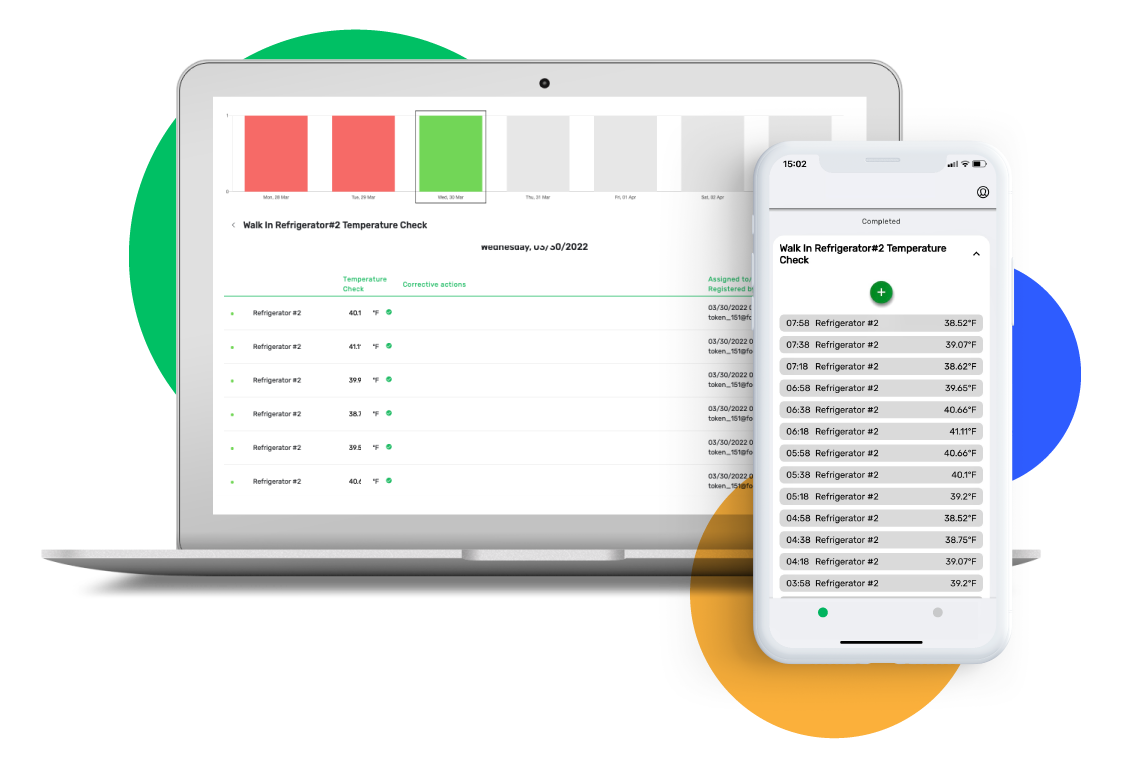
FoodDocs digital Food Safety Management System can be easily integrated with smart devices and IoT temperature sensors, making monitoring faster and all your food safety management information accessible from one dashboard. This saves you time from switching between different solutions.
11F_integrations

How FoodDocs helps simplify temperature monitoring?

Paper-based fridge temperature checks are time-consuming and difficult to manage consistently across busy kitchen operations.

FoodDocs helps teams digitise temperature monitoring with smart logs, automated reminders, and real-time visibility across locations.

Using FoodDocs, teams can:

  • Complete digital fridge temperature checks from mobile devices
  • Receive reminders for scheduled monitoring tasks
  • Record corrective actions instantly
  • Store audit-ready records securely
  • Reduce missed checks and incomplete paperwork
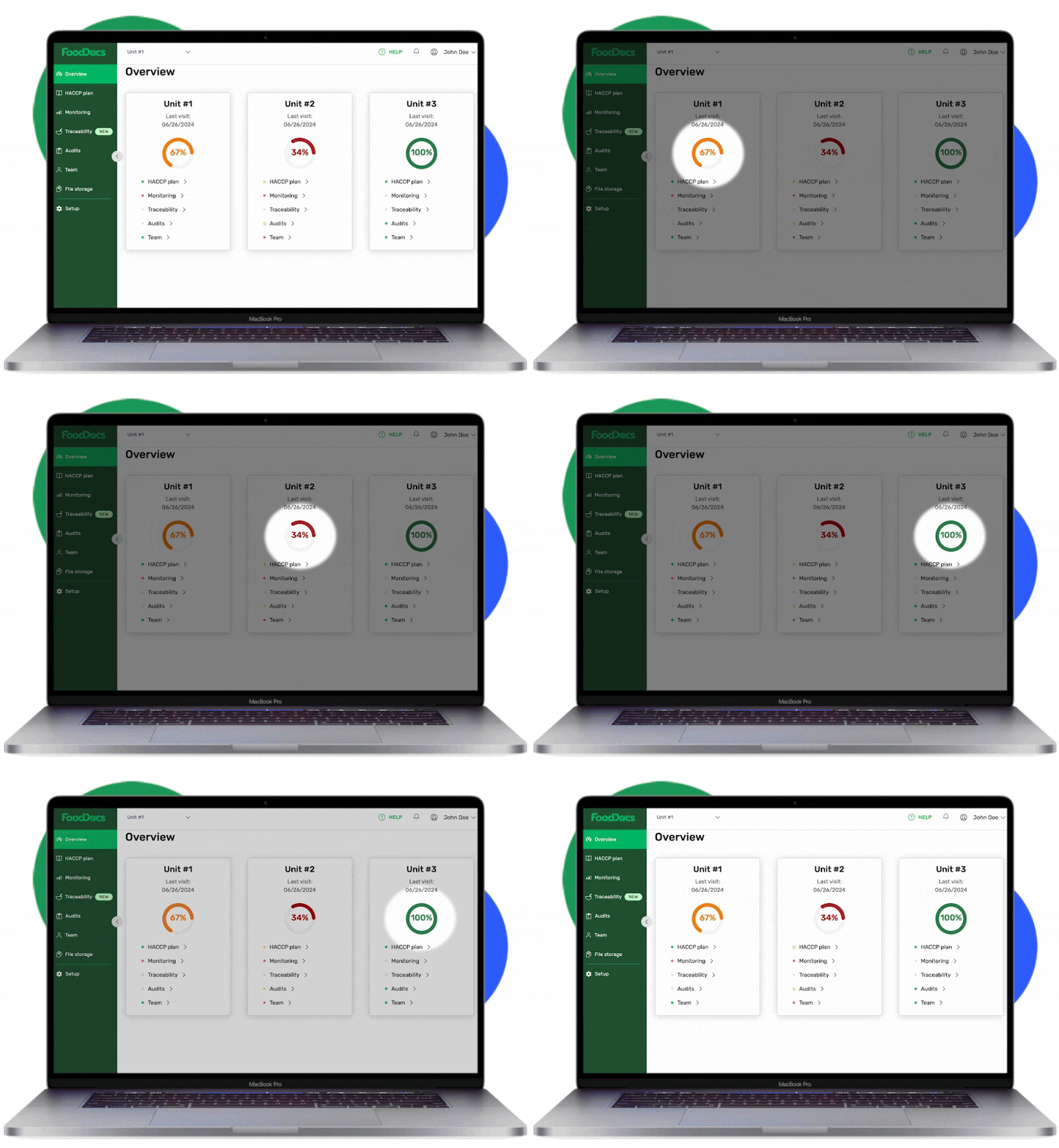
  • Monitor compliance across multiple locations from one dashboard

HACCP_overview_valge_2025

What temperature should a fridge be in the UK?

UK food businesses generally keep chilled food at 8°C or below. Many kitchens use a lower internal limit, such as 5°C, for higher-risk foods.

What should be included in a fridge temperature record sheet?

A fridge temperature record sheet should include the date, time, actual temperature, target temperature, equipment identification, staff initials, and corrective actions if limits are exceeded.

How often should fridge temperatures be checked?

Most kitchens check refrigerator temperatures at least once or twice daily. Higher-risk operations may require more frequent monitoring.

Are fridge temperature logs required for HACCP?

Yes. Temperature recording is commonly included within HACCP monitoring procedures for chilled storage and cold holding controls.

Can fridge temperature logs be digital?

Yes. Many hospitality businesses now use digital temperature apps like FoodDocs to reduce paperwork and improve compliance visibility.

fooddocs food safety documents

Switch to digital in 15 minutes

Linnuke An automated setup enables you to go digital in 15 minutes

Linnuke Our app notifications help your team to remember all daily tasks bam

Linnuke Save time on supervising and use automatically filled monitoring sheets

GET STARTED FREE  
1_leapdroid
2_getapp
3_software_advice
4_capterra
fooddocs food safety documents

Start your free trial

Linnuke  No need to hire a food safety specialist to open your food business

Linnuke  Saves time - artificial intelligence is 500 times faster than a consultant

Linnuke  Let's you change your HACCP content at any time

START CREATING HACCP
1_leapdroid
2_getapp
3_software_advice
4_capterra