Danger Zone for Food: UK Temperature Safety Guide

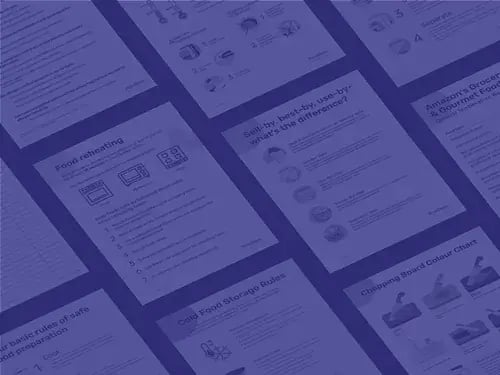
Fooddocs collage of posters
digital-food-safety

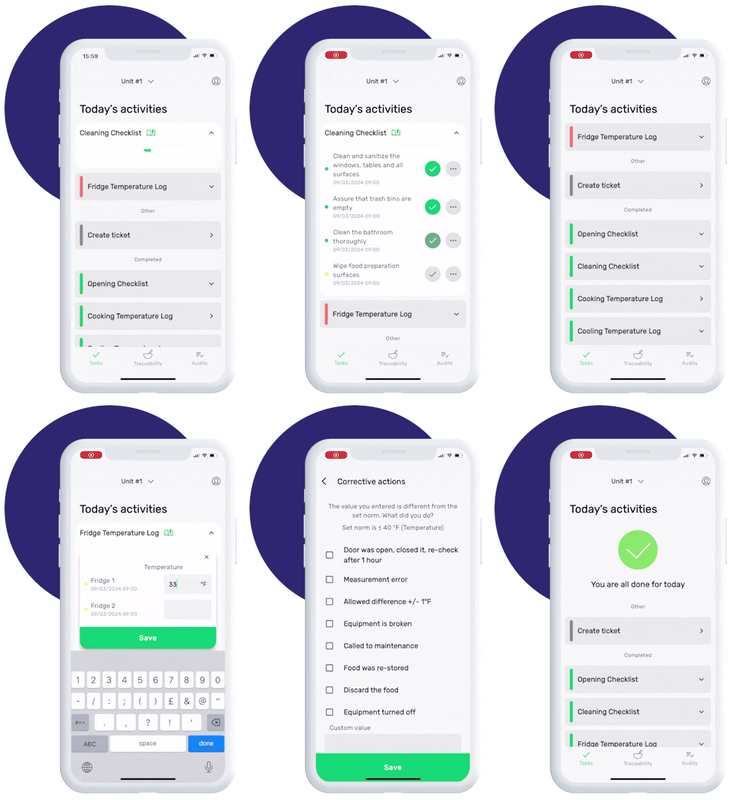
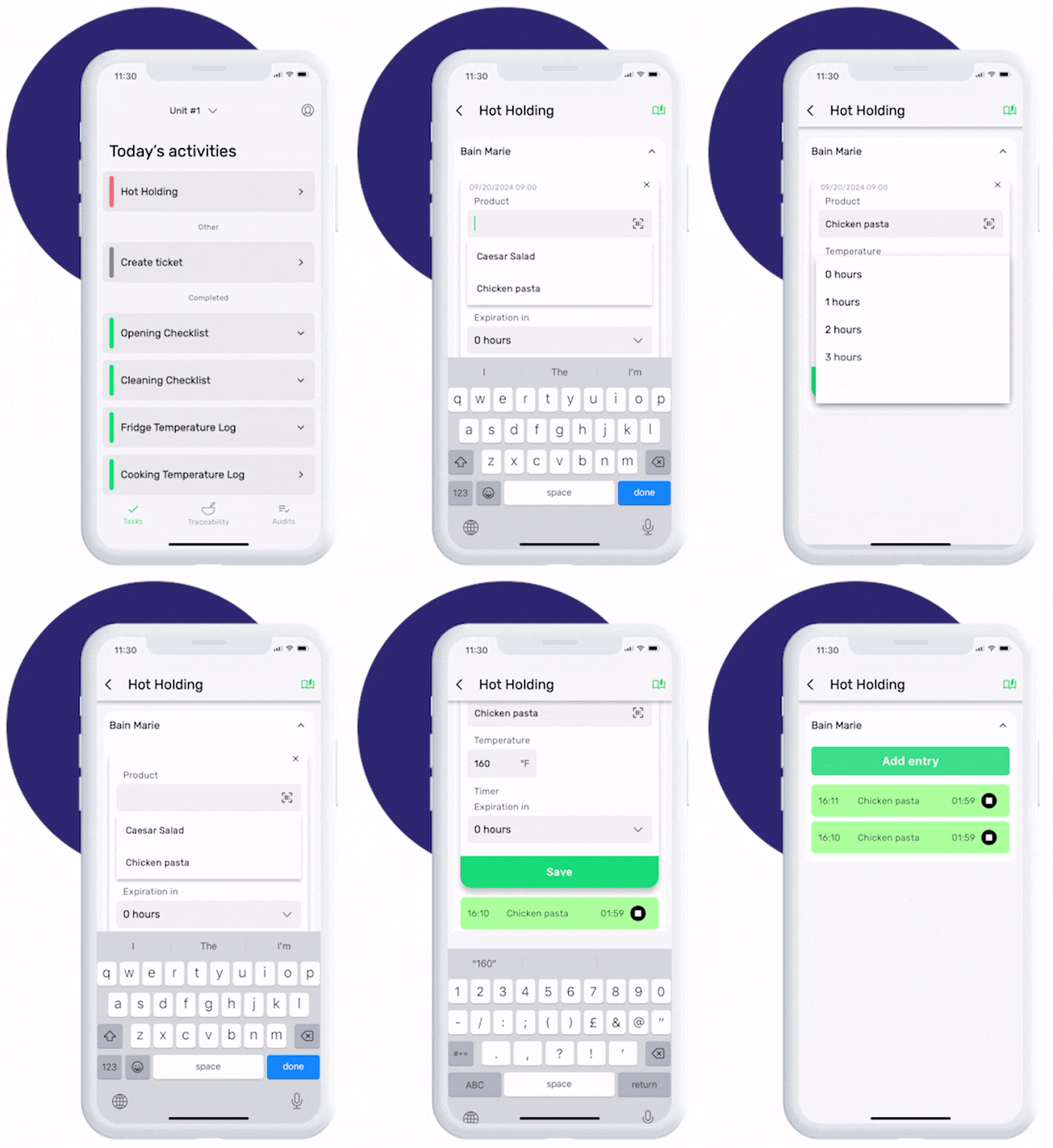
This is how our Digital Food Safety platform saves 20% of your time on daily tasks:

  1. Get upcoming task notifications
  2. Add data into the app
  3. Check the status of tasks in real-time
TRY 14-DAY FREE TRIAL
quotation marks

When food safety was still handled on paper, I typically spent a couple of hours per day getting the papers and going around checking or completing tasks… Now I can sit down and it's just all there in one place. It takes me 5-10 minutes.

Profile icon of Ruth B

Ruth B.

Store Manager

The danger zone for food is the temperature range where harmful bacteria can grow quickly if food is not properly controlled.

In UK foodservice operations, food safety teams normally keep food outside the danger zone by keeping chilled food at 8°C or below and hot food at 63°C or above. The Food Standards Agency states that cold food must be kept at 8°C or below in England, Wales, and Northern Ireland, and hot food should be kept at 63°C or above during hot holding.

This matters during busy service, cooling, delivery checks, buffet holding, reheating, and refrigerated storage. For restaurant groups and healthcare operations, clear temperature controls help reduce food safety risks and support HACCP records for EHO inspections.

ToC is currently active

Key points covered

  1. The UK danger zone for food is generally between 8°C and 63°C.

  2. Cold food should be kept at 8°C or below, with fridges usually set at 5°C or below.

  3. Hot food should normally be held at 63°C or above.

  4. High-risk foods such as cooked meat, rice, dairy, seafood, sauces, and prepared salads need close temperature control.

  5. Food should spend as little time as possible within the temperature danger zone.

  6. Digital monitoring solutions like FoodDocs helps multi-site operations reduce missed checks

  7. Cooling, reheating, refrigeration, and hot holding all help keep food outside unsafe temperature ranges.

  8. Healthcare and care home kitchens require especially strict temperature control because they serve vulnerable groups who are at higher risk of foodborne illness.


What is the danger zone for food?

The danger zone for food is the temperature range where harmful bacteria can multiply quickly enough to increase the risk of foodborne illness.

For UK foodservice operations, the most practical way to manage the temperature danger zone is to keep:

  • chilled food at 8°C or below
  • hot food at 63°C or above
  • refrigerators ideally set at 5°C or below

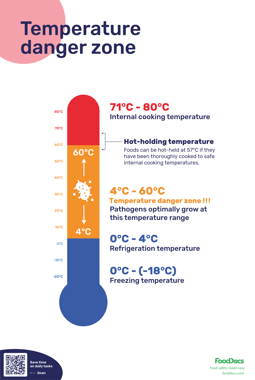
Some international food safety resources describe the danger zone as 4°C to 60°C. For UK hospitality, healthcare, and retail food operations, the article should use the UK operational limits first because these align better with FSA guidance and EHO expectations.

Common high-risk foods affected by the food temperature danger zone include:

  • cooked meat
  • poultry
  • fish and shellfish
  • milk and dairy products
  • eggs
  • cooked rice and pasta
  • sauces and gravies
  • ready-to-eat chilled foods
  • prepared salads

These foods usually contain the moisture and nutrients bacteria need to grow quickly.


What temperature range is the danger zone?

In UK foodservice operations, the danger zone temperature for food is commonly managed as the range between 8°C and 63°C.

This means kitchen teams should:

  • keep cold food at 8°C or below
  • keep hot food at 63°C or above
  • cool cooked food quickly before refrigeration
  • reheat food thoroughly before service
  • record temperature checks as part of HACCP procedures


Temperature danger zone chart

Food type or process Recommended temperature
Frozen food storage -18°C or below
Ideal fridge temperature 0°C to 5°C
Maximum chilled food temperature 8°C or below
UK operational food temperature danger zone 8°C to 63°C
Hot holding temperature 63°C or above
Reheating food At least 75°C
Cooling cooked food Cool quickly and refrigerate as soon as possible


Kitchen teams should minimise the time food spends within the danger zone during:

  • preparation
  • cooling
  • transport
  • service
  • buffet holding
  • temporary storage

Why the temperature danger zone matters

Food left inside the temperature danger zone can become unsafe faster, especially during busy service periods.

Common operational risks include:

  • soup held below 63°C during buffet service
  • sandwiches stored in overloaded display fridges
  • cooked rice left at room temperature too long
  • cooked chicken cooled too slowly before refrigeration
  • chilled deliveries accepted without temperature checks
  • staff forgetting fridge checks during peak service

These issues can lead to failed checks, corrective actions, wasted food, and weaker EHO inspection readiness.

NHS Inform advises keeping fridges between 0°C and 5°C, avoiding overfilled fridges, and cooling cooked food quickly before refrigeration.


How long can food stay in the danger zone?

Food should spend as little time as possible inside the danger zone.

For hot food displayed below 63°C, the FSA allows food to be displayed for up to two hours, but only once. After that, it should be reheated until steaming hot and put back into hot holding, chilled down quickly to 8°C or below, or thrown away.

For chilled food, kitchen teams should return food to refrigeration quickly and avoid leaving high-risk foods at room temperature during preparation, service, or transport.

Good procedures include:

  • checking fridge and freezer temperatures daily
  • recording hot holding temperatures during service
  • using calibrated thermometers
  • documenting corrective actions
  • training staff on what to do when food enters the danger zone

Using a digital temperature log helps standardise monitoring procedures across shifts and locations.

Temperature-log

How to reduce danger zone temperature risks

The two main ways to reduce danger zone temperature risks are:

  • hot holding
  • refrigerated storage

Hot holding keeps food above the danger zone. Refrigeration keeps food below the danger zone. Both require regular monitoring and clear corrective actions.

Temperature control is especially important in:

  • care home kitchens
  • hospital catering
  • hotel breakfast service
  • central kitchens
  • food-to-go preparation
  • grocery retail kitchens
  • catering transport

Food safety teams should also make sure thermometers are calibrated. Incorrect thermometer readings can make staff believe food is safe when it is actually inside the temperature danger zone.


Hot holding temperature

Hot holding means keeping cooked food hot before or during service.

In UK foodservice operations, hot food should normally be held at 63°C or above. This applies to buffet service, hot counters, catering events, and prepared dishes waiting for service.

Good hot holding practices include:

  • covering food where possible
  • checking temperatures regularly
  • avoiding mixing new food with old batches
  • never using hot holding equipment to reheat food
  • taking corrective action when food drops below 63°C

For multi-site operations, digital monitoring can help regional managers see missed checks, repeated failures, and corrective actions across locations.

Hot-holding-log-valge


Refrigerated food temperature

Refrigeration slows bacterial growth but does not kill bacteria.

Cold food must be kept at 8°C or below, and the FSA recommends setting fridges at 5°C or below to allow for temperature fluctuations.

Common refrigeration problems include:

  • overfilled fridges
  • poor airflow
  • damaged door seals
  • frequent door opening
  • missing temperature records
  • delayed maintenance

Kitchen teams should monitor fridges and display units regularly, especially in food-to-go, grocery retail, and healthcare kitchens where chilled ready-to-eat food is handled daily.

Cooling food safely

Cooling food too slowly keeps it in the temperature danger zone for longer.

To cool food safely:

  • divide cooked food into smaller portions
  • use shallow containers
  • move food away from hot cooking areas
  • use ice baths where suitable
  • use blast chillers where available
  • refrigerate food once it has cooled enough

Do not place large amounts of very hot food directly into the fridge, as this can raise the temperature of other chilled foods.


The smart way to monitor the food temperature danger zone

Temperature checks are repetitive, but they are critical for food safety compliance.

Paper-based systems often lead to:

  • missed checks
  • incomplete records
  • delayed corrective actions
  • poor visibility across locations
  • inconsistent routines between sites

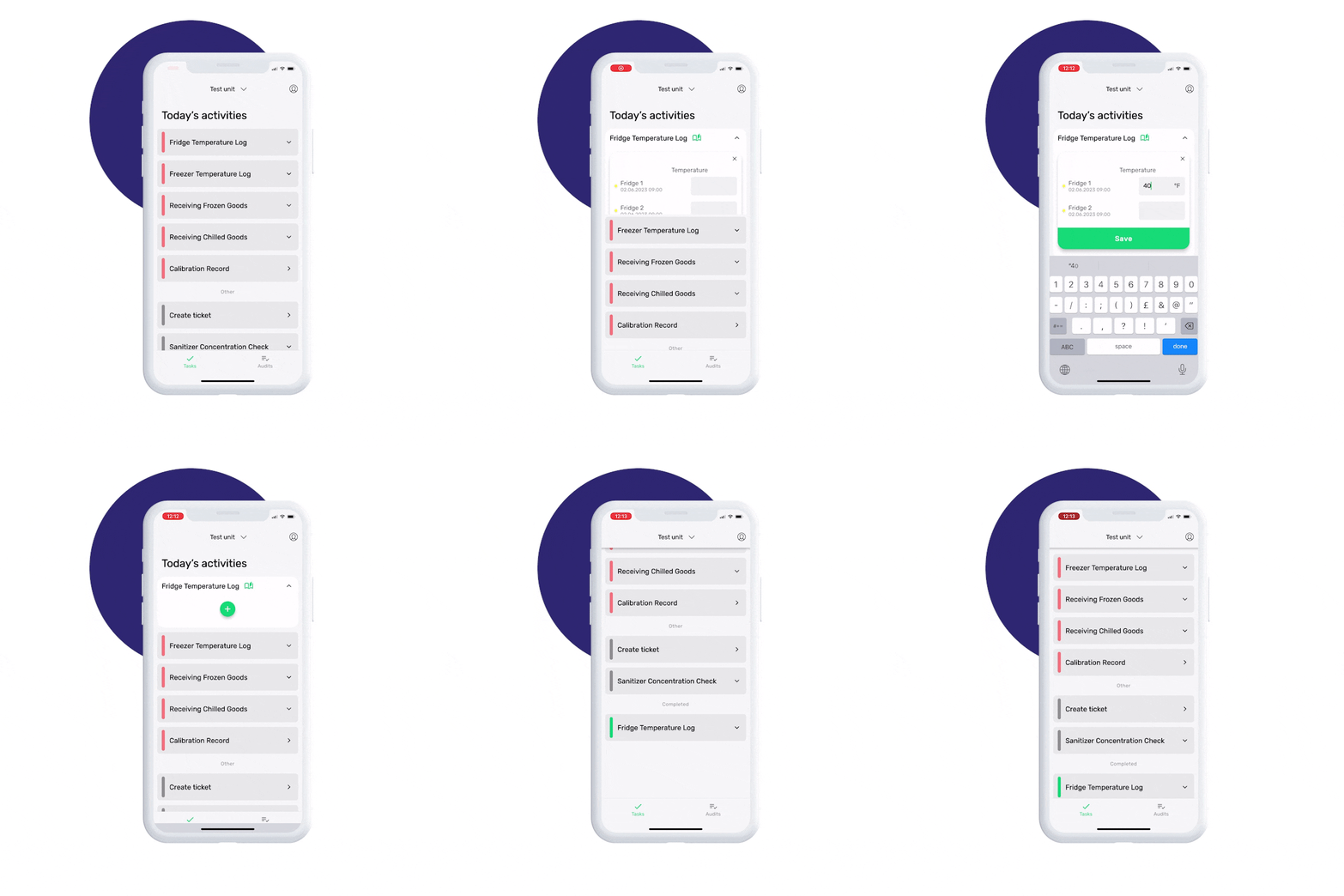
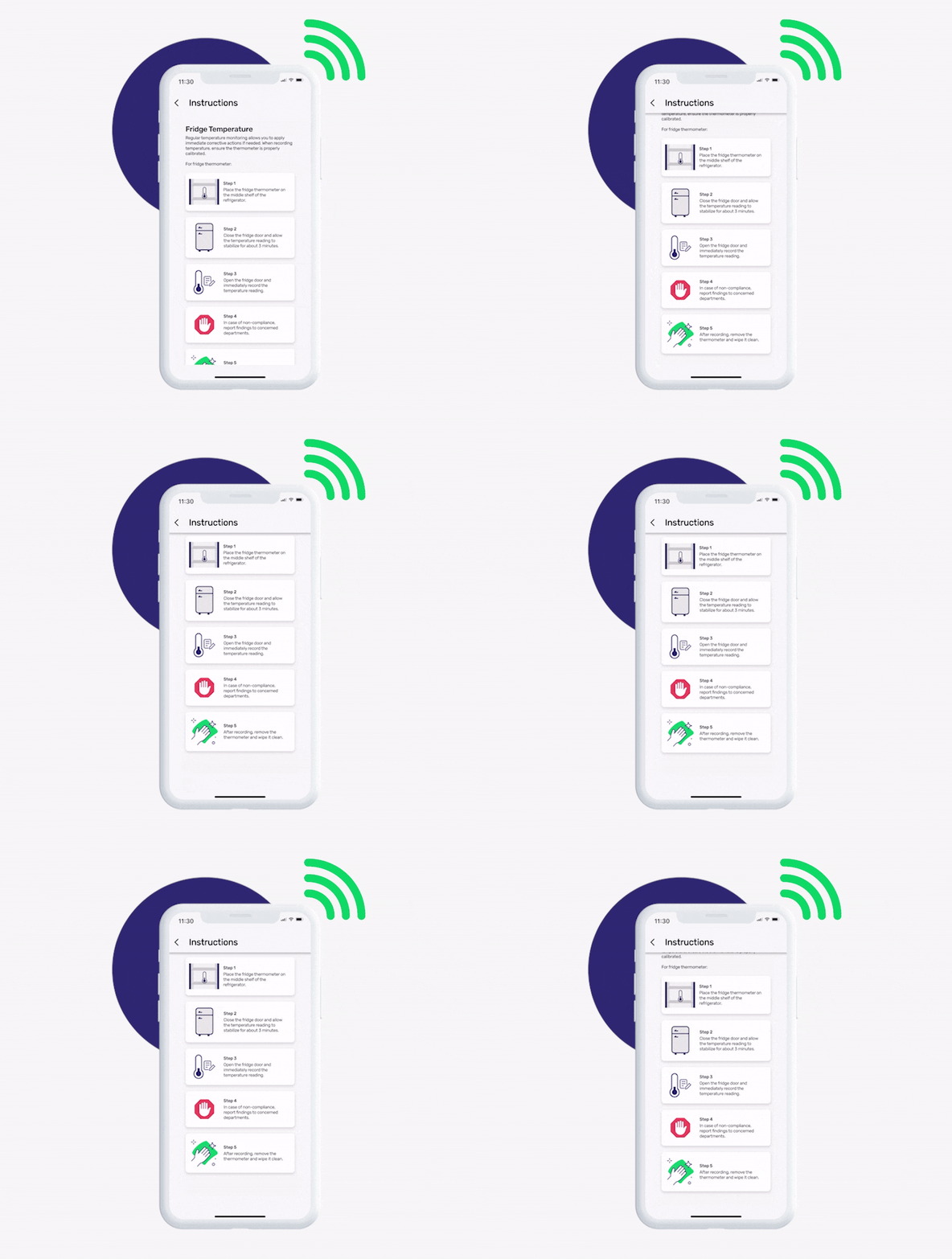
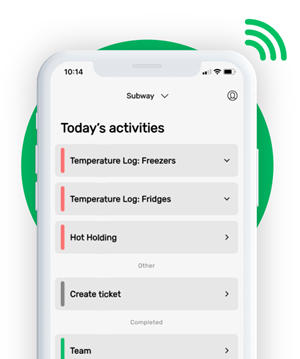
FoodDocs helps food safety teams replace paper-based temperature records with digital monitoring forms, smart task reminders, corrective actions, and real-time visibility across locations.

For multi-site hospitality, healthcare catering, and food-to-go operations, this makes it easier to standardise temperature checks and prepare for EHO inspections without relying on manual paperwork.
Educative_instructions gif

Frequently asked questions

What is the danger zone for food?

The danger zone for food is the temperature range where harmful bacteria can grow quickly. In UK foodservice operations, food is commonly kept below 8°C or above 63°C to stay outside this range.

What temperature is the danger zone?

The UK operational danger zone temperature for food is commonly treated as between 8°C and 63°C.

What temperature range is the danger zone for food?

The food temperature danger zone is commonly managed as 8°C to 63°C in UK hospitality and foodservice operations.

What temperature should cold food be kept at in the UK?

Cold food should be kept at 8°C or below. In practice, fridges are usually set at 5°C or below.

What temperature should hot food be held at?

Hot food should normally be held at 63°C or above.

Why do EHOs check temperature records?

EHOs check temperature records to confirm that food safety procedures are followed consistently and corrective actions are recorded when temperatures fall outside safe limits.

Which foods must be kept out of the danger zone?

High-risk foods such as cooked meat, poultry, seafood, dairy products, cooked rice, pasta, sauces, and ready-to-eat chilled foods should spend as little time as possible in the danger zone.

fooddocs food safety documents

Switch to digital in 15 minutes

Linnuke An automated setup enables you to go digital in 15 minutes
Linnuke Our app notifications help your team to remember all daily tasks bam

Linnuke Save time on supervising and use automatically filled monitoring sheets

GET STARTED FREE  
1_leapdroid
2_getapp
3_software_advice
4_capterra
fooddocs food safety documents

Start your free trial

Linnuke  No need to hire a food safety specialist to open your food business

Linnuke  Saves time - artificial intelligence is 500 times faster than a consultant

Linnuke  Let's you change your HACCP content at any time

START CREATING HACCP
1_leapdroid
2_getapp
3_software_advice
4_capterra